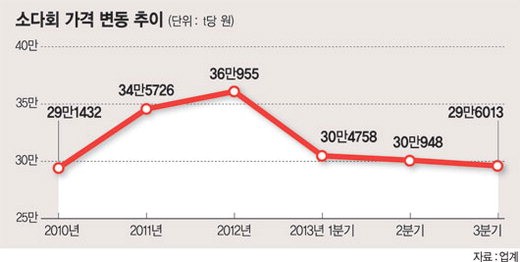
Soda ash prices have stabilized, significantly easing cost pressures for South Korea's glass manufacturers. After soaring to KRW 360,000 per ton last year, prices fell back to 2010 levels of around KRW 290,000 per ton in Q3 2013, offering a rare profit boost to an industry hit by weak construction demand. This development is relevant for overseas buyers of flat glass and soda ash, as it signals improved competitiveness for Korean producers and potential shifts in regional supply dynamics.
Price trend and cost relief
Soda ash, a key raw material for glass production, saw its price drop to approximately KRW 290,000 per ton in Q3 2013, down from a peak of KRW 360,000 per ton in the previous year. This decline has brought prices back to levels last seen in 2010, providing substantial cost relief to domestic glass makers. The stabilization comes after a period of high raw material costs that squeezed margins across the industry.
Impact on major glass producers
South Korea's flat glass market is dominated by two players: KCC with a 44% share and Hankuk Glass Industries with 31%. KCC, with its diversified portfolio including PVC flooring, windows, and paints, was less affected by the soda ash price surge. However, Hankuk Glass Industries, which relies on flat glass for over 80% of its revenue, recorded hundreds of billions of won in losses last year due to the combined pressures of high raw material costs and a sluggish construction sector.
Financial recovery and market share gains
The soda ash price decline has directly improved the financial health of glass manufacturers. Hankuk Glass Industries reduced its first-half cumulative loss from KRW 28 billion last year to approximately KRW 15 billion this year. KCC's building materials operating profit, including glass, reached KRW 72.8 billion in Q3 2013 alone, up about KRW 8 billion year-on-year. Domestic glass market share has also risen from 70% to 75%, as lower costs make local products more competitive against imports.
Demand diversification and outlook
While construction-related flat glass demand remains weak, the industry is seeing growing demand from automotive, display, home appliance, and solar energy sectors. This diversification is reducing reliance on the construction cycle. An industry insider noted, "Although the proportion of architectural glass has decreased, stable automotive glass demand and new demand from appliances and solar energy are creating a more varied portfolio." The same source added that soda ash prices are expected to remain stable through next year, positioning 2014 as a recovery year for the glass market.
What buyers should watch
Overseas buyers of flat glass and soda ash should monitor South Korea's production costs and export competitiveness. The current soda ash price stability could lead to more aggressive pricing from Korean glass exporters, particularly in automotive and specialty glass segments. Additionally, the rising domestic market share suggests that Korean producers may prioritize local sales, potentially tightening export availability. Buyers should also watch for any shifts in soda ash supply from China or the Middle East that could affect regional pricing.
Source: Read the original report | Published: November 24, 2013