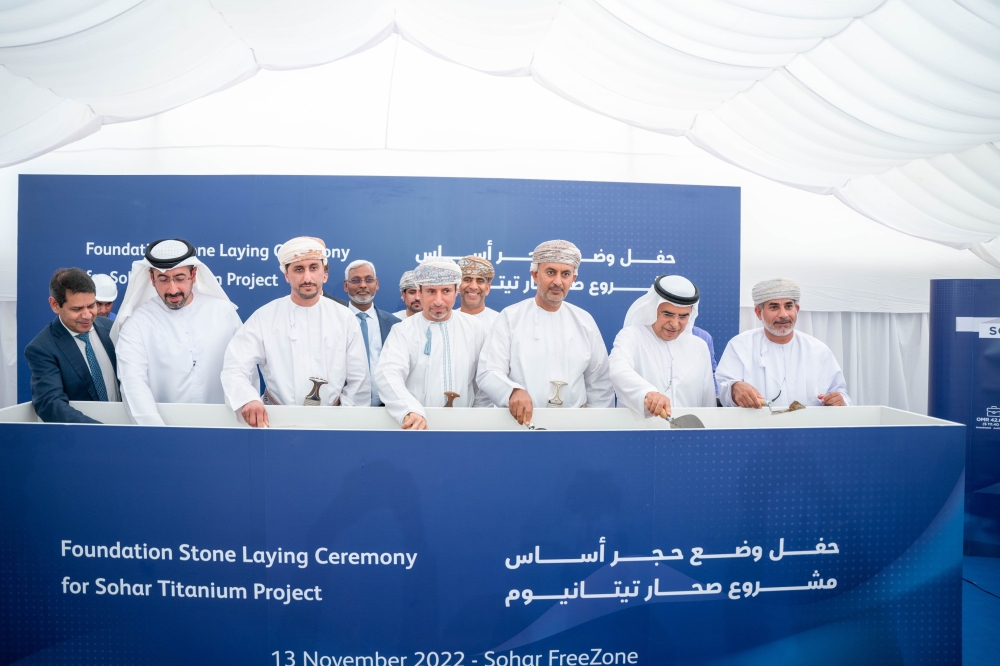
Sohar Titanium, a subsidiary of Minerals Development Oman (MDO), has officially broken ground on a fully integrated titanium dioxide (TiO2) production facility in the Sohar Free Zone. The project, with a total investment of OMR 43 million (approximately USD 112 million), is set to produce 150,000 metric tons of TiO2 annually and is expected to commence commercial operations by 2025. This development signals a strategic expansion in the global TiO2 supply chain, offering overseas buyers a new, reliable source of this critical white pigment used in paints, coatings, plastics, and paper.
Project overview
The facility will occupy a 120,000-square-meter site within the Sohar Free Zone. Sohar Titanium is a joint venture between Minerals Development Oman, Dubai Holding, and Stork Group through Gulf Titanium. The plant's annual capacity of 150,000 tons positions it as a significant new player in the global TiO2 market, which has faced supply constraints and price volatility in recent years.
Strategic location advantages
The Sohar Free Zone was chosen for its modern infrastructure and proximity to Sohar Port, which will handle raw material imports and finished product exports. The location also offers close access to key target markets in the Middle East, Africa, and Asia. The free zone's integrated logistics capabilities, including world-class port facilities, are expected to reduce shipping times and costs for international buyers.
Supply-chain impact
This project adds a new production hub outside of traditional TiO2 manufacturing centers in China, the US, and Europe. For overseas importers and formulators, this diversification can help mitigate supply risks and potentially stabilize pricing. The plant's output will serve industries such as paints, coatings, plastics, and specialty chemicals, where TiO2 is a key raw material.
What buyers should watch
Overseas buyers should monitor the project's construction timeline and commissioning updates. Once operational, Sohar Titanium could offer competitive pricing due to Oman's low energy costs and strategic shipping routes. Importers in Europe, Africa, and South Asia may benefit from shorter lead times compared to sourcing from East Asia. Additionally, the plant's compliance with international quality and environmental standards will be critical for market acceptance.
China sourcing context
While China remains the world's largest TiO2 producer, accounting for over 50% of global capacity, this Omani project provides an alternative source for buyers seeking to reduce dependence on Chinese supply. The new capacity could also influence regional pricing dynamics, particularly in the Middle East and African markets where Chinese TiO2 has traditionally dominated.
Source: Read the original report | Published: November 13, 2022