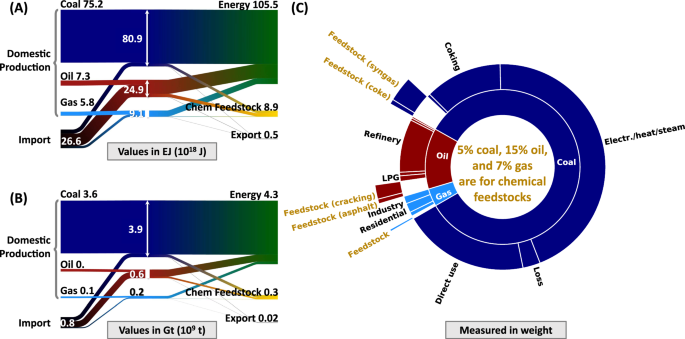
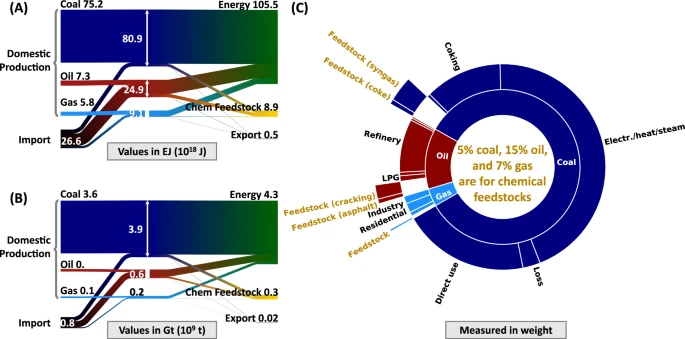
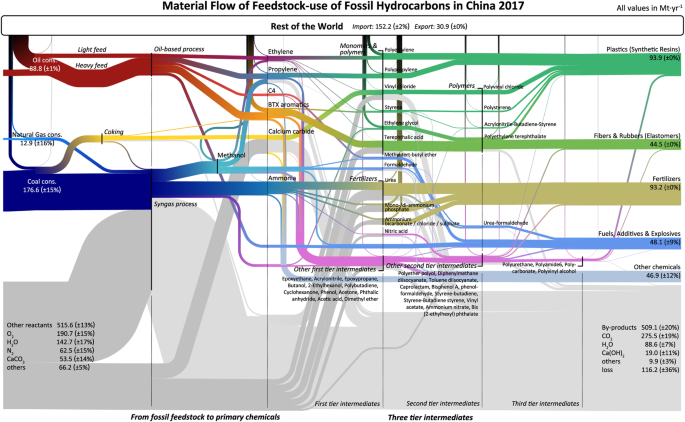
A new process-based material flow model reveals that China's chemical industry consumed 0.18 Gt of coal, 88.8 Mt of crude oil, and 12.9 Mt of natural gas as feedstock in 2017, accounting for 5%, 15%, and 7% of national totals respectively. Coal-fed methanol, ammonia, and PVC production alone generated 0.27 Gt of CO₂ emissions, underscoring the carbon intensity of China's coal-chemical pathway. For overseas buyers of bulk chemicals, polymers and fertilizers, this analysis signals persistent supply-chain carbon exposure and potential shifts toward green hydrogen alternatives.
Coal dominance in China's chemical feedstock
China uniquely relies on coal as both an energy source and chemical feedstock, unlike Europe, North America and the Middle East which primarily use natural gas and crude oil. In 2017, coal-fed production of methanol, ammonia and PVCs contributed 0.27 Gt CO₂ emissions. This coal-centric approach amplifies the carbon footprint of China's chemical outputs, making them among the most carbon-intensive globally.
Hard-to-abate emissions from chemical production
Process emissions from chemical reactions are inherent and cannot be reduced without technological changes, labeling the sector as "hard-to-abate." Beyond feedstock use, vast amounts of heat, steam and electricity are required, generating additional CO₂. The study applies a coefficient-based carbon accounting method (scope 2) to distinguish process emissions from energy-related emissions, identifying the most carbon-intensive primary chemical building blocks.
China's chemical sector still expanding
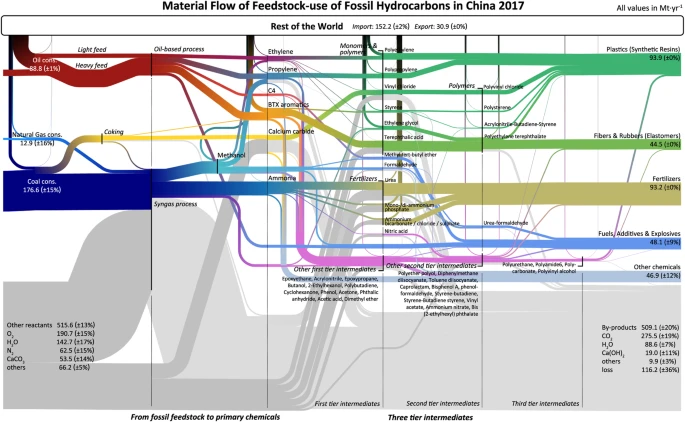
China leads the world in both chemical production volume and fossil fuel consumption, yet per capita chemical product consumption lags behind high-income nations. High-end products remain import-dependent, indicating the industry is still in a rapid expansion phase. This growth trajectory means fossil hydrocarbon feedstock demand will rise over the coming decades, even as energy-related fossil use declines.
What buyers should watch
Overseas importers and distributors should monitor China's evolving feedstock mix as green hydrogen deployment and energy efficiency improvements emerge as decarbonization alternatives. The study highlights that oil-to-chemical (OTC) technology, which converts 70-80% of crude oil into high-value chemicals, could reshape global supply. Buyers of methanol, ammonia, PVC and other coal-derived chemicals should prepare for potential carbon-related trade measures and shifting cost structures as China's chemical industry decarbonizes.
Compliance and logistics signals
With China's chemical industry accounting for 10-14% of national CO₂ emissions, regulatory pressure to reduce carbon intensity is likely to intensify. This may affect export competitiveness and compliance costs for Chinese-produced chemicals. Importers should track China's progress on coupling green hydrogen with coal chemical production, as successful deployment could alter the carbon profile of key bulk chemicals and polymers traded globally.
Source: Read the original report | Published: May 08, 2024