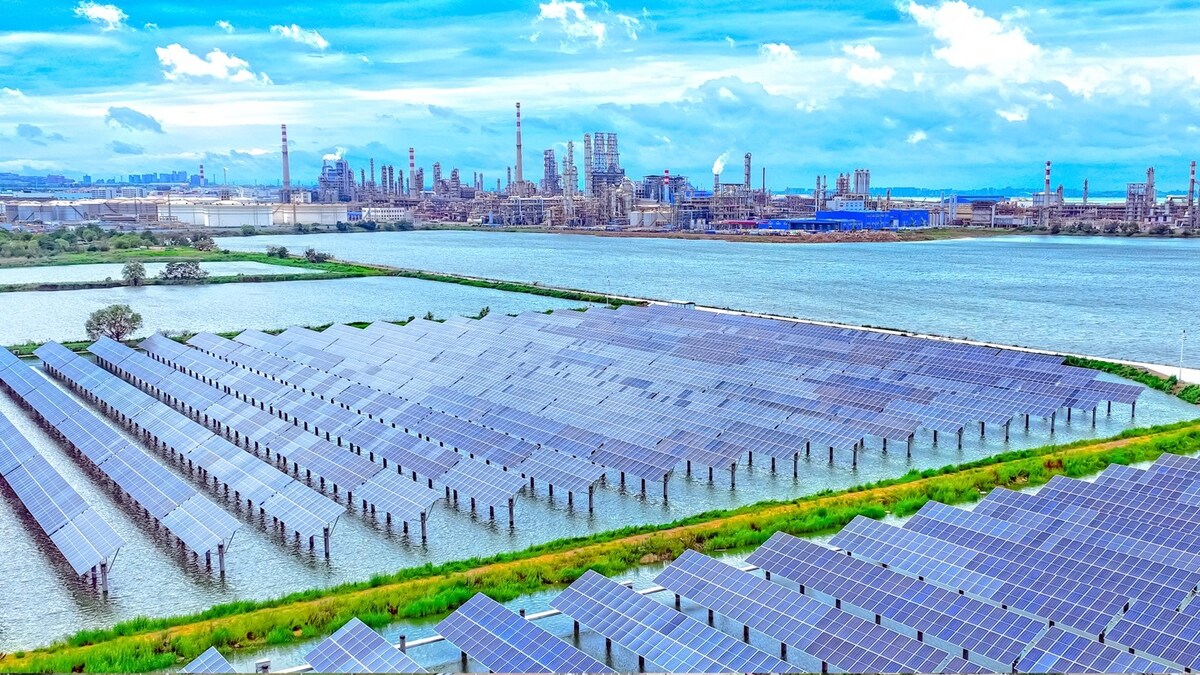
Sinopec has completed China's first factory-based seawater hydrogen production project at its Qingdao refinery, integrating direct seawater electrolysis with renewable energy to produce 20 cubic meters of green hydrogen per hour. This breakthrough offers coastal regions a new way to utilize renewable energy for green hydrogen production and provides an alternative pathway for treating high-salinity industrial wastewater, signaling a shift in sustainable chemical sourcing for overseas buyers.
Project overview
The project operates on a factory-based model, using green electricity from the refinery's floating photovoltaic power station. Through electrolysis, seawater is split into hydrogen and oxygen, with the hydrogen seamlessly integrated into the refinery's pipeline network for use in refining processes or hydrogen-powered vehicles. The entire production process occurs within factory settings, ensuring operational efficiency and stability.
Technical challenges and solutions
Seawater contains about 3% salt and impurities like chloride ions that can corrode electrodes, while cation deposits may clog equipment channels, reducing efficiency. Sinopec Qingdao refinery, in collaboration with the Dalian Institute of Petroleum and Petrochemicals, overcame these challenges through specialized equipment innovations and unique process designs, including chlorine-resistant electrode technology, high-performance electrode plate design, and a seawater circulation system.
Strategic significance for buyers
Seawater hydrogen production preserves freshwater resources and converts unstable renewable energy into storable green hydrogen. This technology is particularly relevant for coastal chemical buyers seeking sustainable hydrogen feedstocks without competing for freshwater supplies. It also offers a potential solution for managing high-salinity industrial wastewater, reducing environmental compliance costs.
China sourcing context
Sinopec is accelerating its efforts to become China's hydrogen energy leader, having already deployed a megawatt-scale PEM electrolyzer and operated China's first 100-kilowatt solid oxide electrolysis cell project. By 2024, the company had established 136 hydrogen refueling stations and 11 hydrogen supply centers, demonstrating its commitment to scaling hydrogen infrastructure. Overseas buyers should monitor these developments for future supply opportunities.
Source: Read the original report | Published: December 20, 2024