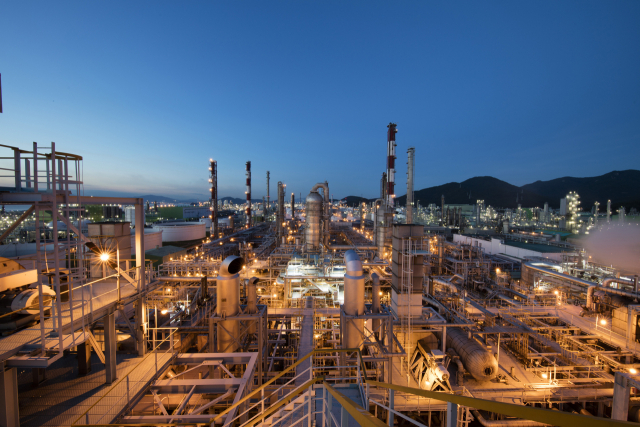
South Korean petrochemical companies are bracing for impact from the Trump administration's latest tariff wave, but analysts see potential gains from the escalating US-China trade conflict. With China imposing retaliatory tariffs on US goods, disruptions to US chemical exports to China could create opportunities for Korean producers, particularly in polyethylene (PE), LPG, and ethane-derived products.
Tariff exposure and market dependence
South Korea's chemical exports to the US account for about 8.9% of total outbound chemical shipments, or roughly USD 4.3 billion. While the US is the second-largest market after China (36.9%), the dependence is not overwhelming. Moreover, Chinese and European exporters also face US tariffs, meaning Korean products may not lose price competitiveness disproportionately.
China's retaliatory tariffs and supply-chain shifts
China announced it will impose a 34% retaliatory tariff on US imports starting April 10. This directly threatens US polyethylene (PE) exports to China, which total about 2.5 million tons annually—one-quarter of China's total PE imports. Analysts at Hyundai Motor Securities predict US PE will struggle to remain profitable in China, leading to reduced volumes and potential price increases.
LPG and ethane disruption risks
China may also halt US liquefied petroleum gas (LPG) imports, as it did during the first Trump administration. US-origin LPG accounts for 50% of China's total LPG imports. A disruption would impact Chinese propane dehydrogenation (PDH) plants producing propylene, benefiting Korean chemical makers. Similarly, if US ethane imports face sanctions, Chinese production of ethylene glycol (EG), styrene, and PVC could be hampered, offering advantages to LG Chem and Lotte Chemical.
Downstream demand concerns and rubber sector risks
Despite potential gains, Korean chemical firms face headwinds from US tariffs on China and Southeast Asia—34% on China, 36% on Thailand, and 46% on Vietnam. These tariffs could weaken demand for Korean intermediate chemicals exported to appliance and auto factories in those regions. The rubber sector is particularly vulnerable, as Kumho Petrochemical derives about 50% of its revenue from synthetic rubber, much of it destined for Southeast Asian tire plants.
What buyers should watch
Overseas buyers should monitor the impact of US-China trade tensions on global chemical pricing and supply flows. Disruptions to US PE, LPG, and ethane exports to China may tighten supply and lift prices in Asia, benefiting Korean producers. However, broader demand weakness from US economic slowdown could offset these gains. Importers of PE, PP, EG, styrene, and PVC should assess alternative sourcing from South Korea as Chinese domestic production faces feedstock constraints.
Source: Read the original report | Published: April 09, 2025