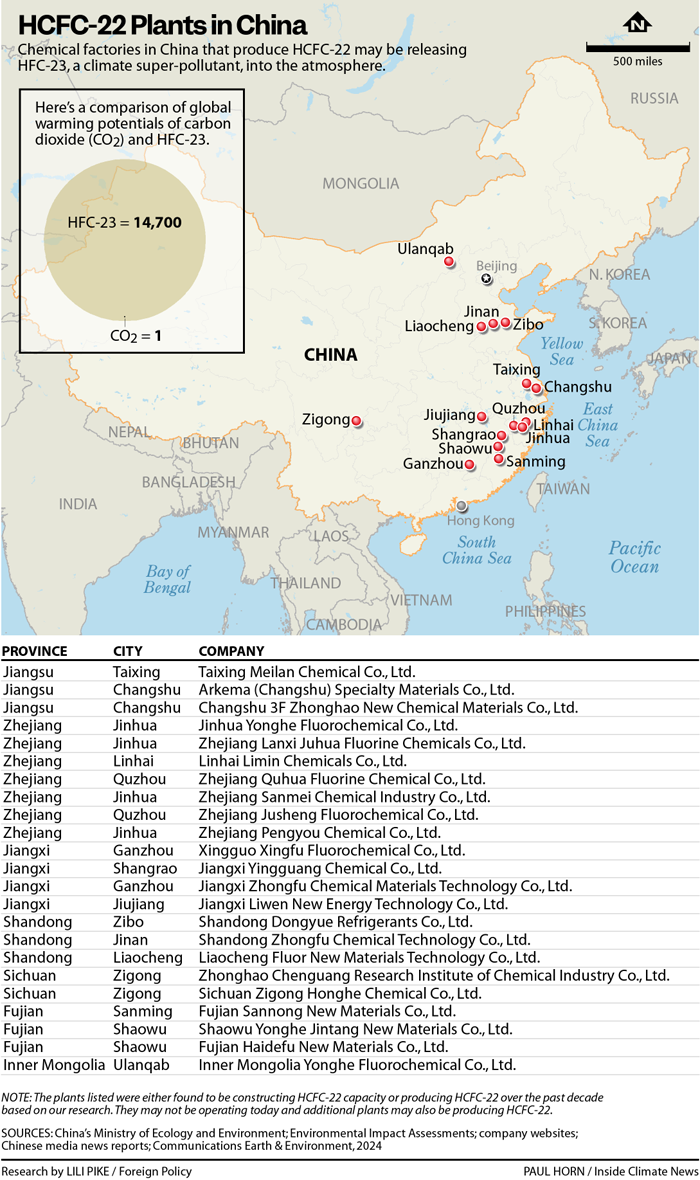
A new study reveals that global emissions of trifluoromethane (HFC-23), a potent greenhouse gas, were five times higher in 2023 than countries reported to the United Nations. For overseas buyers of fluorochemicals and related polymers, this signals tighter regulatory scrutiny on Chinese HCFC-22 plants, which produce the majority of HFC-23 as a byproduct. Compliance risks and potential supply disruptions may follow as enforcement of the Kigali Amendment intensifies.
Emissions gap and regulatory context
Atmospheric monitoring data published in December 2023 detected 14,000 metric tons of HFC-23 released globally, equivalent to the annual greenhouse gas emissions of 48 million cars or 55 coal-fired power plants. This is five times the annual releases that countries reported to the UN in recent years. The Kigali Amendment to the Montreal Protocol requires parties to destroy HFC-23 from HCFC-22 production "to the extent practicable," but enforcement remains weak.

China's role and industry pushback
China produces over two-thirds of the world's HCFC-22, a feedstock for polymers like PTFE. Just two dozen Chinese factories are believed to generate the majority of global HFC-23 emissions. At recent UN talks, a Chinese delegate argued that more research and technical capacity are needed before stricter measures can be adopted. A formal decision called for voluntary sharing of atmospheric monitoring data but included no enforcement details.
Cost-effective abatement vs. economic disincentives

Incinerators can destroy 99.9% of HFC-23 at a cost of $5–$9 per kilogram destroyed, or roughly 30–60 cents per metric ton of CO2 equivalent—far cheaper than carbon capture ($15–$342 per ton). However, without subsidies or profit from emissions credits, companies see it as an extra cost. Chinese firms received UN climate incentives and government subsidies starting in 2006 to install incinerators, but some plants have since stopped operating them.
What buyers should watch
Overseas importers of HCFC-22 derivatives (e.g., PTFE, refrigerants) should monitor compliance audits at Chinese chemical plants. The study also flags emerging HFC-23 sources from other hydrofluorocarbon production and semiconductor manufacturing, which fall outside current reporting requirements. Illegal HCFC-22 production for refrigerant use remains a risk. Buyers may face supply volatility if Chinese regulators tighten enforcement or if plants face shutdowns for non-compliance.

Compliance and logistics signals
In the U.S., a 2023 rule limits HFC-23 emissions from domestic plants, but implementation has faced industry pushback. No U.S. plant has exceeded the limit as of 2023. For global supply chains, the widening gap between reported and actual emissions suggests that customs and environmental authorities in importing countries may demand more rigorous documentation of HFC-23 destruction at source plants. Logistics providers handling fluorochemicals should prepare for potential shipment delays due to enhanced monitoring.
Source: Read the original report | Published: May 21, 2025