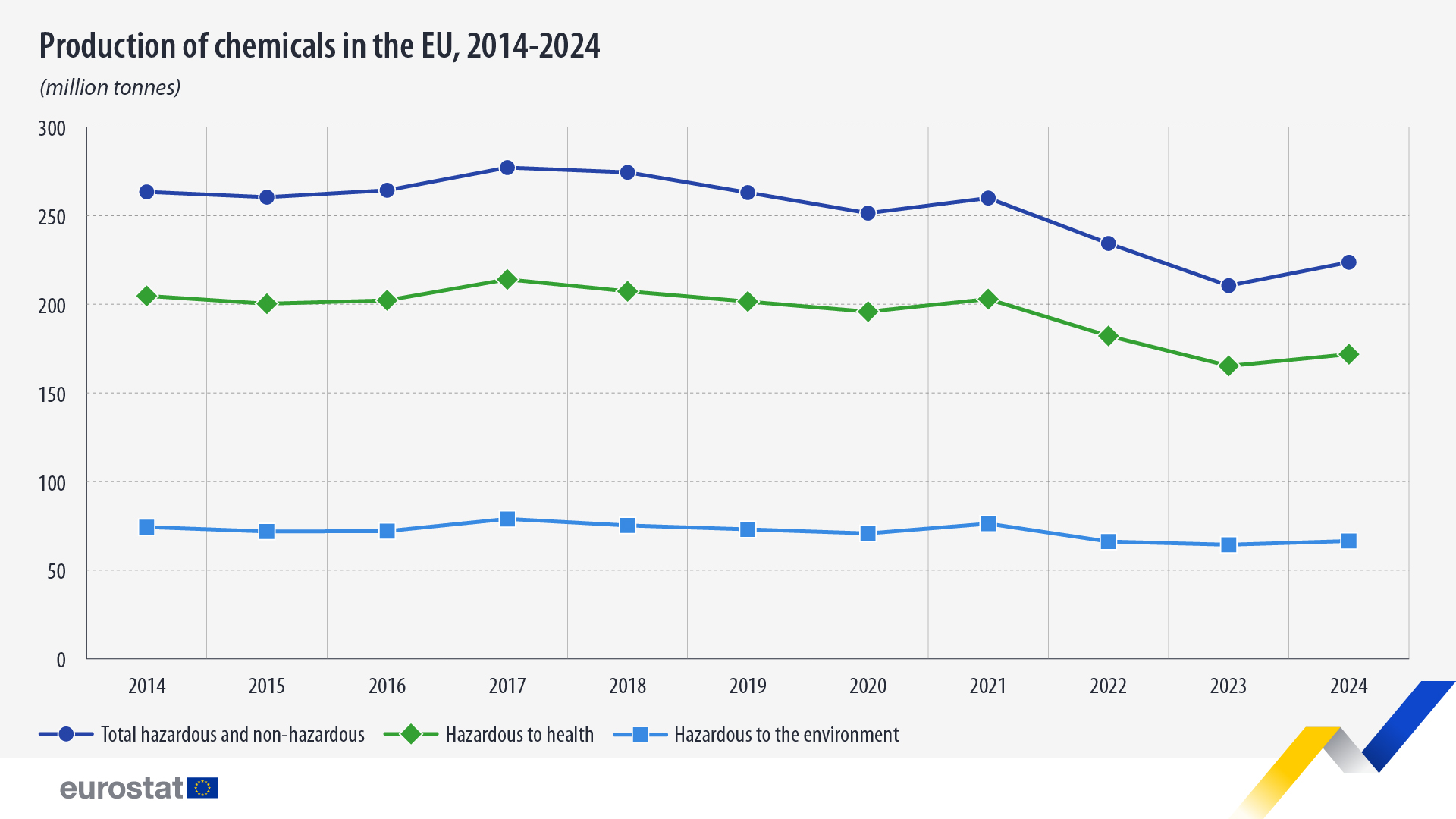
EU chemical production and consumption have declined significantly over the past decade, with output falling 15% and consumption dropping 18% from 2014 to 2024, according to Eurostat data released today. For overseas buyers sourcing from or competing with EU chemical suppliers, this structural contraction signals tighter supply, potential price volatility, and a shift toward less hazardous alternatives.
Production and consumption trends
In 2024, the EU produced 224 million tonnes of chemicals (hazardous and non-hazardous) and consumed 232 million tonnes. Compared with 2014, production fell 15% and consumption declined 18%. However, year-on-year from 2023, both metrics showed modest recovery: production rose 6% and consumption increased 5%.

Hazardous chemical decline
Production of chemicals hazardous to health reached 172 million tonnes in 2024, down 16% from 2014. Chemicals hazardous to the environment totaled 66 million tonnes, an 11% decrease over the same period. Consumption of health-hazardous chemicals fell 22% to 170 million tonnes, while environmentally hazardous chemical consumption dropped 32% to 53 million tonnes.
Most harmful substances reduced

EU consumption of the most harmful chemicals—those causing cancer, genetic mutations, reproductive harm, or endocrine disruption—declined from 48 million tonnes in 2014 to 30 million tonnes in 2024, a reduction of 18 million tonnes. This reflects regulatory pressure and industry efforts to phase out high-risk substances.
What buyers should watch
Overseas importers and distributors should monitor EU chemical availability, especially for hazardous categories where production is shrinking. The decline in most harmful substances may accelerate substitution demand for safer alternatives. Year-on-year upticks in 2024 suggest possible short-term stabilization, but the long-term downward trend remains intact.

Data methodology
Consumption volumes are calculated by adding net imports to production volumes. Hazardous-to-health chemicals include those posing acute risks via skin, inhalation, or dermal exposure, while environmentally hazardous chemicals cause acute harm to aquatic organisms. The two hazardous categories overlap.
Source: Read the original report | Published: December 16, 2025