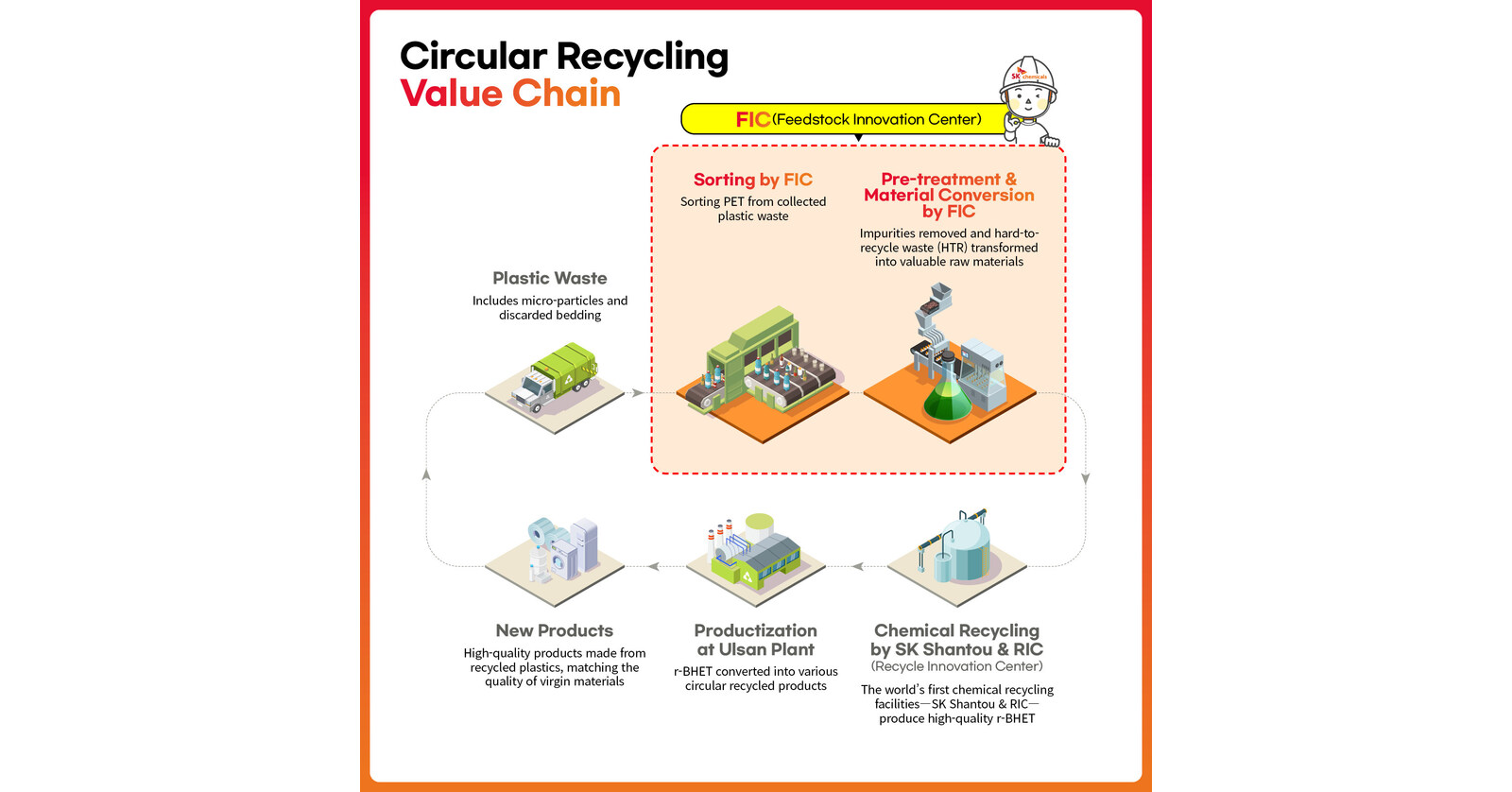
SK Chemicals has signed a joint venture agreement with China-based plastics recycler Kelinle to build a Feedstock Innovation Center (FIC) in Shaanxi Province, marking Korea's first vertical integration of chemical recycling. The move allows SK Chemicals to secure in-house waste-plastic feedstock, reducing exposure to price volatility and supply instability that have long challenged recycled-plastics producers. For overseas buyers of recycled PET and other circular materials, this development signals improved cost competitiveness and supply reliability from a major Asian supplier.
Feedstock Innovation Center details
The FIC will be built on an idle 13,200 m² site owned by Kelinle in Weinan, Shaanxi Province. Kelinle, with a decade of local plastics recycling experience, will use its network to procure waste plastics. SK Chemicals will apply its depolymerization technology to convert the waste into PET pellets. Initial capacity is about 16,000 tons per year, ramping up to 32,000 tons per year, supplying most feedstock needed by SK Shantou, SK Chemicals' chemical recycling subsidiary in China.
Unique feedstock sourcing strategy
Unlike mechanical recyclers that rely on PET bottles, the FIC will process end-of-life textiles such as discarded blankets and fines from PET-bottle shredding. These materials are typically incinerated due to recycling difficulty, but SK Chemicals' depolymerization technology can recover them. This approach offers a cost advantage over clear PET bottles, which are easier to recycle but more expensive to procure. The company expects waste plastic raw material costs to drop by about 20% once the FIC is fully operational.
Vertical integration and supply-chain stability
SK Chemicals becomes the first Korean chemical company to establish a corporate entity with facilities for sourcing waste plastics for depolymerization-based chemical recycling. CEO Ahn Jae-hyun stated, "With the FIC, we have secured a complete recycling value chain from depolymerization and material production to feedstock sourcing." This vertical integration reduces dependence on external suppliers, shielding the business from price volatility and supply disruptions driven by rising global demand for recycled materials.
What buyers should watch
Overseas importers and formulators of recycled PET should monitor the FIC's startup timeline, targeting the second half of 2026. The facility's ability to convert hard-to-recycle textiles into feedstock could lower the price gap between recycled and virgin plastics, making circular materials more competitive. SK Chemicals' established r-BHET and CR-PET production in Shantou, combined with this feedstock integration, may offer buyers a more stable and cost-effective supply chain for chemically recycled plastics.
Compliance and logistics signals
As global regulations increasingly mandate recycled content, securing reliable feedstock becomes critical. SK Chemicals' vertical integration aligns with tightening compliance requirements in Europe and North America. The FIC's location in China also provides proximity to major manufacturing hubs, potentially reducing logistics costs for Asian buyers. However, importers should verify the facility's certification and quality standards for recycled PET pellets before committing to long-term contracts.
Source: Read the original report | Published: December 10, 2025