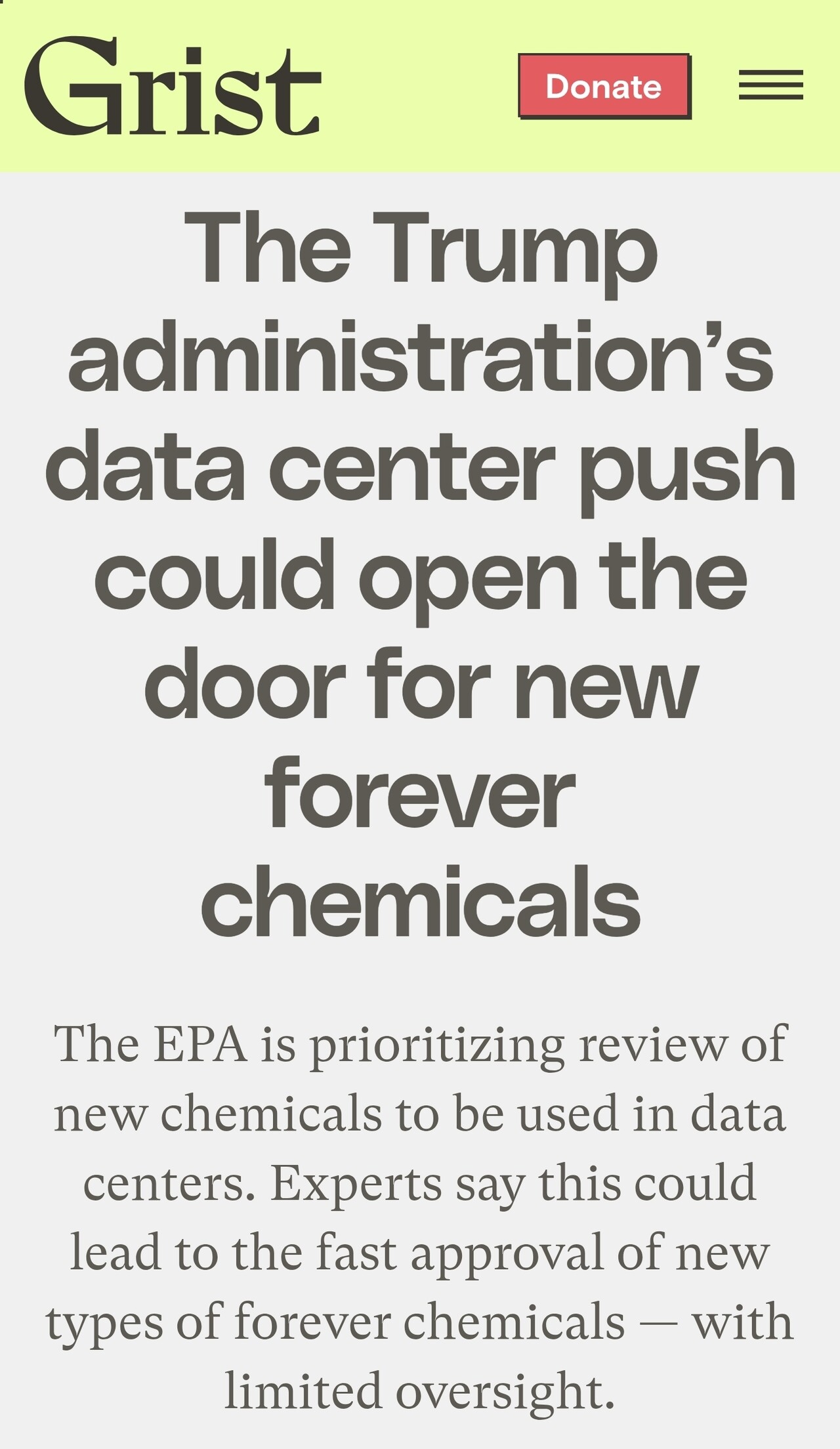
The Trump administration is accelerating the approval of new chemicals for data centers and AI projects, potentially fast-tracking the use of persistent pollutants like PFAS, also known as 'forever chemicals.' This policy shift, reported by the nonprofit environmental outlet Grist, could reshape supply chains for cooling fluids and semiconductor materials, prompting global buyers to reassess compliance and sourcing strategies.
Policy shift and expedited review
The US Environmental Protection Agency (EPA) introduced a fast-track review system in September 2024 for new chemicals used in data centers or related projects. Eligible projects include data center construction, additions of over 100 megawatts to the power grid, national security initiatives, and projects designated by the Departments of Defense, Interior, Commerce, and Energy. Companies can gain priority in the review queue by submitting a certification that their chemical will be used in such projects. EPA Administrator Lee Zeldin stated that the Biden administration left a backlog of new chemical reviews, delaying data center and AI projects. He emphasized that the Trump EPA will not be an obstacle to accelerating critical developments. The agency claims it will not skip any review steps and will maintain the same scientific standards.
Industry insiders and lobbying influence

Former EPA new chemicals division chief Greg Schweer warned that the system allows a single confirmation letter from a department official to qualify a project, without requiring evidence. He cautioned that time pressure could prevent thorough review of submissions, potentially compromising safety. Key EPA positions are held by industry veterans. Nancy Beck, head of the Office of Chemical Safety and Pollution Prevention (OCSPP), previously worked for industry lobbying groups. Emails obtained via FOIA show Beck met with the global semiconductor lobby group SEMI in March 2024 to discuss PFAS regulatory approaches. After the meeting, SEMI submitted comments supporting changes to the new chemicals program, as recommended by the EPA.
Immersion cooling and PFAS resurgence
Data centers use immersion cooling, particularly two-phase immersion cooling, for high thermal efficiency. Many cooling fluids are carbon-fluorine based, falling under the PFAS category. PFAS are persistent in the environment and linked to health issues like cancer and immune suppression, leading to strict regulations in the EU and elsewhere.

Chemours has developed a fluorine-hydrogen-carbon-based cooling fluid and conducted performance tests with Samsung, claiming it can reduce cooling energy by up to 90%. Meanwhile, Exxon and Shell emphasize their PFAS-free cooling fluids, strategically positioning for stricter PFAS regulations. Microsoft researchers noted that tightening PFAS rules in the EU and US could limit commercialization of two-phase immersion cooling.
What buyers should watch
Overseas buyers of chemicals for data centers, semiconductors, and cooling systems should monitor EPA's fast-track approvals closely. The policy may increase supply of PFAS-based fluids and semiconductor chemicals, but regulatory risks remain high in other markets like the EU. Buyers should evaluate alternative PFAS-free cooling solutions from suppliers like Exxon and Shell, and prepare for potential divergence in global chemical regulations.
Compliance and logistics signals

Semiconductor manufacturers are major beneficiaries of the fast-track policy, as photolithography processes require large volumes of PFAS-based chemicals. Earthjustice attorney Jonathan Kalmuss-Katz noted that the semiconductor industry is a primary submitter of new chemical applications and will gain most from this policy. Importers should verify that their suppliers' chemicals are certified for eligible projects to avoid delays, while also assessing long-term compliance with stricter EU PFAS rules.
China sourcing context
While the policy is US-specific, it may influence global chemical supply chains. Chinese manufacturers of cooling fluids and semiconductor chemicals could face competitive pressure from US-based suppliers gaining faster approvals. However, Chinese buyers exporting to the EU must still comply with stringent PFAS regulations, creating a complex landscape for sourcing decisions.
Source: Read the original report | Published: December 08, 2025