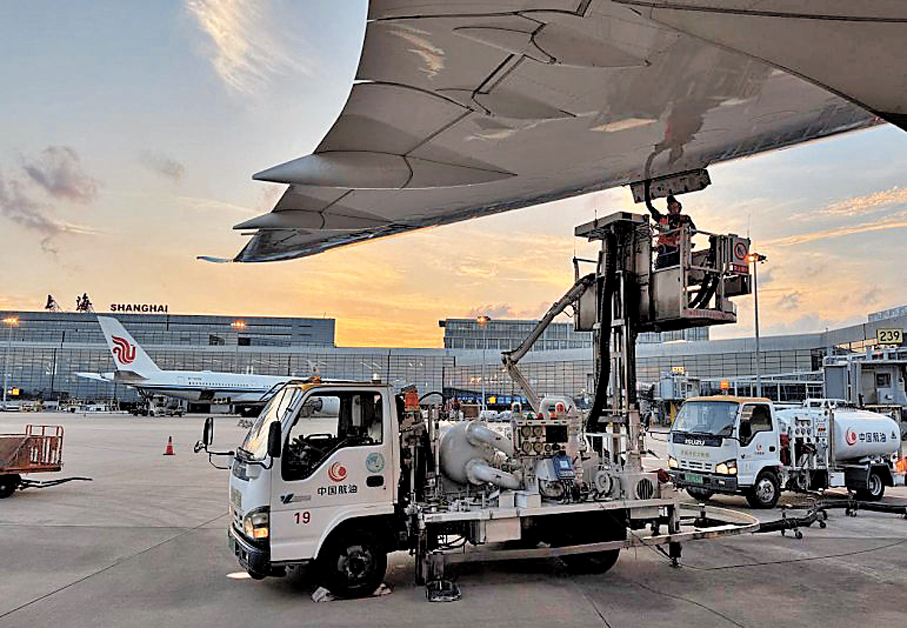
China's state-owned assets regulator has approved the restructuring of Sinopec Group and China National Aviation Fuel Group (CNAF), creating a vertically integrated energy giant that spans from refining to aircraft fueling. The move aims to strengthen China's energy security, enhance global competitiveness in aviation fuel, and accelerate the commercialization of sustainable aviation fuel (SAF). Overseas buyers should watch for potential shifts in China's aviation fuel supply dynamics and SAF market development.
Restructuring details and rationale
The State-owned Assets Supervision and Administration Commission (SASAC) announced on January 8, 2026, that the restructuring of Sinopec and CNAF has been approved by the State Council. Sinopec is China's largest supplier of refined oil and petrochemical products, the world's top refiner and second-largest chemical company. CNAF is Asia's largest aviation fuel service provider, covering procurement, transport, storage, testing, sales, and refueling.
From channel player to full-chain giant
Professor Lin Boqiang, director of the China Energy Policy Research Institute at Xiamen University, said the restructuring is not a simple scale addition but aims to create a full-chain energy giant. Before the deal, CNAF was mainly a midstream and downstream channel and service provider. After integration, the new entity will combine Sinopec's world-leading refining capacity with CNAF's nationwide distribution network, targeting integrated operations from refinery to wingtip.
Strategic benefits for supply chain and competitiveness
Lin noted that the integration mirrors the model of international majors like Shell and BP, improving efficiency, reducing costs, and enhancing supply chain resilience. CNAF will gain more stable upstream supply, while Sinopec secures a smooth outlet for its aviation fuel output. The combined scale and complete chain will strengthen bargaining power in international procurement, trading, and price volatility management, boosting China's global competitiveness in aviation fuel.
SAF development gets a boost
Sustainable aviation fuel (SAF) is a key focus. Sinopec has advantages in bio-jet fuel production technology, while CNAF controls application and refueling nodes. Lin said their combination could accelerate SAF R&D and commercial deployment, helping China capture a leading position in future aviation energy. IATA data shows global SAF consumption reached 6 million tonnes in 2025 and is expected to hit 18 million tonnes by 2030.
What buyers should watch
Overseas importers and distributors of aviation fuel and SAF should monitor how the integrated entity manages export volumes and pricing. The restructuring may lead to more stable supply from China but also potentially tighter domestic allocation. Companies sourcing SAF or conventional jet fuel from China should prepare for possible changes in contract terms and logistics partnerships as the new entity streamlines operations.
Source: Read the original report | Published: January 09, 2026