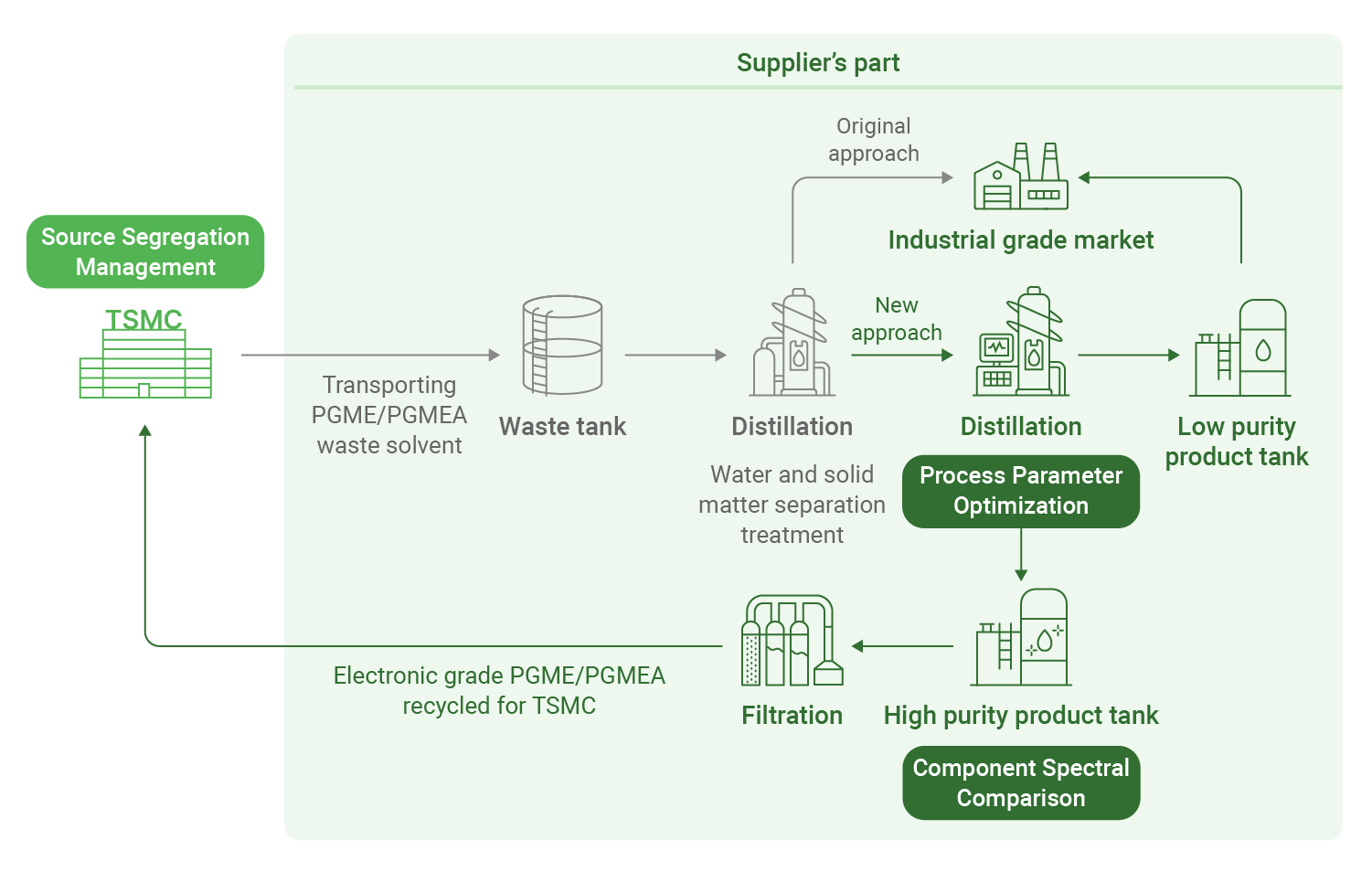
Taiwan Semiconductor Manufacturing Company (TSMC) has successfully validated a technology to recycle waste photolithography solvents—propylene glycol monomethyl ether (PGME) and propylene glycol monomethyl ether acetate (PGMEA)—into electronic-grade materials, reducing new chemical procurement by 16,000 metric tons annually and cutting carbon emissions by 31,100 metric tons. This breakthrough signals tighter supply and higher quality standards for these key solvents in the global semiconductor supply chain, directly impacting chemical distributors and formulators serving the electronics industry.
Technology and process
TSMC, in collaboration with suppliers, developed a three-step recycling process: source segregation management, process parameter optimization, and organic component spectral comparison. The waste liquids are reprocessed into electronic-grade PGME/PGMEA that meet TSMC's strict quality specifications. The technology was validated at Fab 15B and Fab 18A in January 2026 and is scheduled for rollout at five fabs in Q2 2026.
Supply-chain impact
PGME and PGMEA are widely used in semiconductor photolithography for chip cleaning, photoresist dilution, and equipment cleaning. Previously, spent solvents were often downgraded to industrial markets such as coatings, inks, and textiles. TSMC's in-house recycling program will reduce demand for virgin electronic-grade solvents, potentially tightening supply for other buyers and raising the bar for solvent purity specifications.

What buyers should watch
Chemical suppliers and distributors of PGME/PGMEA should monitor TSMC's procurement volume decline and the potential spillover effect on the broader Asian electronics-grade solvent market. The company is also assessing feasibility for recycling n-butyl acetate (NBAC) and hydrofluoric acid (HF), which could further reshape demand patterns for these chemicals. Buyers should prepare for possible price adjustments and stricter quality requirements from semiconductor clients.
China sourcing context
As the world's largest semiconductor foundry, TSMC's circular economy model may influence other chipmakers in China and Taiwan to adopt similar chemical recycling programs. This could reduce overall import demand for virgin electronic-grade solvents from China-based producers, while increasing opportunities for suppliers of recycling and purification equipment.
Source: Read the original report | Published: January 12, 2026