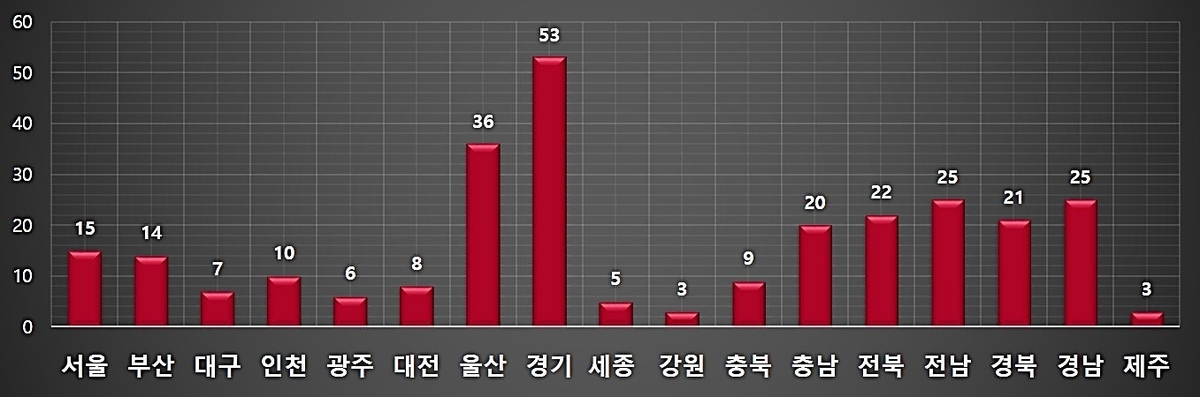
South Korea recorded 282 chemical accidents in 2025, with a notable concentration during the summer months, according to the National Fire Agency's '2025 Domestic Chemical Accident Statistical Analysis' released on February 26. The data highlights regional hotspots and recurring hazardous substances, offering critical insights for overseas chemical buyers sourcing from or operating in South Korea.
Regional accident hotspots
Gyeonggi Province, home to dense industrial complexes, reported the highest number of accidents at 53. Ulsan followed with 36, while Gyeongnam, Jeonnam, Jeonbuk, and Gyeongbuk each recorded 25, 25, 22, and 21 incidents respectively. Changwon saw a sharp surge from an annual average of 2-3 accidents over the past five years to 10 in 2025, demanding heightened vigilance.
Common hazardous substances
Strong acids and bases dominated the accident list. Nitric acid (HNO3), hydrogen chloride (HCl), and sulfuric acid (H2SO4) were frequent offenders, alongside bases like ammonia (NH3) and sodium hydroxide (NaOH). Toxic gases such as hydrogen sulfide (H2S) and carbon monoxide (CO) also caused multiple asphyxiation incidents. In Changwon, four of the ten accidents involved toxic gases, and three involved acidic substances.
Seasonal and material trends

Accidents peaked in July (33) and August (34), attributed to higher temperatures increasing chemical volatility and internal pressure in storage containers. Conversely, incidents involving mercury (Hg) and formaldehyde (aq. HCHO) in school laboratories dropped significantly, indicating improved safety measures in educational settings.
Compliance and logistics signals
The National Fire Agency has identified high-risk substances based on accident frequency and casualty potential, sharing response guidelines with local fire stations. Kim Yeon-sang, head of the National Fire Research Institute, emphasized that prevention and initial response are critical to avoiding large-scale casualties and environmental damage.
What buyers should watch
Overseas importers and distributors sourcing chemicals from South Korea, especially from Gyeonggi, Ulsan, and Changwon, should verify suppliers' summer safety protocols for acids, bases, and toxic gases. The surge in Changwon warrants extra due diligence on local logistics and storage practices. Expect tighter regulatory oversight on high-risk substances, potentially affecting supply continuity.
Source: Read the original report | Published: February 26, 2026