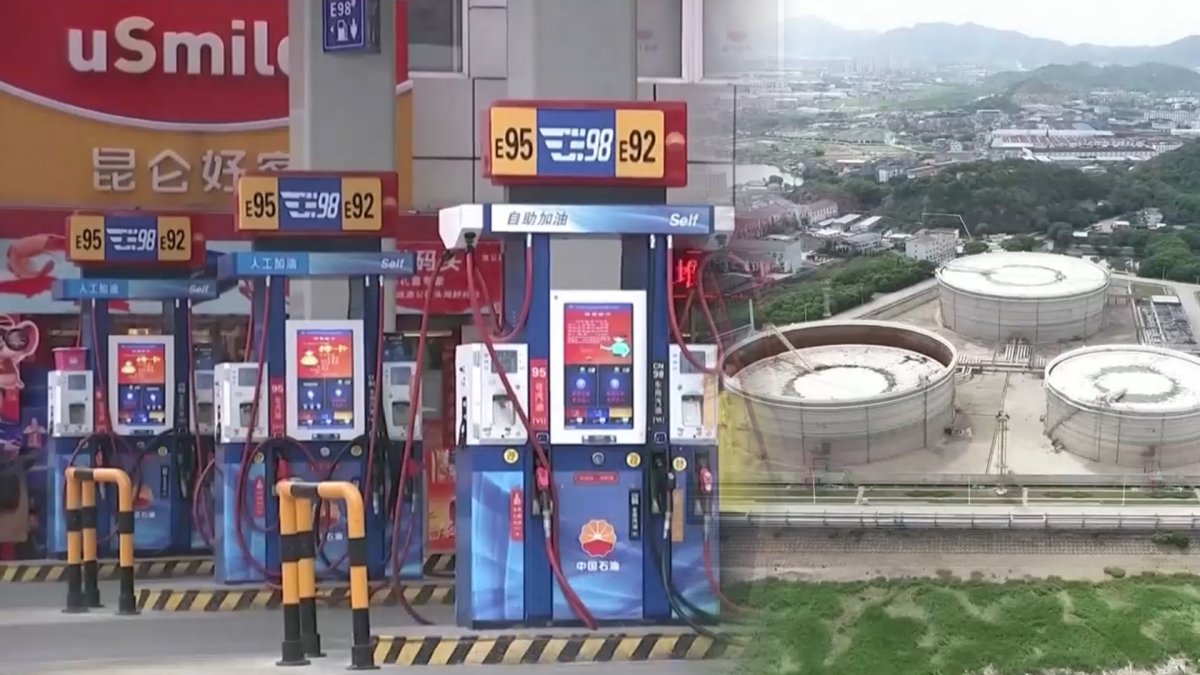
China has effectively suspended exports of refined oil products, triggering supply chain tensions across Asia as the energy shock spreads beyond fuels to chemical feedstocks.
Beijing raised gasoline prices by 695 yuan per ton and diesel by 670 yuan per ton, the largest increase since March 2022. 92-octane gasoline rose by 0.55 yuan per liter (approximately 117 Korean won).
"Previously, a single refueling cost 3,000 yuan; today it will cost an extra 300 yuan (60,000 won)," said a Chinese truck driver.
Sources say Chinese authorities have instructed refiners to halt new export contracts for oil products and to cancel existing orders. Except for supplies of aviation fuel and deliveries to Hong Kong and Macau, China has effectively shifted to prioritizing domestic reserves.
Some refineries, including Zhejiang Petroleum & Chemical and Fujian Refining & Petrochemical, have reduced or halted operations, raising the possibility of reduced Asian oil product supply.
"All parties have the responsibility to ensure stable and uninterrupted energy supply. China will take necessary measures to safeguard its energy security," said Chinese Foreign Ministry spokesman Guo Jiakun.
Disruptions in the Strait of Hormuz have also raised alarms for sulfur (a fertilizer raw material) and industrial methanol procurement. China relies heavily on Gulf-region sulfur imports; any supply disruption would simultaneously raise costs for spring agriculture and the chemical industry.
"This conflict triggered by the United States is not just a regional clash but a century-long struggle over energy and currency hegemony," said Chinese military expert Zhang Yuanwei.
China's combined government and commercial crude oil reserves are estimated at about 78 days of import cover.
Rising oil prices, coupled with higher freight and war insurance premiums, could compound cost pressures across refining, petrochemicals, and logistics.
If China's oil product export halt becomes prolonged, the fallout from the Middle East conflict may extend beyond domestic fuel price increases to reshape Asia's raw material supply chain.
This report is from Beijing by Yonhap News TV's Bae Sam-jin.
Source: Read the original report | Published: March 11, 2026