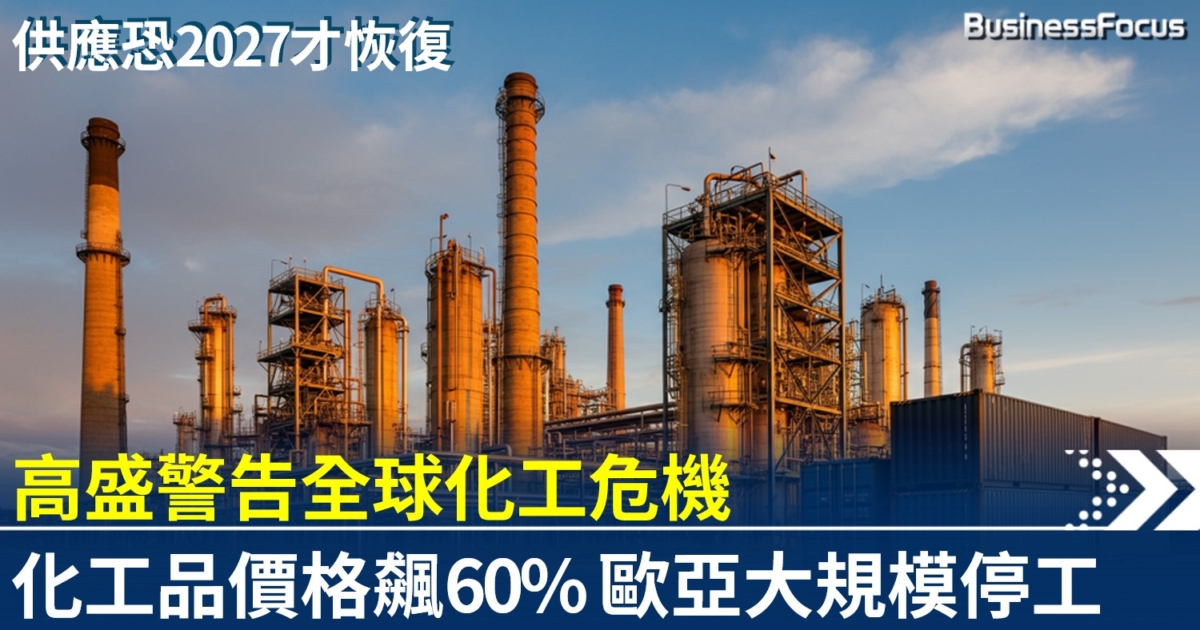
Goldman Sachs has issued a stark warning that disruptions in the Strait of Hormuz are triggering an unprecedented global chemical supply-chain shock. Basic chemical prices have surged over 60% in recent weeks, the fastest pace and largest increase on record, and double the impact of the 2022 European energy crisis. Approximately 20% of global chemical supply is now blocked, with plants across Asia and Europe cutting operating rates to 50-60%, some facing shutdown risks. The bank warns the market is severely underestimating the depth and breadth of the crisis.
Price surge and historical comparison
Goldman Sachs reports that basic chemical prices have soared over 60% within weeks, setting records for both speed and magnitude. In contrast, the 2022 European energy crisis was gradual and mainly affected natural gas, which accounts for only 10-15% of chemical production costs. The current crisis is a sudden shock directly impacting oil and naphtha—core feedstocks for the global petrochemical industry—which together represent about 70% of production costs. Using the 15th week after the conflict as a benchmark, the chemical contract price index shows double the increase and speed compared to the same period in 2022. Asia-Pacific is hit hardest, with about 70% of its chemical raw materials imported from the Middle East, far higher than Europe's 20%. The region is also the core production hub for global chemicals, accounting for roughly 65% of global output and 51% of manufacturing value-added.
Supply-chain impact and recovery timeline
About 20% of global chemical supply is disrupted, with Asia and Europe already showing signs of profit erosion, production cuts, and demand decline. Many petrochemical plants have reduced operating rates to 50-60%, and some face shutdown risks as inventories run dry. The impact has spread from low-value sectors like textiles, packaging, and auto parts to construction and South Korea's semiconductor and memory chip manufacturing, which face shortages of critical chemical solvents—typically byproducts of basic chemical production that cannot be produced independently. Supply recovery will be prolonged. Goldman Sachs estimates that even if the Strait of Hormuz reopens immediately, raw materials will take about 140 days to reach Asian or European petrochemical crackers: 30 days for safe passage clearance, 30 days to clear shipping backlogs, 25 days to reschedule raw material transport, and 55 days to restart crackers and ramp up to full capacity. Physical chemical supply in Asia and Europe may not ease until Q3 2026, with further price upside risk.
What buyers should watch
From a cost perspective, the rise in petrochemical derivative prices will increase sales costs for U.S. and European companies by an average of about 11%, with furniture, medical aesthetics, and apparel sectors hit hardest. Consumer price impacts will lag by 6-12 months, peaking in Q3 or Q4 2026. Hong Kong investors should track two trends: energy stocks like CNOOC (0883) and PetroChina (0857) benefit from high oil prices, but manufacturers reliant on petrochemical raw materials—such as Sunny Optical (2382) and BYD Electronic (0285)—will face rising cost pressures and margin compression.
Source: Read the original report | Published: April 28, 2026