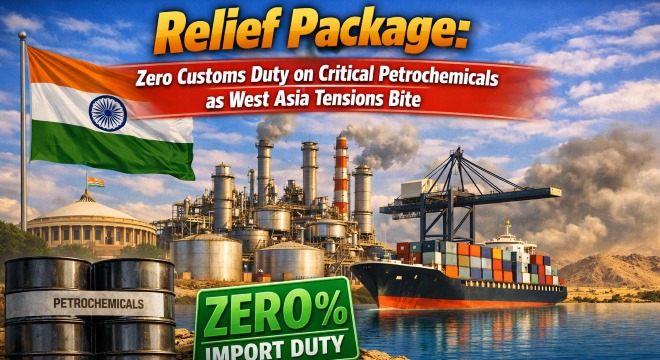
India has temporarily eliminated customs duties on a wide range of petrochemicals and textile raw materials until June 30, 2026, in response to supply-chain disruptions caused by the ongoing West Asia conflict. The three-month exemption covers critical inputs such as PTA, MEG, PP, and PET chips, offering relief to downstream sectors including textiles, chemicals, plastics, packaging, pharmaceuticals, and automotive components. Overseas buyers sourcing from India should monitor price trends and availability as the measure aims to stabilize domestic costs and ensure supply continuity.
Scope of the tariff exemption
The Indian government has set customs duties to zero on 40 product categories, spanning HS codes from 2814 to 4002. Key items include anhydrous ammonia, toluene, styrene, methanol, MEG, PTA, polypropylene, polystyrene, PVC, PET chips, epoxy resins, polycarbonates, and polyurethanes. The exemption is temporary, effective until June 30, 2026, and is designed to mitigate price spikes and supply shortages caused by geopolitical tensions in West Asia.
Sectors expected to benefit
The tariff relief is anticipated to support a broad range of industries reliant on petrochemical feedstocks and intermediates. Textiles, chemicals, plastics, packaging, pharmaceuticals, automotive components, and other manufacturing segments will see reduced input costs. This measure also aims to provide downstream consumer relief by curbing final-product price inflation.
What buyers should watch
Importers and distributors sourcing petrochemicals or textile raw materials from India should track the exemption's impact on domestic pricing and export availability. The temporary nature of the policy means that after June 30, 2026, duties may revert, potentially affecting contract negotiations and inventory planning. Buyers are advised to engage with Indian suppliers early to secure favorable terms during the duty-free window.
China sourcing context
While India's duty exemption may temporarily shift some sourcing dynamics, China remains a dominant supplier of many of the same chemicals, such as PTA, MEG, and polyolefins. Overseas buyers should compare landed costs between Indian and Chinese origins, factoring in logistics, quality, and long-term supply stability. The West Asia conflict continues to influence global petrochemical trade flows, making diversified sourcing strategies prudent.
Source: Read the original report | Published: April 02, 2026