Japanese shipping giant Mitsui O.S.K. Lines (MOL) has established a new Chemical Logistics Division to integrate its marine and land-based chemical storage operations, aiming to become a leading chemical logistics provider. The company plans to invest ¥390 billion (approx. US$2.6 billion) over five years from fiscal 2026, targeting ¥45 billion in pretax profit by fiscal 2030. This move signals a strategic shift for overseas chemical buyers who rely on integrated supply-chain services across Asia, Europe, and the US.
Division structure and fleet
The new division combines MOL's chemical tanker, methanol carrier, product tanker, and tank terminal businesses. As of March 2026, the operating fleet includes 112 chemical tankers, 19 methanol carriers, and 20 product tankers. MOL operates seven tank terminals in key chemical hubs: Rotterdam (Netherlands), Antwerp and Lillo (Belgium), and Houston, Seabrook, Freeport, and Baton Rouge (US). The division's scale and global network are designed to serve importers and distributors requiring seamless sea-to-storage logistics.
Investment and growth targets
MOL plans to invest ¥390 billion in chemical logistics over the five years from fiscal 2026. Pretax profit targets are ¥12 billion for fiscal 2026, ¥13 billion for fiscal 2027, and ¥45 billion by fiscal 2030. The company aims to expand tank storage capacity by 30% to 4 million cubic meters by around 2030, up from the current 3 million cubic meters. This capacity growth will support rising demand for bulk chemical storage, especially for products like ETBE, benzene, acetic acid, ethylene glycol, and ethanol.
Acquisitions and market position

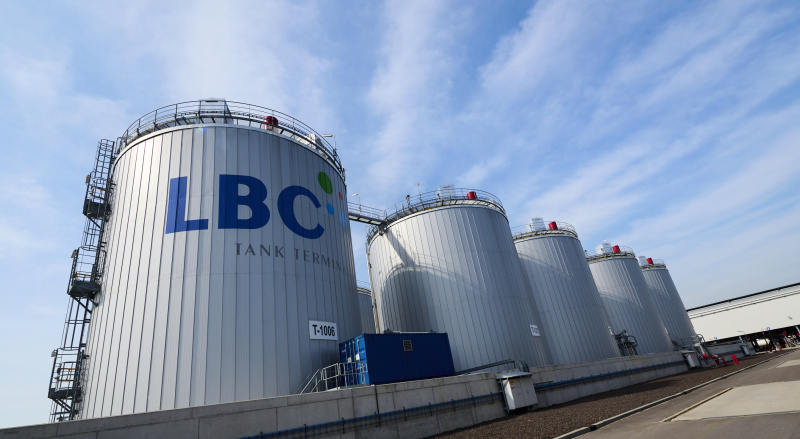
MOL has built its chemical tanker fleet through acquisitions: Nordic Tankers in 2019 and Fairfield Chemical Carriers in 2024, making it one of the world's largest chemical tanker operators. In 2025, it acquired Dutch tank terminal operator LBC Tank Terminals for approximately ¥260 billion, marking its entry into land-based chemical storage. The company also holds a 20% stake in Den Hartogh, a Dutch specialist in tank-container chemical transport, enabling it to offer both bulk and small-lot shipping solutions.
Asia expansion and new energy focus
MOL is exploring tank terminal opportunities in Asia, particularly Southeast Asia, where chemical demand is growing. It has secured development rights for an ammonia storage terminal in Vlissingen, Netherlands, with a final investment decision expected once customer contracts are secured. The terminal, slated to start operations around 2029, may also include liquefied CO2 storage for carbon capture and storage projects. This aligns with MOL's strategy to participate in upstream production and clean methanol transport for stable revenue.
What buyers should watch
Overseas chemical buyers should monitor MOL's integrated sea-land logistics model, which could offer cost efficiencies and supply-chain reliability. The expansion of tank storage in Europe and potential new terminals in Asia may provide additional storage options for bulk chemicals. MOL's ability to handle both large-volume tanker shipments and small-lot tank-container deliveries through its Den Hartogh stake gives it flexibility to serve diverse customer needs. Importers and distributors should evaluate how MOL's growing network might impact freight rates and storage availability in key regions.
Source: Read the original report | Published: April 17, 2026