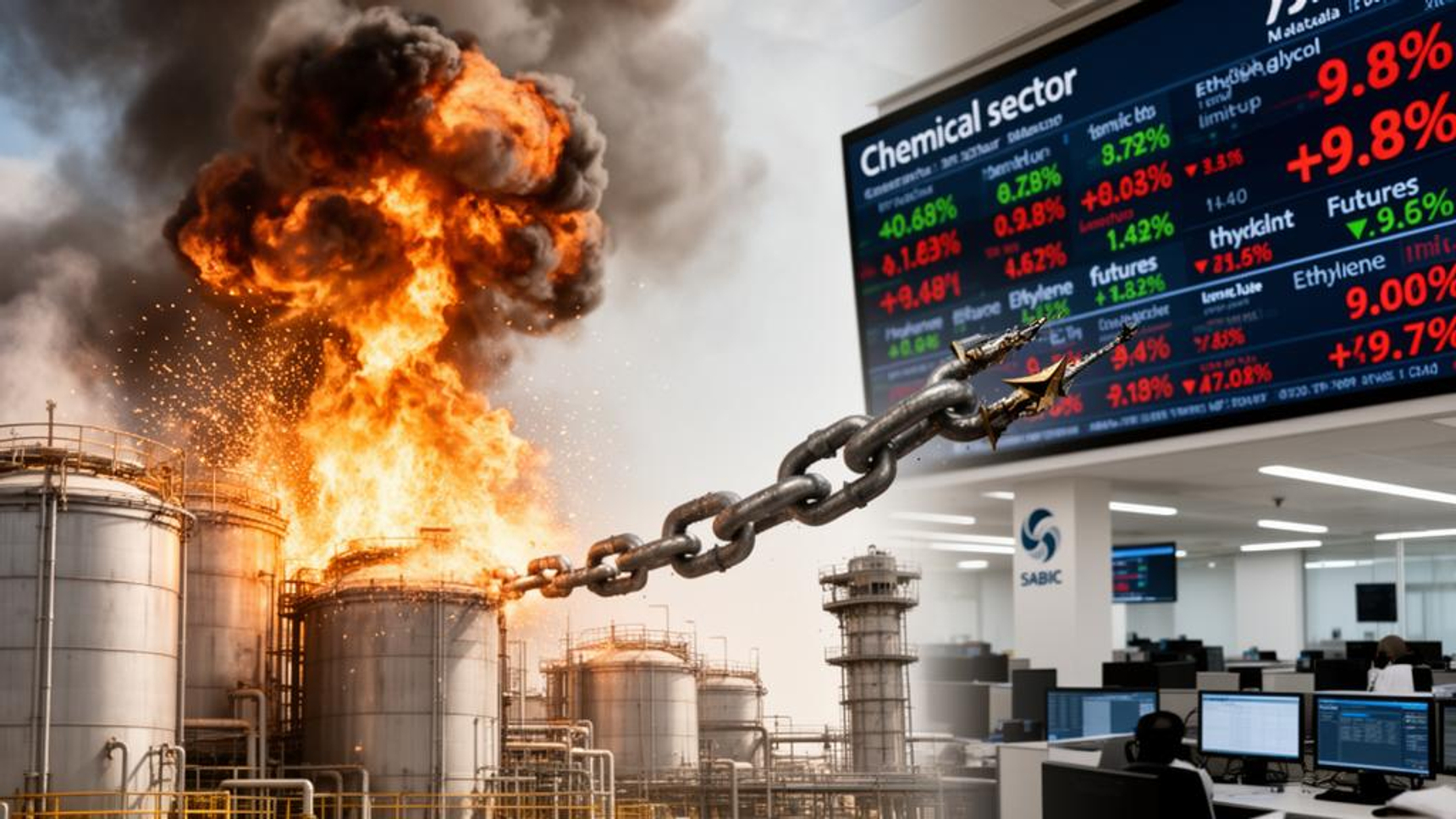
On April 7, escalating geopolitical tensions in the Middle East led to coordinated attacks on Iran's largest petrochemical complex and Saudi Arabia's key Jubail Industrial City, sparking severe global supply concerns. This directly drove Chinese ethylene glycol futures to hit daily price limits, while methanol and propylene futures surged. The chemical sector led gains in China's A-share market, highlighting supply-chain vulnerabilities for overseas buyers reliant on Middle East feedstocks.
Attack details and immediate market reaction
According to Xinhua News Agency, the Israel Defense Forces announced an airstrike on a major petrochemical facility in Iran's Asaluyeh region, one of the country's largest complexes. Israeli Defense Minister Israel Katz confirmed the strike, part of a series targeting Iran's two biggest petrochemical hubs, reportedly crippling over 85% of Iran's petrochemical export capacity. Iranian media also reported explosions at plants in Bushehr province.
Nearly simultaneously, Iran's Fars News Agency reported widespread explosions in Saudi Arabia's Jubail Industrial City, a global petrochemical powerhouse producing about 60 million tonnes annually (6-8% of world output). The site hosts SABIC, the Sadara project (Dow Chemical), and a Saudi Aramco-TotalEnergies joint venture. The back-to-back attacks on two of the world's most critical export hubs have sent shockwaves through global supply chains.
Futures market surge: Ethylene glycol, methanol, propylene
On the afternoon of April 7, Chinese futures markets saw violent moves. On the Dalian Commodity Exchange, ethylene glycol main contract hit the daily limit up, closing at 5,706 yuan/tonne (approx. $790), a rise of about 11%. On the Zhengzhou Commodity Exchange, methanol surged 9% and propylene jumped 7%. These basic chemicals are essential for polyester, plastics, and synthetic fibers, and the supply shock triggered immediate repricing.
Stock market rally and policy tailwinds
China's A-share market saw the chemical sector lead gains, with many stocks hitting daily limits in sub-sectors like chemical fibers, raw materials, and petrochemicals. Analysts attribute the rally to a triple catalyst: supply shock, price hike expectations, and policy support. Global chemical majors have been raising prices—Dow Chemical doubled its polyethylene price increase, and Wacker Chemie raised prices on about 2,800 silicone products—adding upward pressure.
On the policy front, China's Ministry of Industry and Information Technology and six other departments issued the "Petrochemical and Chemical Industry Aging Equipment Renewal and Transformation Action Plan (2026-2029)," aiming to complete equipment upgrades by 2029. This resonates with the current supply tightness, providing medium-term demand support for the sector.
What buyers should watch: Supply-chain ripple effects
The impact is expected to cascade from upstream raw materials to downstream manufacturing. Ethylene glycol is key for polyester fibers and PET bottles; methanol is a building block for many chemicals; propylene is a monomer for plastics and synthetic rubber. Supply tightness and price increases will inevitably raise production costs across textiles, plastics, automotive, electronics, and high-end manufacturing.
Market observers note that geopolitical tensions are now penetrating from energy (crude oil) into chemical intermediates and broader manufacturing chains. For overseas importers and distributors, securing stable supply of these critical raw materials becomes paramount. Chinese chemical firms may see short-term earnings boosts from product price increases, but face challenges in managing rising feedstock costs and leveraging equipment upgrade policies for long-term transformation.
As of now, the exact production capacity lost remains under assessment. The situation warrants close monitoring for further developments and lasting impacts on global petrochemical markets.
Source: Read the original report | Published: April 07, 2026