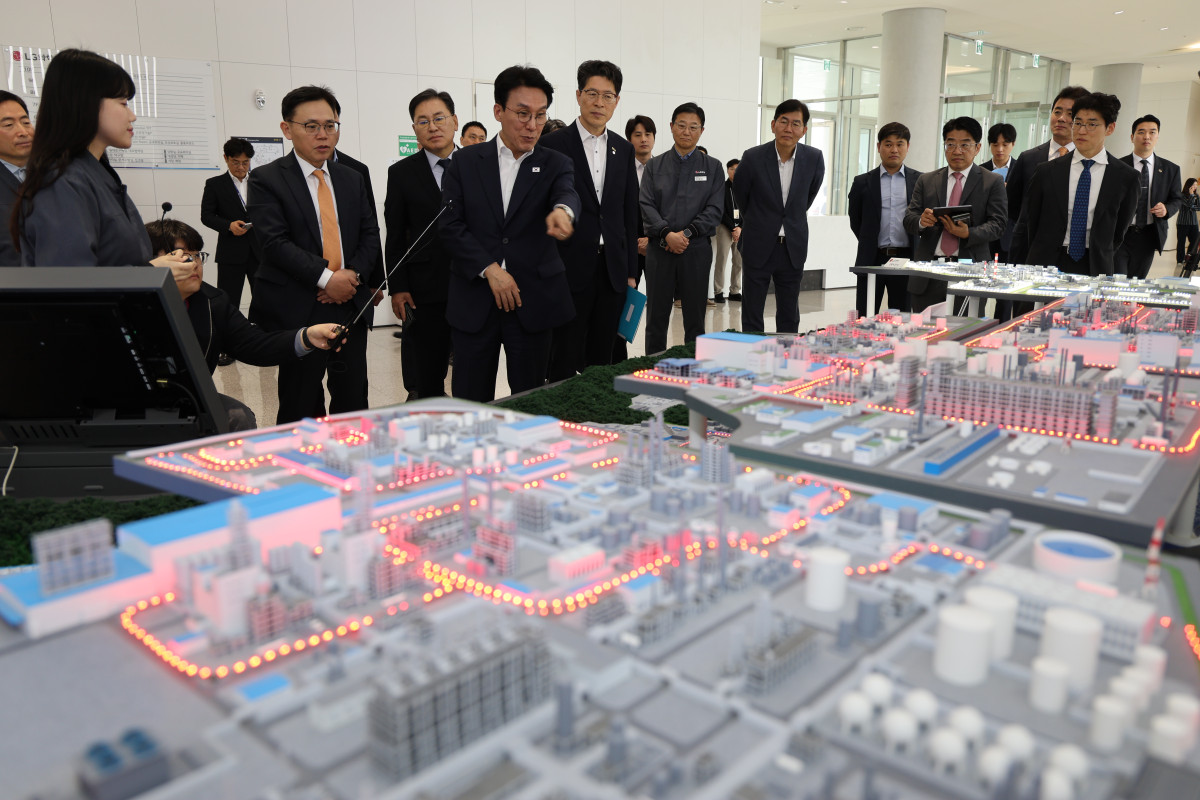
South Korean Prime Minister Kim Min-seok visited LG Chem's Yeosu plant on April 23 to inspect the petrochemical supply chain amid prolonged Middle East tensions. The visit underscores government concern over naphtha-based production vulnerabilities and potential disruptions to raw material imports, which could impact downstream industries from automotive to medical supplies.
Government supply-chain review
Prime Minister Kim Min-seok toured LG Chem's Yeosu plant in Jeollanam-do on April 23, examining production processes and supply-chain structures. The Yeosu National Industrial Complex, spanning about 986万平方米, hosts over 140 companies and employs roughly 20,000 people, making it South Korea's largest petrochemical hub. LG Chem's Yeosu facility alone employs about 3,000 workers and has operated since 1976, starting with a PVC plant.
Production structure and risks
Petrochemical production relies on naphtha derived from crude oil, cracked at high temperatures in NCC (naphtha cracking center) units to produce ethylene, propylene, and other base chemicals. These feedstocks then move via pipeline to downstream plants for intermediate and final products. The Yeosu complex comprises four production zones: NCC, intermediates, and final polymer units, producing PVC, ABS, and other materials used in windows, pipes, construction materials, toys, and medical gloves.
Middle East conflict impact
According to the Ministry of Trade, Industry and Energy, the prolonged blockade of the Strait of Hormuz threatens petrochemical raw material supply. The government plans to secure alternative import sources quickly if supply-chain disruptions occur. This visit is part of broader efforts to stabilize key industries amid oil price volatility and raw-material procurement risks.
High-value materials showcased
During the tour, LG Chem highlighted advanced materials including carbon nanotubes (CNT) for battery conductivity enhancement and solar panel films for renewable energy applications. These products represent the company's shift toward higher-value, technology-driven chemicals that align with global energy transition trends.
What buyers should watch
Overseas buyers of petrochemical derivatives from South Korea should monitor potential supply tightness for naphtha-based products such as ethylene, propylene, PVC, and ABS. The government's proactive stance on securing alternative import routes may mitigate some risks, but prolonged Middle East instability could lead to price volatility or allocation changes. Buyers may want to diversify sourcing or increase inventory buffers.
Source: Read the original report | Published: April 23, 2026