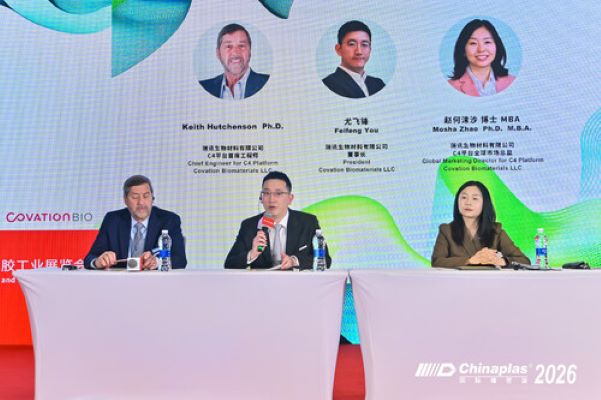
Covation Biomaterials (CovationBio) has achieved mechanical completion of its first commercial plant for the C4 product platform in Qidong, Jiangsu Province, China, and launched the Xatryx brand for its new bio-based PTMEG portfolio. The facility will produce bioTHF and bio-based polytetramethylene ether glycol (PTMEG), marking a major step in scaling renewable chemical production and offering overseas buyers a new source of sustainable intermediates for downstream applications.
Facility and investment overview
The C4 facility, built around CovationBio's proprietary process technology, represents a total investment of RMB 10 billion and is being developed in three phases. Once fully complete, it is expected to reach a total capacity of 500,000 tons per year of bio-based materials. Phase one, now mechanically complete, delivers 50,000 tons per year of commercial capacity for both bioTHF and bioPTMEG, with commercial production scheduled to begin in the second half of 2026.
Xatryx brand and technology
Alongside the milestone, CovationBio officially launched the Xatryx brand, which will cover its new portfolio of non-food, bio-based PTMEG products manufactured at the site. The platform uses the company's Advanced ThermoChemical technology to convert abundant, non-food agricultural by-products directly into high-value chemical feedstocks, positioning Xatryx as a key material in next-generation sustainable manufacturing.
What buyers should watch
Overseas importers and formulators in the polyurethane, elastomers, and specialty chemicals sectors should monitor the ramp-up of bioTHF and bioPTMEG supply from this facility. The 50,000-ton phase-one capacity, when operational in H2 2026, could offer a renewable alternative to fossil-based intermediates, potentially impacting sourcing strategies for sustainable product lines. Early engagement with CovationBio may provide supply security as the facility scales.
China sourcing context
The Qidong location in Jiangsu Province places the facility in a well-established chemical manufacturing hub with strong logistics links to major ports, facilitating export to global markets. The use of agricultural by-products as feedstock aligns with China's push for circular economy and bio-based industrial development, which may offer cost advantages and regulatory support for buyers seeking to diversify their supply chains with renewable chemicals.
Source: Read the original report | Published: June 11, 2026