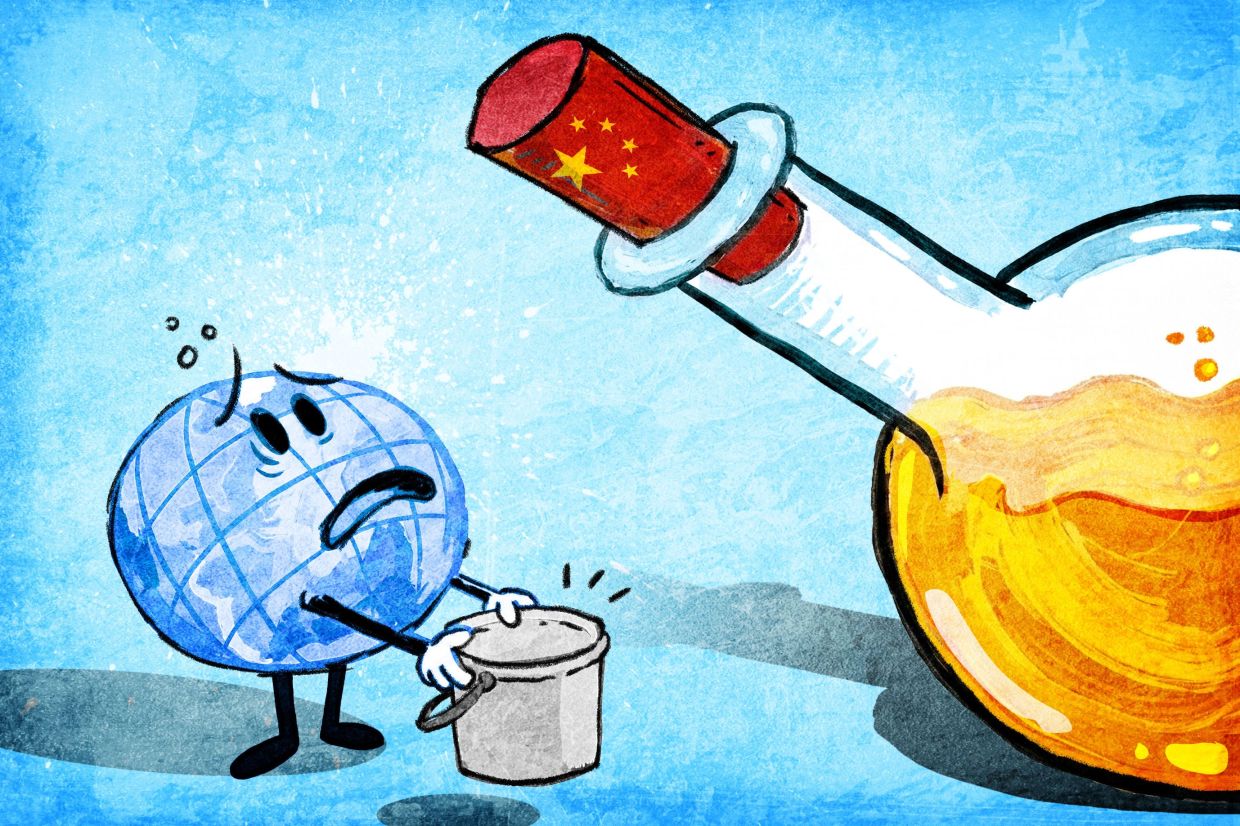
China's reported ban on sulphuric acid exports, expected to take effect in May, could severely disrupt global supply chains for fertilizers, battery metals, and copper mining. As the world's largest exporter, accounting for 23% of global shipments, any restriction would tighten seaborne markets and drive up prices, leaving overseas buyers scrambling for alternatives.
Supply-chain impact
China exported 3.33 million tonnes of sulphuric acid from May to December last year, according to Argus Media. A full export suspension could remove at least 3 million tonnes from the seaborne market. In the first three months of this year, exports had already dropped 50% year-on-year to 528,000 tonnes, following earlier quota cuts to around 700,000 tonnes for January–April.
Reasons behind the ban
Analysts point to multiple drivers: prioritizing domestic fertilizer production amid global sulphur supply disruptions from the Iran conflict and Strait of Hormuz issues; securing raw materials for battery supply chains; and supporting food security. One company executive noted the restriction could be part of a "national project" to secure inputs for lead-acid and lithium-ion batteries.
What buyers should watch
Overseas buyers in Chile, Indonesia, Saudi Arabia, Morocco, India, and the United States—top destinations for China's sulphuric acid—face immediate supply risks. The restriction is expected to last through at least the end of 2026, according to Peng Yang of Moco Tech. Downstream products such as monoammonium phosphate (MAP) and diammonium phosphate (DAP) fertilizers will also be affected.
Compliance and logistics signals
Around April 9–10, several Chinese sulphuric acid producers and smelters received internal directives to stop exporting by-product acid from copper and zinc smelting. At least one major international buyer was directly informed by its Chinese supplier. Western OEMs are now questioning whether magnesium or other critical materials could be next.
China sourcing context
China has quietly become a "linchpin" in global sulphuric acid trade, with no meaningful substitutes available from other major exporters like South Korea and Japan. The ban underscores Beijing's willingness to use chemical export controls as a strategic tool, similar to its rare earth policies, which have already influenced US-China trade dynamics.
Source: Read the original report | Published: May 02, 2026