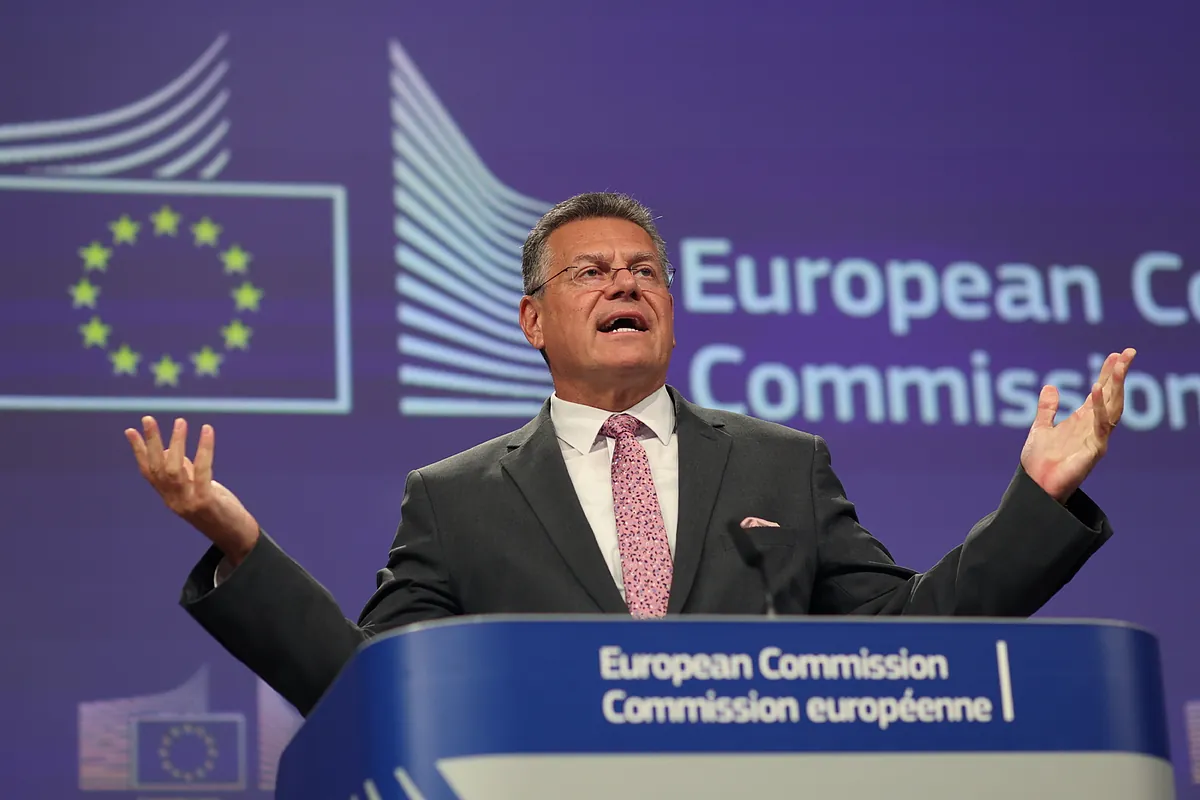
The European Union is developing regulations that could require European companies to purchase critical components from at least three different suppliers, aiming to reduce the bloc's dependence on China. The proposed rules target manufacturers in key sectors such as chemicals and industrial machinery, which have complained about a surge in cheap Chinese imports. This move responds to Beijing's export restrictions on key technologies and seeks to address the EU's daily trade deficit of €1 billion.
Proposed supplier diversification rules
The new law would set maximum limits, estimated between 30% and 40%, on what can be bought from a single supplier. The remaining components would need to be sourced from at least three different suppliers, not all from the same country. EU Trade Commissioner Maros Sefcovic aims to protect companies from what he describes as China's "use of trade as a weapon," following disruptions to European auto production lines last year due to Chinese export controls on rare-earth magnets and other components.
Tariffs and trade measures
Sefcovic plans to impose punitive tariffs on chemicals and machinery from China to curb the drastic increase in imports that has shaken European manufacturers. A senior European Commission official stated, "In many sectors, we are becoming increasingly dependent on Chinese exports. Dependencies have a price, so we must redouble our efforts to diversify." The official warned that China's massive investment in manufacturing, with high subsidies reported by the IMF, poses an urgent threat to the EU's industrial base.
Timeline and scope
The plans are in an early stage but will be presented at a Commission meeting dedicated to China on May 29. If commissioners agree, EU leaders could approve a detailed proposal at a summit in late June. The rules would not only cover China, as some raw materials or chemical inputs come mostly from a few countries, such as helium from the US and Qatar, and cobalt from the Democratic Republic of Congo and Indonesia.
What buyers should watch
European chemical and machinery buyers should monitor the May 29 Commission meeting and the potential June summit for formal proposals. The EU may also use its network of free trade agreements with over 70 countries to boost investment and build supply chains with producers. Traditional anti-dumping and anti-subsidy instruments take up to two years, so these new measures aim to provide faster relief. However, Chinese companies may absorb tariffs due to lower operating costs, maintaining competitive pricing.
China sourcing context
China has stated that the scale of its industrial policy has been exaggerated and accuses the EU of "applying protectionism under the pretext of 'fair competition'." The EU's chemical sector has reported record complaints, with one industry leader saying the sector is "on the brink of collapse." A Commission official noted, "We will not have the time or human resources to investigate them all. Today, in two years, you can lose the entire industry." Safeguards, which last five years, have already been proposed for steel, with higher tariffs and reduced quotas to maximize impact on China.
Source: Read the original report | Published: May 18, 2026