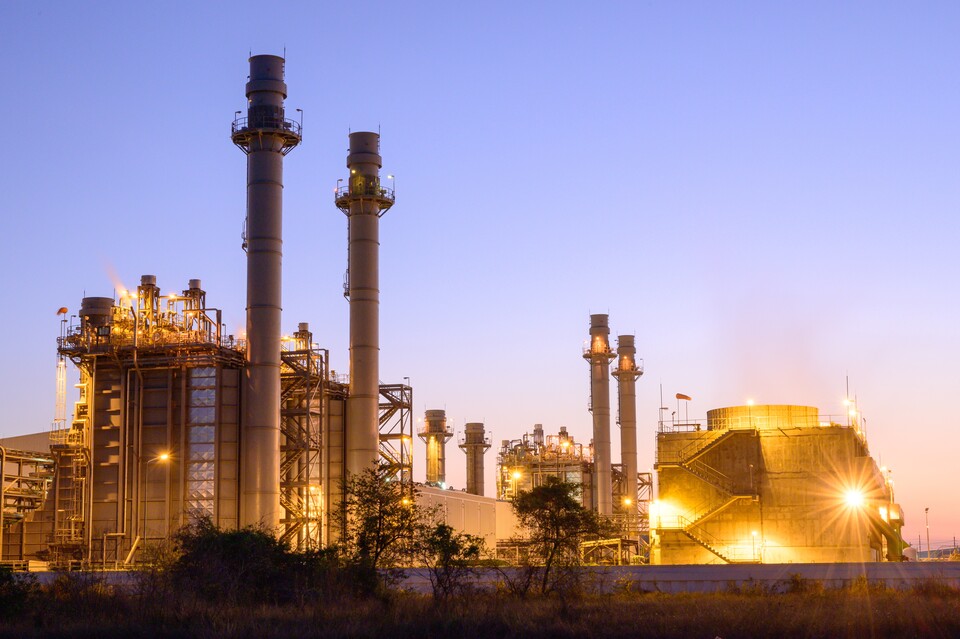
South Korea's refining and petrochemical sectors are set for diverging fortunes in the second half of 2025, as Middle East supply disruptions and sustained high oil prices boost refining margins but squeeze naphtha-based petrochemical producers. This shift, combined with major projects like S-Oil's Shaheen and restructuring at Lotte Chemical in Daesan and Yeosu, is accelerating industry realignment, directly impacting global chemical buyers sourcing from Korea.
Supply-chain impact
The core issue is not just higher oil prices but physical supply-chain damage. Yuanta Securities estimates that restoring crude flows after the Hormuz blockade in March 2025 will take about eight months. Dubai crude is forecast at $110/bbl in Q2, $95/bbl in Q4, and $75-85/bbl through 2026. OECD oil inventories fell from 2.83 billion barrels in February to 2.67 billion in April. In the Middle East Gulf, about 2.8 million b/d of refining capacity and 13 million tons of gas facilities have been disrupted. Refinery repairs may take weeks to over a year, meaning jet fuel, diesel, and naphtha supply normalization will be prolonged.
Refining sector outlook
Singapore's complex refining margins, after spiking in March-April, are expected to stay strong at $10-15/bbl through year-end. Global refining utilization is projected to rise from 83.9% in 2025 to 88.2% in 2026. S-Oil is a key beneficiary, swinging to a large Q1 profit on inventory gains and margin improvement. Its Shaheen project in Ulsan, a KRW 9.5 trillion mega petrochemical complex, is 96.9% complete (EPC) as of late April, targeting mechanical completion by end-June 2025. The NCC unit will start in Q4 2025, and refining units in early 2027. SK Innovation, with SK Energy's refining and the merged SK E&S's LNG/power portfolio, posted Q1 operating profit of KRW 2.16 trillion, a sharp turnaround. The company warns that even if Middle East tensions ease, refining production and logistics normalization will take time.
Petrochemical restructuring pressure
For naphtha-based petrochemical makers, high oil prices raise feedstock costs faster than product prices. The ethylene-naphtha spread rebounded briefly in March-April but is correcting again. Yuanta sees the 2025 spread at about $270/ton, improved from ~$200/ton in 2024 but still near breakeven. Global ethylene utilization is forecast at 83.0% in 2026 but falling to 79% in 2027. Lotte Chemical posted Q1 operating profit of KRW 73.5 billion on sales of KRW 4.99 trillion, but this is attributed to lag effects, rate adjustments, and cost control, not structural recovery. Overcapacity from China and the Middle East, high naphtha dependence, and commodity oversupply continue to cap margins.
What buyers should watch
Government-led restructuring is accelerating. The government approved a Daesan petrochemical restructuring plan involving HD Hyundai Oilbank, Lotte Chemical, and HD Hyundai Chemical. Lotte Chemical's Daesan operations will be split and merged with HD Hyundai Chemical, with each party investing KRW 600 billion for a 50:50 stake. The government offers over KRW 2 trillion in financial, tax, permit, electricity, and R&D support. Industry expects similar moves in Yeosu by December 2026 and Ulsan after H2 2027. LG Chem, Yeochun NCC, Hanwha Solutions, and DL Chemical are also under restructuring pressure. Buyers should monitor potential supply disruptions from plant closures or integration, and possible shifts toward higher-value products.
China sourcing context
South Korea's petrochemical restructuring mirrors broader Asian trends of capacity rationalization amid weak margins. For Chinese buyers, this may reduce availability of commodity-grade ethylene derivatives from Korea in the medium term, while increasing competition from Middle Eastern and Chinese domestic capacity. The Daesan integration could create a more competitive entity focused on cost efficiency, potentially affecting pricing dynamics for polymers and solvents in the region.
Source: Read the original report | Published: May 29, 2026