
South Korea's Customs Service (KCS) has announced new measures to diversify energy and petrochemical feedstock imports, reducing reliance on the Middle East. Effective immediately, a direct-shipment exemption for US crude oil under the FTA will ease tariff benefits, while Australian naphtha alternatives will enter duty-free. These moves are expected to add approximately 4 million barrels of US crude and 2.5 million tons of naphtha substitutes annually, directly impacting global chemical supply chains and pricing for Asian buyers.
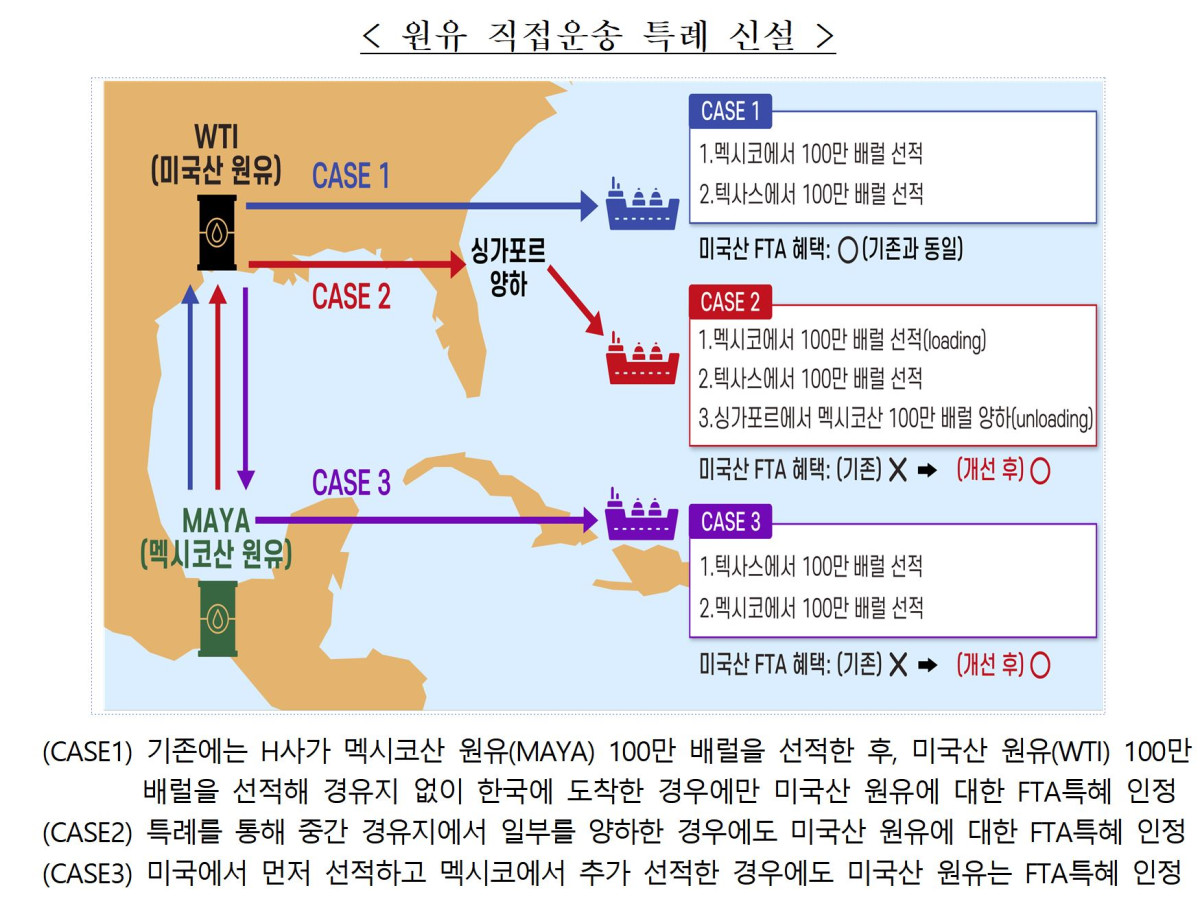
Direct-shipment exemption for US crude oil
KCS has implemented a 'direct-shipment special case' for US crude oil imports, relaxing the strict FTA direct-transport rule. Previously, US crude transiting a third country or partial unloading at an intermediate port could not receive FTA preferential tariffs. Now, vessel tracking data (AIS) and crude measurement records alone can prove direct shipment, eliminating a major barrier. Industry sources say this will significantly boost US crude procurement, with one refiner noting that last year it forfeited FTA benefits on 4 million barrels due to documentation issues.
Duty-free entry for Australian naphtha alternatives
KCS has applied a fast-track customs classification review for Australian naphtha substitutes, classifying them as petroleum products rather than crude oil. This removes the 3% tariff and storage obligations, allowing immediate use in production. The substitutes contain 80-90% naphtha, offering higher yield than conventional feedstocks. KCS estimates this will secure 2.5 million tons of alternative feedstock annually, equivalent to about 16% of South Korea's total naphtha imports last year, stabilizing production of everyday petrochemical goods like garbage bags and syringes.
Malaysia crude certificate delays addressed
KCS is also tackling delays in Certificate of Origin (CO) issuance for Malaysian crude oil, which currently takes over six months on average. This forces companies to pay tariffs upfront and seek refunds later. KCS is negotiating with Malaysian authorities to shorten the issuance period, which could improve cash flow and sourcing flexibility for refiners.
What buyers should watch
For overseas chemical importers and distributors, South Korea's reduced Middle East dependence may shift regional crude and naphtha pricing dynamics. The US crude exemption could increase spot availability of light sweet crude, while duty-free Australian naphtha alternatives may pressure conventional naphtha prices. Buyers should monitor South Korean refinery and petrochemical plant feedstock shifts, as these changes could affect export volumes and product costs for polymers, solvents, and other downstream chemicals.
China sourcing context
South Korea's move parallels China's own efforts to diversify crude and naphtha sources amid geopolitical tensions. However, China has focused more on Russian and Iranian discounted barrels, while South Korea prioritizes US and Australian supplies under FTA frameworks. This divergence may create arbitrage opportunities for traders in Asian chemical markets, particularly for naphtha-based derivatives.
Source: Read the original report | Published: May 26, 2026