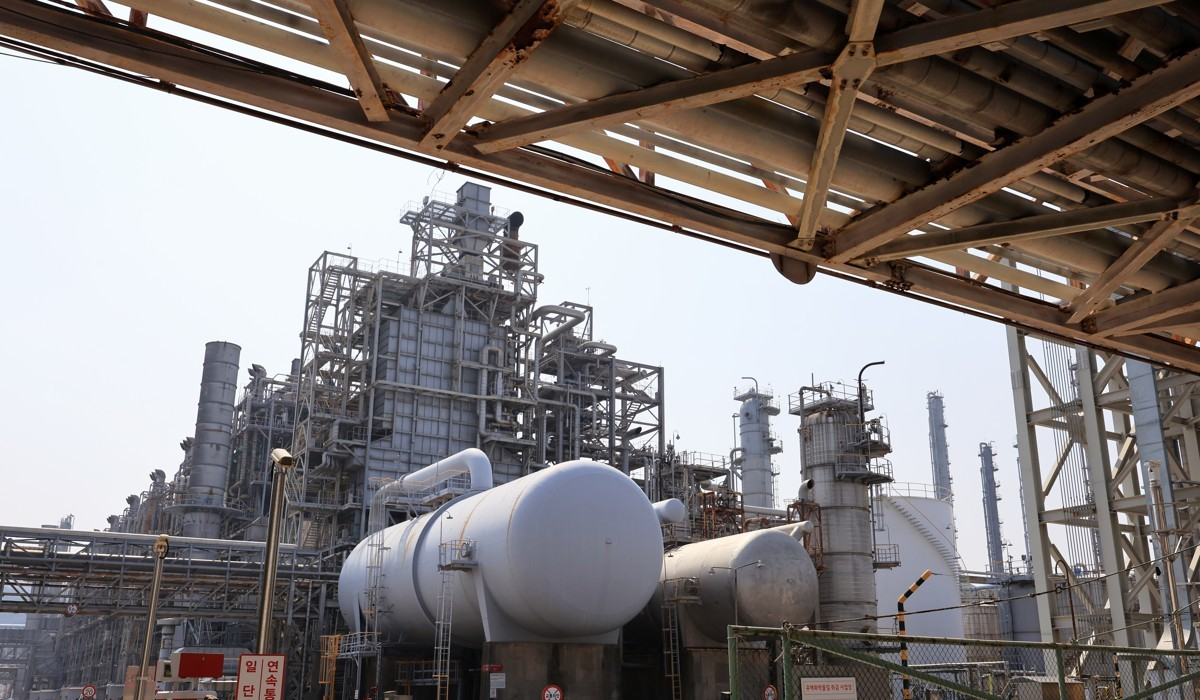
South Korean petrochemical producers, having posted a clear earnings turnaround in Q1, are expected to extend their strong performance into Q2, driven by lingering supply-chain disruptions from the Hormuz Strait blockade. Even if the blockade is lifted, normalization of supply chains will take time, sustaining favorable market conditions for overseas buyers sourcing from the region.
Q1 earnings rebound
After a sluggish January-February period marked by Chinese oversupply and weak downstream demand, the market reversed sharply in March as Middle East risks escalated and the Hormuz Strait blockade pushed product prices higher. A lagging effect—where naphtha procured at lower pre-war prices was fed into production while product prices rose first—significantly improved operating profits for major players. Lotte Chemical reported Q1 consolidated sales of KRW 4.99 trillion and operating profit of KRW 73.5 billion, swinging to a black from a year earlier. LG Chem posted a KRW 49.7 billion operating loss overall due to battery weakness, but its petrochemical division recovered profitability. Hanwha Solutions achieved KRW 3.88 trillion in sales and KRW 92.6 billion in operating profit, while Kumho Petrochemical posted KRW 1.78 trillion in sales and KRW 59.4 billion in operating profit.
Q2 profit forecasts surge
Securities firms expect even sharper Q2 improvements. Mirae Asset Securities forecasts LG Chem's Q2 consolidated operating profit at KRW 415 billion, predicting a return to black. KB Securities estimates Lotte Chemical's Q2 operating profit at KRW 255.9 billion, 231% above consensus, while Mirae Asset sees KRW 90.8 billion, up 24% quarter-on-quarter. Hanwha Solutions is projected to post KRW 277.2 billion, a 199% surge from Q1. For Kumho Petrochemical, BNK Investment & Securities and Hana Securities estimate KRW 158.7 billion and KRW 165.4 billion respectively, with NH Investment & Securities at KRW 133.7 billion, all above market expectations.
Supply constraints and margin outlook
The bullish outlook is underpinned by persistent supply tightness. Global ethylene supply is estimated to have fallen about 28% due to the Middle East conflict, while plastics account for only 0.1-2% of final product costs. Analysts say customers will pay premiums to secure supply if shortages persist. Petrochemical margins rose from $196 per ton in Q1 to $273 per ton in April-May. Even after a ceasefire, inventory, transport, and plant issues are expected to keep margins elevated above historical levels for some time.
What buyers should watch
Despite the upbeat sentiment, some analysts caution that the rebound is a temporary shock-driven improvement rather than a structural recovery. Major naphtha cracker operators cut utilization to 70-80% in March and further to 60-70% in April. Prolonged conflict could pressure profitability through higher naphtha procurement costs and low operating rates. Industry voices are urging accelerated restructuring during this boom period. Overseas buyers should monitor supply availability and pricing closely, as premium-driven procurement may persist.
Source: Read the original report | Published: May 30, 2026