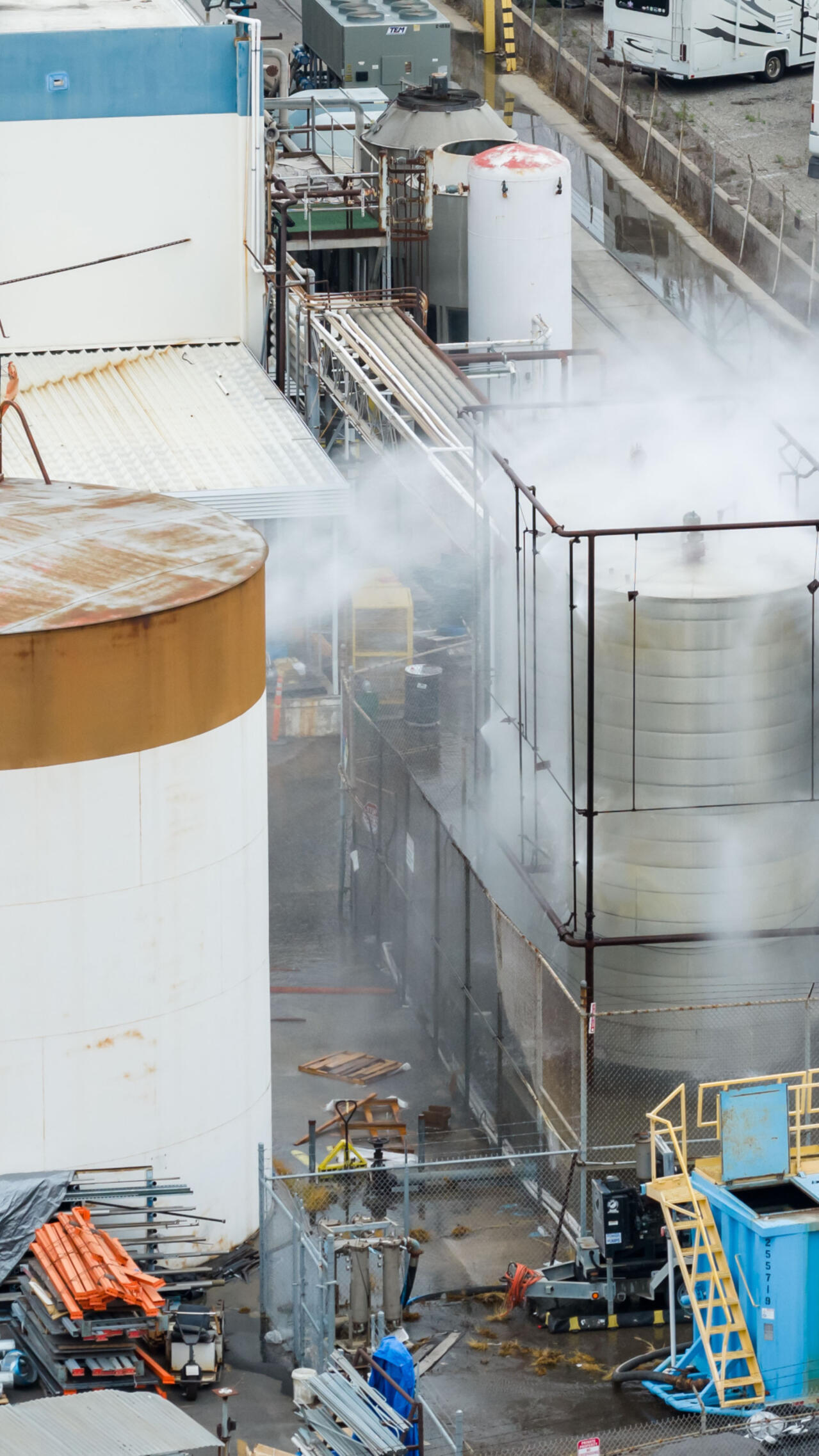
A damaged chemical tank in Garden Grove, Orange County, Southern California, may have developed a crack that could lower the risk of a catastrophic explosion, fire officials said Sunday (May 24). The tank, containing approximately 26,000 liters of methyl methacrylate—a flammable liquid used in plastics manufacturing—has been unstable since Thursday, prompting the evacuation of about 50,000 residents. No timeline for their return has been given, and the evacuation order remains in effect as authorities continue to monitor the situation.
Incident overview
The tank, located at a GKN Aerospace facility in Garden Grove, has been in a dangerous state since Friday (May 22). It holds methyl methacrylate, a colorless, flammable liquid classified as a hazardous substance by the U.S. federal government. The leak was first detected on Thursday. Authorities are building protective barriers to prevent toxic chemicals from entering nearby river systems or flowing into the ocean several kilometers away.
Risk reduction and monitoring
Fire officials reported Sunday that a crack may have formed in the tank, potentially releasing some internal pressure and reducing the explosion risk. The tank's internal temperature had been rising, and crews have been spraying water to cool it. Air monitoring shows pollution levels in the evacuated area remain within normal ranges. No injuries have been reported, and the cause of the incident is still under investigation.
Chemical hazards and comparison
Methyl methacrylate is used in resins, plastics, and products like dentures. The U.S. Environmental Protection Agency (EPA) warns it can irritate the lungs, eyes, and skin, and high exposure may cause reduced lung function, dizziness, and memory impairment. Experts note that the total chemical volume in this tank is far less than the approximately 115,000 gallons of vinyl chloride released in the 2023 Ohio train derailment. An explosion here would likely cause severe structural damage and significant injuries near the tank.
What buyers should watch
Importers and distributors of methyl methacrylate or related monomers should monitor this incident for potential supply disruptions from the affected facility. While the tank's contents are relatively small compared to major chemical disasters, any prolonged shutdown or regulatory scrutiny at GKN Aerospace could impact regional supply chains for acrylic plastics and resins. Buyers should also watch for any changes in U.S. hazardous materials transport or storage regulations that may follow this event.
Source: Read the original report | Published: May 25, 2026