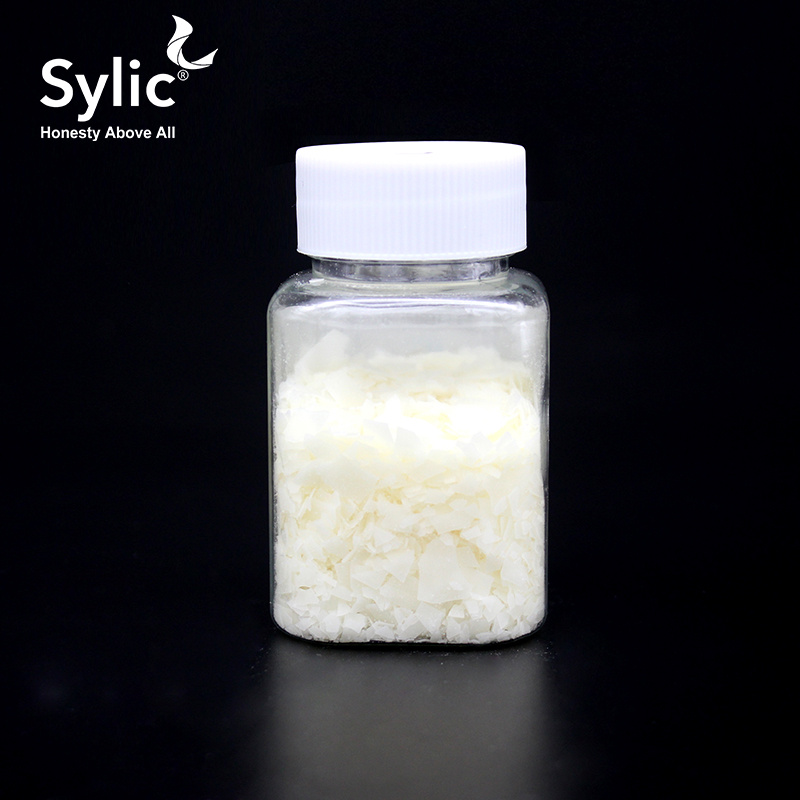
Buyer-facing sourcing profile for Sylic F3605 (CY-9005B), a white granular textile softener flake offered for post-processing finishing applications on cotton, hemp, rayon and blends. RFQs should focus on confirming chemical identity or mixture disclosure, CAS applicability, ionic character, dilution pH, active content, impurity limits, ZDHC documentation, export classification, and batch COA availability before procurement.
Quick buying facts
Identify the grade, package, and import market before comparing suppliers.
Use this page to check the product identity, common specification points, document scope, package notes, and destination-market questions before sending a China sourcing request.
CAS No.: not provided; buyer should confirm whether product is a mixture and request component-level disclosure where availableTextile auxiliary; fabric softener flake; finishing agentCandidate for RFQ after CAS, SDS, COA, ZDHC, impurity, and export classification checks
Ionic character: described as non-ionic / weak cationic; buyer should confirm by TDS and test method
Application field: cotton, hemp, rayon and blended fabrics
Use stage: post-processing textile finishing auxiliary
Dilution reference: commonly diluted to 10% concentration; process conditions should be confirmed from supplier TDS
pH reference: 4–5 for 5–10% diluted solution, as extracted from source listing
Formula: not disclosed / N/A in source listing
CAS No.: not provided; buyer should confirm whether product is a mixture and request component-level disclosure where available
EINECS: not provided in source listing
Color: white
HS Code listed by source: 3910000000; buyer should verify correct HS classification against final composition and destination requirements
Who uses this page
Target buyers
Textile finishing mills
Dyeing and finishing houses
Textile auxiliary distributors
Chemical importers serving apparel supply chains
Fabric softener formulators
Home textile manufacturers
Cotton, hemp, rayon, and blended fabric processors
Regional textile chemical stockists
Before matching
Documents to check
CAS number, grade, assay, and impurity profile
SDS, COA, TDS, HS code, and transport classification
Destination-market import documents before supplier matching
Package and route
Packing notes
Source listing indicates 25 kg woven bag packing.
Confirm inner liner, moisture barrier, palletization, and container loading configuration before order.
Request sample packing details for trial orders; listing references a 200 g sample option.
Confirm shelf life, storage statement, and batch labeling format on supplier documents.
Ask whether neutral export cartons, branded bags, or buyer-specified labels are available for overseas shipments.
Applications and sourcing options
Check whether this product fits the buyer's actual application.
Clear application, grade, package, and document notes help separate real sourcing demand from a vague price check.
Use context
Common applications
Soft handle finishing for cotton fabrics
Post-processing finishing for hemp and rayon textiles
Auxiliary softening step for blended fabric finishing
Distributor stocking of textile finishing auxiliaries
Sample evaluation for mills comparing non-ionic and weak cationic softener flakes
Replacement sourcing where buyers need COA-backed softener flake supply from China
How we compare
Sourcing options
Request 200 g to 1 kg lab sample with matching TDS and SDS before bulk purchase.
Place trial order in 25 kg bags after confirming pH, ionic character, and fabric compatibility requirements.
Source under supplier brand Sylic where documentation matches the listed model number.
Request neutral export packing if importing through a regional distributor.
Ask for annual or quarterly supply quotation if consistent lot-to-lot performance is required.
Compare with alternative non-ionic, cationic, and silicone-based textile softener grades if the CAS or composition disclosure is insufficient.
Human review
Compliance notes
CAS number is not listed; this is a key pre-RFQ verification point because textile softener flakes are often mixtures or proprietary preparations.
Request current TDS, SDS, COA, ZDHC-related documentation, and any MRSL/RSL declaration applicable to textile finishing buyers.
Do not rely on marketplace claims alone for environmental or compliance positioning; verify document issue date, issuing entity, product name match, and batch traceability.
Confirm whether the product contains silicone, quaternary ammonium compounds, fatty acid derivatives, emulsifiers, preservatives, solvents, or restricted substances relevant to the destination market.
Verify impurity limits relevant to textile buyers, such as APEO/NPEO, formaldehyde, heavy metals, organotin compounds, banned amines, phthalates, and solvent residues where applicable.
Confirm dangerous goods status with the supplier SDS and freight forwarder before shipment; no DG conclusion should be assumed from the listing.
Check import registration, chemical inventory, customs, and labeling requirements for the buyer’s country before purchase.
HS code 3910000000 appears in the source listing but should be independently confirmed because classification may vary by formulation and jurisdiction.
Buyer search paths
Related sourcing terms
These terms support long-tail discovery while keeping the page focused on useful product and China export buying context.
Share target market, quantity, packaging scope, artwork status, delivery destination, and required documents so CHN Chemicals can prepare a cleaner supplier comparison.
Questions to confirm
Is Sylic F3605 the same product as CY-9005B, or are these separate grade codes?
Is the product a single substance or a proprietary mixture? If a mixture, can you provide non-confidential composition ranges or regulatory disclosure?
What CAS number, if any, is assigned to this product, and what CAS numbers apply to reportable components?
Please provide the latest TDS, SDS, COA template, ZDHC certificate or declaration, and product compliance statement.
What are the controlled specifications for active content, pH at stated dilution, ionic character, moisture, ash, melting/softening point, and appearance?
What impurity controls are available for APEO/NPEO, formaldehyde, heavy metals, banned amines, phthalates, organotin compounds, and residual solvents?
What is the recommended commercial grade or concentration, and are there different grades for cotton, rayon, hemp, or blended fabrics?
Is the product classified as dangerous goods for sea, air, or road transport according to the latest SDS?
Checks before quote
CAS number is not listed; this is a key pre-RFQ verification point because textile softener flakes are often mixtures or proprietary preparations.
Request current TDS, SDS, COA, ZDHC-related documentation, and any MRSL/RSL declaration applicable to textile finishing buyers.
Do not rely on marketplace claims alone for environmental or compliance positioning; verify document issue date, issuing entity, product name match, and batch traceability.
Confirm whether the product contains silicone, quaternary ammonium compounds, fatty acid derivatives, emulsifiers, preservatives, solvents, or restricted substances relevant to the destination market.
Verify impurity limits relevant to textile buyers, such as APEO/NPEO, formaldehyde, heavy metals, organotin compounds, banned amines, phthalates, and solvent residues where applicable.
Confirm dangerous goods status with the supplier SDS and freight forwarder before shipment; no DG conclusion should be assumed from the listing.
Check import registration, chemical inventory, customs, and labeling requirements for the buyer’s country before purchase.
HS code 3910000000 appears in the source listing but should be independently confirmed because classification may vary by formulation and jurisdiction.
Next step
Send the product page with your target quantity and market. A sourcing manager can then confirm sample options, supplier fit, packaging details, and open document gaps.