China: Ningxia chemical giant YLIT to sell controlling stake for approx. 1 billion yuan; Ningxia tycoon Dang Yanbao to acquire and inject solar assets
Key facts
- Guoneng YL Group will transfer 39.41% of YL Chemical shares to Baofeng Group at a minimum price of 6.27 yuan per share
- The transaction values the controlling stake at approximately 974 million yuan, shifting control from state-linked to private capital
- YL Chemical will issue new shares to Baofeng Group to acquire all equity interests in Baofeng Photovoltaic
- The two-stage plan integrates solar power generation assets into the listed entity while changing its controlling shareholder
- Guoneng YL Group's stake in YL Chemical is expected to decrease to 6.93% after the share transfer is completed
Ningxia-based listed chemical company YL Chemical (000635.SZ) has disclosed two concurrent capital initiatives. The first involves the final transfer of 39.41% of its shares, currently held by controlling shareholder Guoneng YL Group, to Baofeng Group. The second entails the listed entity issuing new shares to Baofeng Group to acquire all equity interests in Baofeng Photovoltaic. Executing a change of control and an asset injection on the same timeline suggests a potential redefinition for this caustic soda producer, which has reported annual losses in recent years.
According to the announcement, Guoneng YL Group intends to negotiate the transfer of 155.3 million shares of YL Chemical, representing 39.41% of the total share capital. The transfer price will not fall below 6.27 yuan per share, establishing a minimum total value of approximately 974 million yuan (roughly 23 billion yen). Upon completion of the transaction, Guoneng YL Group’s stake is expected to decrease to 6.93%, positioning Baofeng Group as the largest shareholder. This move could shift control of YL Chemical from the National Energy Investment Group system to private capital.
The 974 million yuan figure represents only the floor price for the transfer of control, not the total value of the entire transaction. The final valuation of Baofeng Photovoltaic’s equity has not yet been disclosed, as the target assets must undergo a formal valuation process. Details regarding the share issuance price, the number of shares to be issued, and the post-restructuring shareholder composition will be clarified in future proposals. Currently, both parties are still negotiating the share transfer agreement, and both transactions require the completion of subsequent procedural steps.
The other party in the transaction is Dang Yanbao, the de facto controller of Baofeng Group. According to the 2026 Hurun Rich List, his net worth is estimated at approximately 150 billion yuan (roughly 3.6 trillion yen), ranking him 21st in China. He is referred to in market circles as the "tycoon of the Northwest." Baofeng Group, established in October 2010, operates in three main sectors: new energy chemicals, new energy solar power generation, and new energy storage. Dang Yanbao directly holds a 95.59% stake in the group.
Dang Yanbao’s most prominent capital platform is Baofeng Energy (600989.SS). The company listed on the A-share market in 2019 and focuses on coal-based olefin production, with its business expanding from coal and coking to modern coal chemical industry. If the investment in YL Chemical proceeds as planned, the Baofeng group would possess a second listed platform on the A-share market, creating two distinct business expressions: coal chemicals and a combination of "caustic soda chemicals plus solar power generation."
This hierarchical structure is driven by practical considerations. The coal chemical sector faces cycles related to coal prices, product prices, production capacity, and environmental regulations. In contrast, solar power plants prioritize installation scale, generation efficiency, consumption capacity, electricity prices, and procurement costs. The growth cycles and valuation logic for these two asset classes are fundamentally different. Separating them onto different platforms facilitates capital introduction and fundraising arrangements, allowing the market to price them according to their respective distinct logics.
Yinglite's financial foundation is becoming increasingly fragile. As one of China's oldest acetylene-based PVC manufacturers, the company's core business encompasses the production of polyvinyl chloride (PVC), caustic soda, and acetylene, having established an integrated industrial chain of "self-generated power—acetylene—PVC." Since 2023, China's chlor-alkali industry has entered a downturn, with PVC prices experiencing sustained declines. Meanwhile, upstream costs remain rigid and resistant to reduction, causing the company to report consecutive annual losses.
Note: For the first three quarters of 2026, revenue decreased by 15.70% year-on-year, while the net profit attributable to shareholders of the parent company saw its loss expand by 71.76% compared to the same period last year.
The company has previously explained that the year-on-year decline in sales prices for PVC and caustic soda was the primary driver of its widening losses. In contrast, Baofeng Group's consolidated revenue continued to expand, reaching RMB 30.005 billion (approx. JPY 710 billion) in 2023, RMB 35.453 billion (approx. JPY 840 billion) in 2024, and RMB 50.503 billion (approx. JPY 1.2 trillion) in 2025. For the first three quarters of 2026, Baofeng Energy, controlled by Party Yanbao, reported revenue of RMB 47.088 billion (approx. JPY 1.1 trillion) and a net profit attributable to shareholders of the parent company of RMB 14.317 billion (approx. JPY 340 billion).
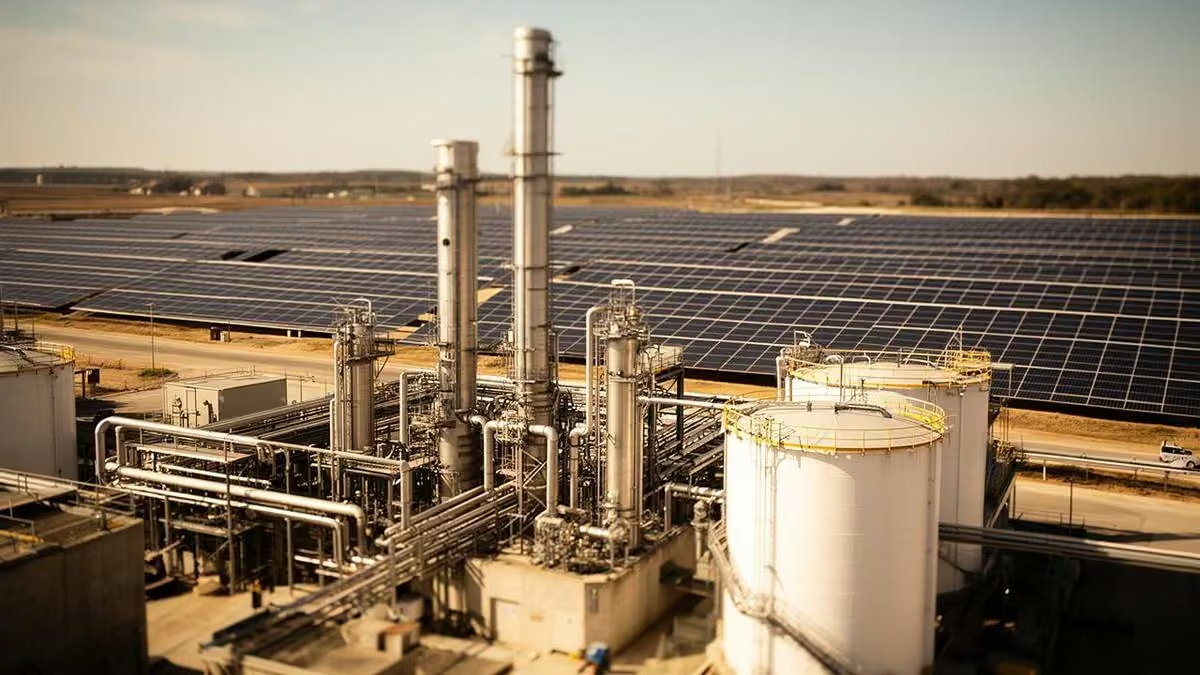
Following a two-stage design of "equity transfer + asset acquisition," Baofeng Group first acquired control of the listed company. Subsequently, Yinglite issued shares to acquire Baofeng Photovoltaic, integrating solar power generation assets into the listed entity. Li Fenzenzi, a researcher at Zhongyan Puhua, told *China Business News* that Baofeng Photovoltaic's green power resources can be directly supplied to Yinglite's acetylene and PVC production processes. This would reduce the procurement of expensive thermal power, thereby lowering production energy costs. Additionally, it would allow Baofeng Photovoltaic to establish a capitalization and fundraising platform on the A-share market.
Chlor-alkali chemistry is an energy-intensive industry, with electricity costs constituting a significant portion of production costs. The above analysis suggests that low-cost green power can contribute to Yinglite's chemical business breaking through its cyclical challenges, aligning with long-term trends such as the low-carbon transition of the chemical industry and carbon footprint management.
However, cost reductions from green power alone are unlikely to fundamentally resolve the core difficulties. Li Fenzenzi pointed out that China's PVC industry currently faces significant overcapacity, compounded by sluggish downstream demand from sectors such as real estate and building materials, which exerts downward pressure on product prices. Consequently, any profit margins gained from cost reductions are easily offset by falling sales prices. Furthermore, Li noted that the return rates for centralized solar power plants are currently declining, introducing uncertainty into the revenue stability of Baofeng Photovoltaic's assets. Solar power plants require substantial initial fixed asset investments and have long depreciation periods, resulting in low book net profit levels. Consequently, the scale of profits is relatively limited, making it difficult to fully offset the cyclical losses of the chemical business.
Li Min, an analyst at Zhuochuang Information, told reporters that integrated acetylene-based producers in the northwest region, which have historically relied on captive power plants and in-house acetylene units, have leveraged their complete industrial chains to maintain a cost advantage and weather industry cycles. However, he noted that in 2026, downward pressure across the sector has expanded comprehensively, pushing the acetylene method out of its profit safety zone. The industry's loss structure has shifted from one-sided pressure from the ethylene method to simultaneous losses in both the acetylene and ethylene segments.
According to data from Zhuochuang Information, companies in Shandong Province that produce PVC using externally purchased acetylene recorded an average loss of approximately 800 yuan per ton in the third quarter of 2026. During this period, the weekly operating load for China's acetylene-based PVC remained between 67% and 74%, while the loss margin for ethylene-based companies was even larger, with weekly operating rates falling to just 51% to 66%. Li Min argued that the core driver of industry losses is the lack of final downstream demand. He pointed out that demand from real estate completions, old housing renovations, and infrastructure development has failed to show recovery beyond expectations, leaving PVC prices without any upward momentum.
From the perspective of state-owned capital, the transfer of control by Guoneng Yinglite Group serves a dual purpose: to activate existing state assets and optimize the industrial allocation of state capital, and to attract a strategic investor capable of injecting industrial resources and assets into the listed company, given that its core business has been in the red for an extended period. The share transfer agreement explicitly states that the preferred conditions for the intended transferee include possessing "industrial synergy capabilities, the ability to inject high-quality core assets, and the capacity to improve the listed company's earnings level."
Based on the disclosed announcements, the parties have not yet published specific agreements regarding raw material supply, product sales, customer channels, or equipment operation. At present, the verifiable synergy is concentrated on the capital side, specifically the combination of "control transfer plus solar asset injection."
For the market, this transaction offers two key observation points: whether Baofeng Photovoltaics can demonstrate new performance that justifies its valuation, and whether Yinglite's existing PVC and caustic soda businesses can halt their losses. While a dual-pillar model can smooth overall profit fluctuations, in a situation where the cyclical downturn in the chlor-alkali industry has not yet bottomed out, the quality of the assets brought in by the new owner will be the decisive factor in any valuation reconstruction.
Chnchemicals take
This restructuring signals a strategic pivot for a struggling caustic soda producer, as the injection of solar assets aims to diversify revenue streams during a cyclical downturn. For investors, the quality of these new assets will be the decisive factor in any valuation reconstruction, given that the chlor-alkali sector has not yet bottomed out. Traders should monitor how this hybrid model impacts the company's long-term stability against current industry headwinds.
Frequently asked questions
What is the minimum value of the controlling stake transfer from Guoneng YL Group to Baofeng Group for YL Chemical?
The minimum total value of the transaction is approximately 974 million yuan. This figure is based on a floor price of 6.27 yuan per share for the 155.3 million shares involved in the transfer.
How will the shareholding structure of YL Chemical change after Baofeng Group completes the acquisition of the controlling stake?
Baofeng Group will become the largest shareholder of YL Chemical following the transaction. Guoneng YL Group’s stake is expected to decrease to 6.93%, shifting control from the National Energy Investment Group system to private capital.
What strategic asset is Baofeng Group planning to inject into YL Chemical through the new share issuance?
Baofeng Group will inject all equity interests in Baofeng Photovoltaic into the listed entity. This move integrates solar power generation assets into YL Chemical, a caustic soda producer that has reported annual losses in recent years.