China: 36Kr Exclusive: Sodium Battery Cathode Material Maker Secures Tens of Millions in Strategic Investment from Jintou Zhiyuan; 10,000-Ton Production Line to Enter Mass Production in Q4
Key facts
- Nanyuan New Material Technology completed a Series A round of tens of millions of yuan with strategic investment from Jintou Zhiyuan
- The company plans to enter mass production for its 10,000-ton sodium-ion battery cathode material line in the fourth quarter
- Funding will support the construction of a smart manufacturing base in the Ma'anshan Economic Development Zone and anode-free battery development
- Nanyuan New Material was founded in 2022 by a team of German-returned PhDs, including Dr. Liu Zhongqing from Forschungszentrum Jülich
- The company is expanding into overseas markets and advancing low-temperature battery swapping applications for light-duty power needs
This article is approximately 3,100 words long and is recommended for an 8-minute read.
HardKrypton reports that Nanyuan New Material Technology (Wuxi) Co., Ltd., a sodium-ion battery cathode material manufacturer, has recently completed a Series A funding round of tens of millions of yuan, with strategic investment from Jintou Zhiyuan. The capital will primarily support the construction of the advanced battery terminal integration smart manufacturing base in the Ma'anshan Economic Development Zone, while also funding the development of anode-free batteries and the expansion into overseas markets.
Founded in 2022, Nanyuan New Material was established by a team of German-returned PhDs with extensive experience in the battery industry. Founder Dr. Liu Zhongqing previously worked at the Forschungszentrum Jülich, a top-tier European energy research institution, where he studied under Martin Winter, an academician of the German Academy of Engineering. He also conducted research and development on battery materials and products at the University of Oxford and the German specialty glass and ceramics manufacturer Schott Group.
Dr. Liu Zhongqing outlines the evolution of sodium-ion battery cathode materials in three distinct phases: 2022 to 2023 was dominated by layered oxides; 2024 to 2025 marks a shift toward NFPP; and from 2026 onward, NFS is expected to see gradual volume growth.
The rationale behind this trajectory is that layered oxides share similarities with lithium ternary battery processes, making them easy to industrialize when lithium prices were high. However, the subsequent crash in lithium prices eliminated their cost advantage, and they also carry safety risks. NFPP, which is closer to lithium iron phosphate (LFP) in terms of process and application, has a clearer path for scaling up and thus leads the next phase. NFS presents the highest technical challenges: the soft material used in low-temperature sintering is prone to moisture absorption and tends to decompose and generate gas under high pressure.
Currently, Nanyuan New Material has developed two polyanion material systems: NFS (sodium iron sulfate) and NFPP (sodium iron pyrophosphate phosphate), supported by a recycling material system.
According to HardKrypton, the company’s team has pioneered an NFS "soft-hard combination + framework" technology. By using a "AB material system" that combines hard additives with the main material, they have overcome technical bottlenecks associated with NFS, such as low compaction density, poor high-temperature cycling performance, and gas generation. For NFPP, the company employs "super-melting fusion synthesis technology" to significantly reduce material powder resistance and enhance overall performance.
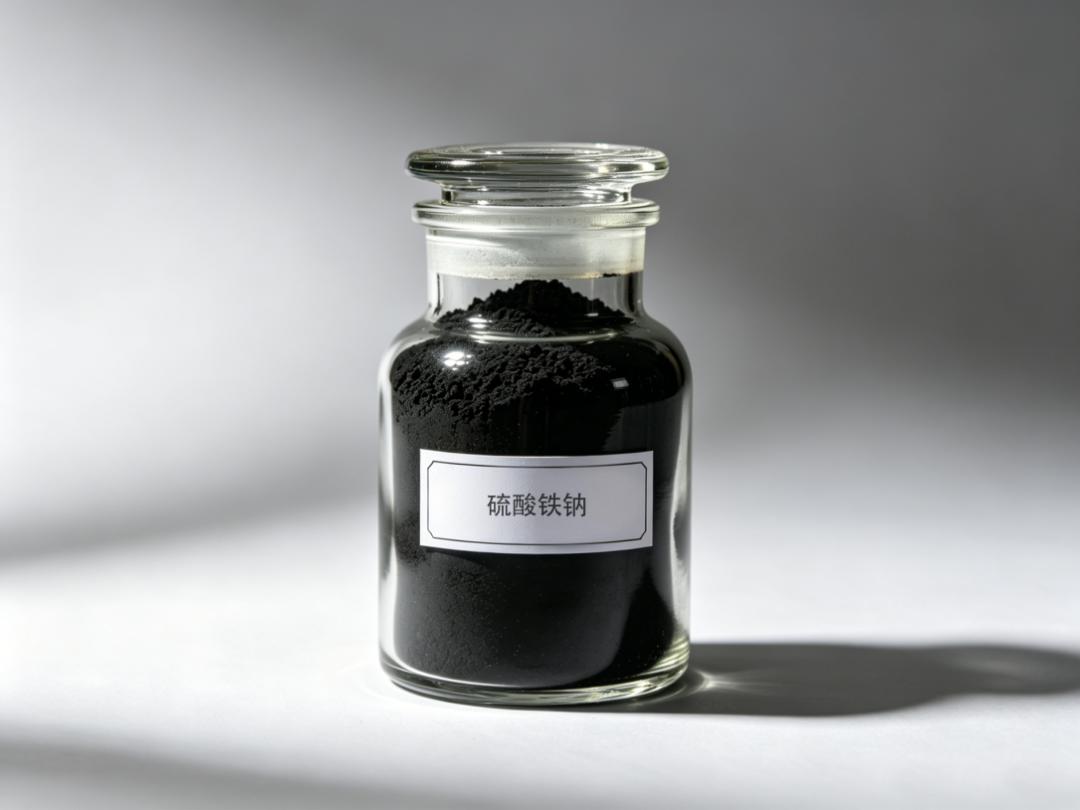
The company has established a clear division of labor between the two materials. NFS is targeted for short-term applications in consumer electronics, light power, UPS, and start-stop systems—scenarios that do not require ultra-long cycle life. It leverages a high-voltage platform of 3.6V to create a significant cost advantage at the pack level. In contrast, NFPP is aimed at large-scale energy storage and AI data center (AIDC) scenarios, focusing on long-cycle life and high compaction.
The company assesses that NFS is phosphorus-free, with a Bill of Materials (BOM) cost of less than 10,000 yuan per ton. NFPP, which involves phosphorus elements, has raw material costs ranging from approximately 15,000 to 18,000 yuan per ton. This results in a raw material price difference of around 10,000 yuan. Furthermore, NFS is the only material unaffected by fluctuations in LFP prices. Compared to NFPP, it is better suited for price-sensitive applications such as light power, where it can serve as a replacement for existing lead-acid batteries.
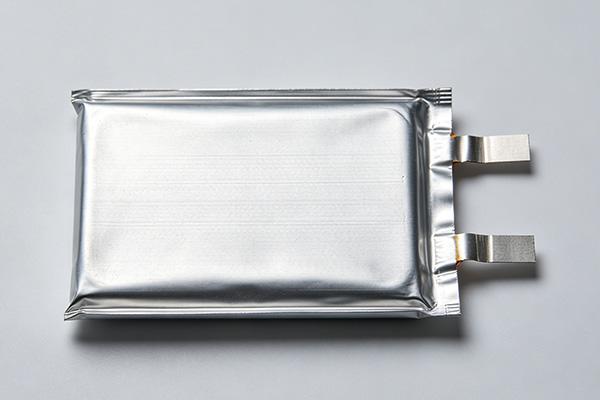
Currently, Nanyuan New Material’s NFS material achieved mass production in 2025 on a thousand-ton-scale pilot line in Jiangxi, utilizing a second-generation spray process. The company is further developing compatibility solutions for hard additives and the AB material system to expand the application boundaries of the material. In the field of anode-free batteries, the company has made substantial investments, progressing from early small soft packs under 1Ah to the development of large cells at the 10Ah and 20Ah levels. The plan is to produce complete battery packs based on 6020 or 7220 cell configurations by the end of this year for on-vehicle validation.
The company is currently collaborating with Germany’s Schott AG on a solid-state sodium battery development project. Under this arrangement, Schott supplies the solid electrolyte, while Nayuan provides the cathode material and anode-free solutions. The partnership aims to transition battery technology from purely anode-free liquid systems to anode-free semi-solid and fully solid-state configurations. On the cathode side, the focus is on interface optimization and coating with nano-scale solid electrolytes; on the anode side, the team is treating the solid electrolyte interface (SEI). These efforts are expected to raise the energy density of sodium-ion batteries to 250–320 Wh/kg, enabling further application in emerging sectors such as automotive, low-altitude aviation, and robotics.
At the same time, the company is extending its business toward terminal integration. In a statement to 36Kr, Nayuan New Materials clarified that this expansion does not represent a shift in its core business. The domestic materials segment remains the primary growth driver, while terminal integration solutions serve as a complementary second growth curve specifically targeted at overseas markets.
This strategic move is driven by the distinct needs of international clients compared to domestic cell manufacturers. Overseas markets typically require complete, integrated solutions, making it difficult to commercialize by selling cathode materials alone. “Demand for sodium batteries at the terminal level is not weaker in overseas markets than in China, but the local supply chain is incomplete. We cannot simply export raw materials, so we must participate in terminal integration,” said Liu Zhongqing.
The company emphasized that its core identity remains that of a materials provider. The push into battery terminal integration is intended to accelerate industry adoption and marketization. For future mass production of battery packs, the company has not ruled out seeking partnerships with other industry players.
Nayuan New Materials has already established a presence in several international regions. In Southeast Asia, it is involved in integrated photovoltaic-storage distributed projects in Indonesia and Malaysia. In Central Asia, specifically Pakistan, the Ministry of Commerce and overseas clients have visited China for research, with Nayuan leading a consortium of domestic partners—including cathode material, cell, terminal pack, and vehicle application specialists—to coordinate these efforts. The company is also exploring opportunities in Russia, other cold-climate northern regions, and Europe, where projects involving special power sources, recreational vehicles, and distributed energy storage are under discussion. Domestically, the company is simultaneously advancing low-temperature battery swapping and aftermarket light-duty power applications, creating synergy with its overseas cold-climate initiatives.
Looking ahead, the company noted that industry competition has shifted from showcasing technology and narratives to demonstrating whether products can genuinely meet customer needs and whether the entire supply chain can achieve profitability. The key challenge for the 2026–2028 period is establishing a virtuous cycle across materials, cells, and terminal applications.
In terms of capacity planning, Nayuan New Materials is following a gradual expansion path: pilot scale, thousand-ton scale, ten-thousand-ton scale, and long-term expansion. In 2024, the company completed a hundred-ton-scale engineering technology center in Wuxi. In 2025, a thousand-ton-scale pilot production line in Jiangxi achieved mass production. For 2026, a ten-thousand-ton-scale dual-stack production line in Lu’an, Anhui, is scheduled to begin mass production in the fourth quarter. Additionally, the company is planning a long-term capacity expansion to 100,000 tons. The roadmap targets reaching ten-thousand-ton capacity next year and 30,000 to 50,000 tons the year after, with a gradual progression toward the 100,000-ton level. Sustainability will be the core test of this expansion.
36Kr: Sodium battery cathode materials have evolved from layered oxides to NFPP and then to NFS. Why is NFS considered the most difficult yet the most worthwhile direction?
Liu Zhongqing: Layered oxides are similar to lithium ternary materials in terms of equipment and processes, making them the easiest to produce initially. However, with lithium prices below 200,000 yuan, they lack cost-effectiveness, and their slightly higher voltage fails the nail penetration test. NFPP is analogous to lithium iron phosphate, with established manufacturing and usage protocols, which is why many companies shifted from layered oxides to NFPP in 2024 and 2025, achieving rapid volume growth. NFS is a soft material that requires low-temperature sintering. It is hygroscopic and prone to decomposition and gas generation under high pressure, leading to swelling. At the time, we were the only company in the industry choosing this direction.
We launched our hard additive at the end of 2024, employing a hybrid soft-hard framework technology to resolve application-level challenges. Mass production is scheduled for 2025, with customer validation processes expected to conclude sequentially throughout 2026. NFS is phosphorus-free, with a Bill of Materials (BOM) cost under 10,000 yuan per ton. It stands as the only material unaffected by price fluctuations in lithium iron phosphate (LFP). Compared to NFPP, its raw material cost is nearly 10,000 yuan lower. Once volume scales up next year, it is highly likely to expand into more scenarios, mirroring the historical transition where NFPP replaced layered oxides.
Liu Zhongqing: One cannot evaluate performance based on a single cell alone. For instance, in a 7220 battery pack, NFS operates on a 3.6V voltage platform, requiring only 20 cells to achieve 72V. In contrast, NFPP has a voltage of just 2.85V, necessitating 26 to 27 cells for a 72V pack. A single 20Ah cell costs over 30 yuan; the difference at the PACK stage alone amounts to 200 yuan. Given that a 7220 pack may sell for less than 1,000 yuan, this represents a 20% cost disparity. Previously, NFS material had numerous issues that rendered it unusable. However, once viable, it can rapidly open up market opportunities, with volume already beginning to rise in the second half of this year. We are also willing to assist clients with cell design and scenario expansion. If clients cite poor rate capability, we iterate NFS from 0.5C and 1C up to 20C and 30C. When clients perform well and purchase more material, it benefits us as well.
Yingke: Anode-free and solid-state technologies are considered the next-generation directions. Why is Nayuan, as a materials company, investing so heavily in this area? Where are the boundaries?
Liu Zhongqing: Anode-free technology is viewed as the first step toward solid-state batteries, following a three-stage evolution logic: anode-free sodium-ion, anode-free semi-solid-state, and anode-free all-solid-state. However, the primary challenge with anode-free systems is that sodium metal on the anode side melts at temperatures exceeding 90 degrees Celsius. Only semi-solid-state and all-solid-state configurations can ensure safety and pass the 130-degree thermal box test, a mandatory hurdle for large-scale power applications. We are collaborating with Germany’s Schott, which supplies the solid-state electrolyte, while we provide the cathode material and anode-free solutions. This partnership facilitates the transition from purely liquid to semi-solid-state and all-solid-state systems. We are optimizing the cathode interface and applying nano-scale coating, while treating the SEI interface on the anode side. This year, we plan to complete 20Ah-class anode-free cells and full module packs, allowing them to be tested in vehicles. Next year, we will advance semi-solid-state and all-solid-state validation with Schott. However, as Nayuan is a materials company, our research into cell directions is primarily aimed at driving industry progress. Future cell production may involve collaborating with industry partners or promoting solutions, though this remains undecided.
Fang Jian, Chairman of Jintou Zhiyuan: We are optimistic about the long-term strategic value of sodium-ion batteries. Nayuan New Materials has built differentiated technical barriers around two polyanion cathode technology routes: NFS and NFPP. This approach closes the technical loop from cathode material and cell design to terminal applications. Nayuan’s material system features high safety, wide temperature tolerance, and recyclability, while also being compatible with next-generation anode-free sodium-ion batteries. This aligns closely with the industrialization needs of energy storage and light power scenarios.
The current funding round will be directed toward constructing an advanced battery terminal integration smart manufacturing base in the Ma’anshan Economic Development Zone. This marks a critical step for the company in extending from the materials end to downstream terminal systems, completing the integrated manufacturing capability across “material—cell—PACK.” This will shorten product validation cycles and improve delivery response efficiency. Simultaneously, it will accelerate the application validation of future anode-free sodium-ion batteries in terminal products.
Ma’anshan possesses a mature new energy industry support ecosystem. The Ma’anshan Economic Development Zone mother fund, managed by Jintou Zhiyuan, leverages the local industrial ecosystem to assist enterprises in establishing manufacturing capacity and connecting with downstream customer resources nearby. We believe sodium-ion batteries are currently in a critical window for commercial scaling. Nayuan New Materials’ dual-route parallel integrated layout facilitates continuous yield optimization and system cost reduction, accelerating the implementation of complete sodium-ion solutions. Going forward, we will continue to empower the enterprise in industrial chain integration, production line construction, and market expansion, jointly supporting and driving Nayuan’s development.
Chnchemicals take
This strategic investment signals a maturing phase for sodium-ion battery supply chains, shifting focus from R&D to scalable manufacturing. The entry of established industrial players like Jintou Zhiyuan validates the commercial viability of cathode materials, reducing perceived risk for downstream buyers. Producers must now demonstrate consistent quality and cost efficiency to secure long-term contracts in this competitive landscape.
Frequently asked questions
How much funding did Nanyuan New Material Technology secure from Jintou Zhiyuan for its sodium battery cathode material production?
Nanyuan New Material Technology secured tens of millions of yuan in strategic investment from Jintou Zhiyuan. This capital will primarily support the construction of an advanced battery terminal integration smart manufacturing base in the Ma'anshan Economic Development Zone.
When is the 10,000-ton production line for sodium-ion battery cathode materials scheduled to enter mass production?
The 10,000-ton production line is scheduled to enter mass production in the fourth quarter. The company is also using the funding to develop anode-free batteries and expand into overseas markets.
What strategic advantages does the investment from Jintou Zhiyuan provide for Nanyuan New Material's supply chain integration?
The investment supports industrial chain integration, production line construction, and market expansion. Jintou Zhiyuan aims to empower the enterprise in these areas to jointly support and drive Nanyuan’s development in the sodium-ion battery sector.