Green ammonia, the future fuel for the seas? China takes the lead
Key facts
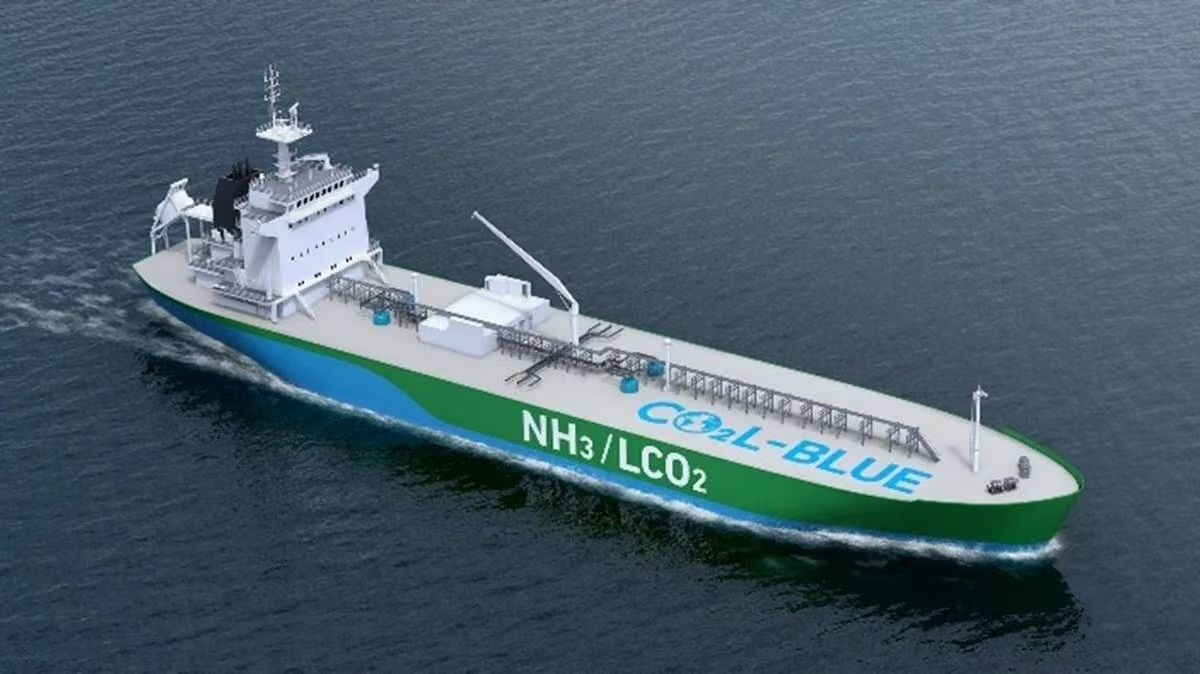
- On October 13, the Shenghang Yongle transferred 1,000 tonnes of green ammonia to the Mineral Europa off Zhoushan, marking the first commercial ship-to-ship bunkering operation
- The International Maritime Organization set a target for maritime carbon neutrality by 2050, requiring a 20% emissions reduction by 2030 and 70% by 2040 relative to 2008 levels
- Maritime shipping currently accounts for approximately 3% of global greenhouse gas emissions, releasing over one billion tonnes of gas annually
- The Shenghang Yongle is a 5,500 cubic meter liquefied gas carrier converted into a bunkering vessel earlier this summer to facilitate ammonia transfers
- A decisive vote at the International Maritime Organization in December will determine if a global carbon price for shipping is established, influencing future fuel demand
Maritime shipping accounts for approximately 3% of global greenhouse gas emissions, and the industry is still searching for a viable fuel for the future. Options such as liquefied natural gas, methanol, and ammonia each present distinct advantages and constraints. With a decisive vote at the International Maritime Organization just weeks away, Beijing is positioning itself across the entire value chain, from production facilities to ship bunkers.
On October 13, off the coast of Zhoushan in Zhejiang province, two vessels moored side by side. Within hours, the Shenghang Yongle transferred 1,000 tonnes of green ammonia into the tanks of the Mineral Europa, a 210,000-tonne bulk carrier. The vessel then set course for Australia.
According to state-owned China Energy Engineering (Energy China), this marked the world’s first commercial ship-to-ship bunkering operation using green ammonia. Prior to this, such operations had been limited to trials.
The Shenghang Yongle is a small liquefied gas carrier with a capacity of 5,500 cubic meters, which was converted into a bunkering vessel earlier this summer. The ammonia used in the transfer originated in Songyuan, Jilin province. It was transported by road to the port of Nanjing before being shipped via waterways to Zhoushan.
For Li Jingguang, head of the hydrogen division at Energy China, this marks the first time the entire value chain has been assembled: production, storage, transport, bunkering, and end-use. He asserts that the Chinese industry is transitioning from demonstration projects to regular commercial operations.
LNG, methanol, ammonia... toward a cleaner Chinese freight sector
There is no single solution for decarbonizing shipping. The first lever is efficiency: reducing speed, optimizing hull designs, or adding rigid sails can already lower fuel consumption.
Ammonia, however, has its drawbacks. It is toxic, its combustion can release nitrous oxide (a potent greenhouse gas), and it contains roughly three times less energy per liter than heavy fuel oil. Its climate benefits also depend on how it is produced: only "green" ammonia, derived from hydrogen generated using renewable electricity, is nearly carbon-neutral.
A study by the European Maritime Safety Agency estimates that operating an ammonia-fueled vessel could cost up to three to 3.5 times more than a conventional ship. As of mid-2026, only four vessels capable of using ammonia were in service worldwide, with approximately 40 more on order.
Airbus plans to transport its aircraft sections between Europe and North America aboard the *Spirit of Toulouse*, a roll-on/roll-off (RoRo) carrier designed by French shipowner LD Armateurs and built in China by Wuchang Shipyard. In mid-October, six 35-meter-tall Norsepower rotors were installed on the vessel in Shanghai, making it the world’s largest wind-assisted RoRo ship. When paired with engines capable of running on methanol, these rotors are expected to cut CO2 emissions by approximately 70% compared to current vessels.
Other options are also being explored, including rigid-sail cargo ships, biofuels, electric or hydrogen propulsion for short-haul routes, and even civil nuclear power for the largest vessels.
A global stake hinging on an IMO vote
The maritime shipping sector releases over one billion tonnes of greenhouse gases annually, accounting for nearly 3% of global emissions. In 2023, the International Maritime Organization (IMO) established a target to achieve carbon neutrality "by 2050." Interim milestones require a reduction of at least 20% in emissions by 2030 and 70% by 2040, measured against 2008 levels.
To meet these goals, the IMO developed a "net zero framework," which includes progressively stricter fuel standards and a pricing mechanism for emissions. Approved in April 2025, the document was scheduled for adoption in October 2025. However, under pressure from the United States, the vote was postponed by one year, with 57 votes against 49.
The issue returns to the agenda this winter. The IMO’s environmental committee will convene from November 30 to December 3, and the session dedicated to adoption will resume on December 4, 2026. Even if the framework receives the green light, the regulations will not take effect before 2028.
Logistics presents a second major hurdle. Green vessels are rendered useless without fuel available at port. The shortage of ammonia bunkering ships was precisely one of the weak links in the supply chain, a gap that the Zhoushan operation now partially addresses.
Geopolitical context adds a strategic dimension. The conflict involving Iran is disrupting ammonia deliveries from the Middle East. The Chinese embassy in Rabat recently announced the shipment of 30,000 tonnes of liquid ammonia from Nanjing to Morocco for the fertilizer industry. A reminder that this molecule is also a highly sought-after raw material.
For China, an industrial sector to get ahead of the curve
For Beijing, the stakes extend well beyond climate policy. China already stands as the world’s leading shipbuilder. In the first half of 2026, its shipyards secured 82.3% of all new vessel orders globally, according to the Ministry of Industry. Over the past three years, these facilities have also captured more than 68% of the world’s orders for “green” ships.
The country now seeks to control the other half of the equation: fuel. The Songyuan facility, which supplies the ammonia delivered to Zhoushan, exemplifies this ambition. This Energy China complex, with a cost exceeding $4 billion, is powered by wind turbines and solar panels. Its first phase, launched in December 2025, is designed to produce 45,000 tonnes of green hydrogen and 200,000 tonnes of green ammonia and methanol annually. The ultimate goal is to reach a production capacity of 600,000 tonnes of ammonia.
On the day of the inauguration, Energy China signed a contract with CMB.TECH for the sale of green ammonia for transoceanic transport, including a purchase commitment. The transaction on October 13 marks the first concrete realization of this agreement.
Shanghai is concurrently positioning itself as a hub for green fuels. A roadmap released in February 2026 targets the availability of one million tonnes of green methanol and biofuels at the port by 2030. For ammonia, the next phase will likely unfold in the north, at the port of Panjin in Liaoning province, where dedicated storage facilities are scheduled to come online.
China holds a significant advantage in the form of abundant and low-cost renewable electricity, a critical input for large-scale green hydrogen production. The key question now is whether demand will materialize. The outcome will hinge largely on the December vote in London, which will determine whether a global carbon price for shipping is established.
Chnchemicals take
This milestone validates green ammonia as a viable commercial fuel, shifting the focus from technical feasibility to economic viability for the sector. The upcoming IMO vote on a global carbon price is the critical catalyst that will determine whether current production investments yield returns. Without a clear regulatory framework, the high cost of green ammonia remains a barrier to widespread adoption by major shipping lines.
Frequently asked questions
What was the significance of the green ammonia transfer between the Shenghang Yongle and Mineral Europa in Zhejiang?
It marked the world's first commercial ship-to-ship bunkering operation using green ammonia. The transfer involved 1,000 tonnes of fuel, moving the technology from trial phases to commercial application.
How much green ammonia was transferred during the first commercial bunkering operation off Zhoushan?
A total of 1,000 tonnes of green ammonia was transferred. The fuel originated in Songyuan, Jilin province, and was moved to the Mineral Europa bulk carrier.
What are the IMO's interim emission reduction targets for maritime shipping by 2030 and 2040?
The IMO requires a reduction of at least 20% in emissions by 2030 and 70% by 2040. These targets are measured against 2008 levels and aim to achieve carbon neutrality by 2050.