South Korea: K-Petrochemicals, Mired in Deficits, Accelerates 'Survival Surgery' in a No-Retreat Gamble
Key facts
- LG Chem is evaluating a plan to reconfigure its Yeosu plant into a production hub centered on semiconductor materials to counter the slump in its general-purpose petrochemical division
- The company is discussing an investment worth several hundred billion won to expand its isopropyl alcohol production capacity on the site of its existing neopentyl glycol facilities
- Korean petrochemical companies are shifting their strategic focus from general-purpose naphtha cracking units to high-value-added specialty materials to overcome short-term operational pain and restore profitability
- This restructuring process has triggered the establishment of joint ventures and the separation or merger of legal entities, necessitating the large-scale redeployment of on-site personnel
- Lotte Chemical will focus on facility consolidation, while SK Innovation will expand future energy solutions and Kolon Industries will concentrate on specialty chemicals
The Korean petrochemical sector, mired in persistent losses, is accelerating a high-stakes restructuring initiative aimed at securing long-term viability. The industry is shifting its strategic focus from general-purpose naphtha cracking units (NCC) to high-value-added specialty materials, a move designed to overcome short-term operational pain and restore profitability over the medium to long term.
This pivot is driven by the assessment that increasing the share of high-functionality specialty materials will insulate the industry from the supply glut originating in China and fortify its revenue structure. This broader trend of structural reform is now being embedded into the core management strategies of major industry players.
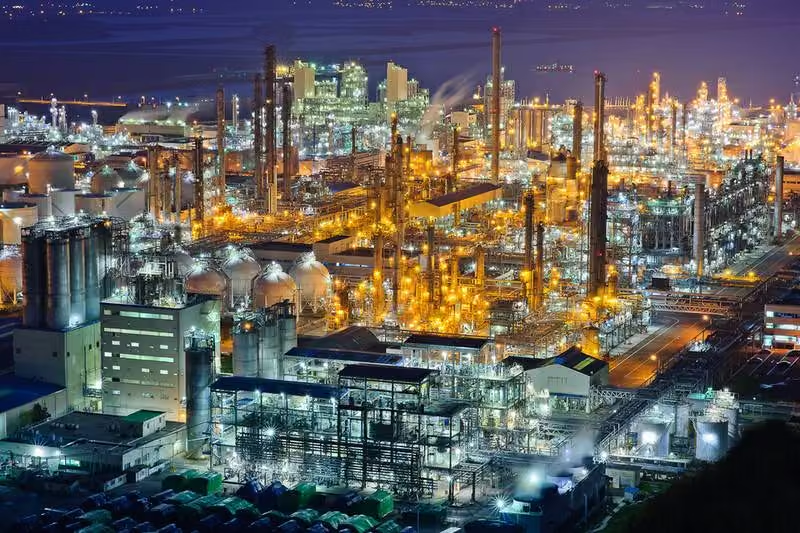
LG Chem is evaluating a plan to reconfigure its Yeosu plant in South Jeolla Province into a production hub centered on semiconductor materials, seeking to counter the slump in its general-purpose petrochemical division.
The company is discussing an investment worth several hundred billion won to expand its isopropyl alcohol (IPA) production capacity on the site of its existing neopentyl glycol (NPG) facilities. As the world’s largest producer of IPA by market share, LG Chem currently manufactures 165,000 tons annually at the Yeosu plant and aims to boost output by tens of thousands of tons through this expansion.
While LG Chem is converting land in the Yeosu industrial complex into a site for advanced materials using funds secured through the divestiture of stakes in subsidiaries, Lotte Chemical is tackling the crisis by aggressively consolidating and closing underperforming general-purpose facilities.
Lotte Chemical is driving large-scale equipment adjustments and business integrations, primarily within the Daesan and Yeosu industrial complexes, to streamline its less competitive general-purpose operations.
This restructuring process has also triggered the establishment of joint ventures and the separation or merger of legal entities, necessitating the large-scale redeployment of on-site personnel and a concurrent effort to slim down the organizational structure.
SK Innovation is also responding to the crisis with rigorous business restructuring and organizational streamlining. The company is focused on reorganizing its operations and improving efficiency, with its core hub in Ulsan, to maximize investment efficiency and ensure financial stability.
SK Innovation is also continuing to restructure its workforce and organization to accelerate decision-making. This move is intended to defend the profitability of its existing oil and chemical businesses while shifting its strategic weight toward high-growth sectors such as liquefied natural gas (LNG) power generation and energy storage systems (ESS), positioning the company to lead in the future energy market.
Previously, Kolon Industries had been accelerating its transition from a general-purpose business model to a high-value specialty materials company.
The firm reduced its exposure to low-margin general-purpose products, redirecting its resources toward high-barrier, high-growth sectors such as aramid, eco-friendly materials, and electronic materials.
The benefits of structural reform are also evident in employment metrics. While the broader industry has been forced to cut headcount due to the downturn, Kolon Industries expanded its workforce by more than 400 employees through the absorption of subsidiaries and the recruitment of key talent.
These newly added personnel are being deployed to R&D and production sectors, which are critical for future growth, to enhance the company's competitive edge in next-generation materials technology.
Consequently, major players are expected to leverage their respective strengths: Lotte Chemical will focus on facility consolidation, LG Chem on transitioning to advanced materials, SK Innovation on expanding future energy solutions, and Kolon Industries on proactively concentrating on specialty chemicals.
Chnchemicals take
The strategic pivot from general-purpose naphtha cracking to high-value specialty materials signals a decisive shift in the Korean petrochemical sector's competitive positioning. By targeting semiconductor-grade inputs and advanced materials, producers aim to insulate their revenue streams from the persistent supply glut originating in China. This structural reform reduces reliance on commoditized products, forcing global buyers to adapt to a more specialized and less volatile supply landscape.
Frequently asked questions
What is the core strategic shift for the Korean petrochemical sector to address persistent losses?
The sector is shifting focus from general-purpose naphtha cracking units to high-value-added specialty materials. This move aims to insulate the industry from supply gluts and restore profitability over the medium to long term.
How is LG Chem planning to reconfigure its Yeosu plant to counter the petrochemical slump?
LG Chem is evaluating a plan to turn its Yeosu plant into a hub for semiconductor materials. The company is discussing an investment to expand isopropyl alcohol production on the site of existing neopentyl glycol facilities.
What specific operational changes are major Korean players implementing as part of this restructuring process?
Major players are establishing joint ventures and merging or separating legal entities to streamline operations. This process necessitates the large-scale redeployment of on-site personnel and a concurrent effort to slim down organizational structures.