Japan: Ethylene Utilization Rate at 71.5% in October, Low Utilization Persists Despite Eased Naphtha Sourcing
Key facts
- JPCIA reported that the operating rate of ethylene production facilities in Japan was 71.5% in October on a preliminary basis
- The utilization rate remains significantly below the 90% threshold generally considered a benchmark for economic health in the industry
- Major chemical companies accelerated alternative naphtha sourcing from the United States and other regions following the February conflict
- Cheaper imported chemicals from China are flooding the domestic market, causing structural changes in the supply chain
- Industry executives stated that the sector requires rationalization of excess capacity and government support to develop new competitive advantages
The Japan Petroleum and Chemical Industry Association (JPCIA) reported on the 19th that the operating rate of ethylene production facilities in October stood at 71.5% on a preliminary basis. Despite the normalization of naphtha (crude gasoline) procurement following the military conflict between the United States and Iran in February, the utilization rate continues to fall significantly below the 90% threshold generally considered a benchmark for economic health.
In response to the Middle East crisis, major chemical companies have accelerated alternative naphtha sourcing from the United States and other regions. Concurrently, the supply chain is undergoing structural changes as cheaper imported chemicals from China flood the domestic market. The industry is increasingly accustomed to operating rates in the low 70% range, which is becoming the new normal.
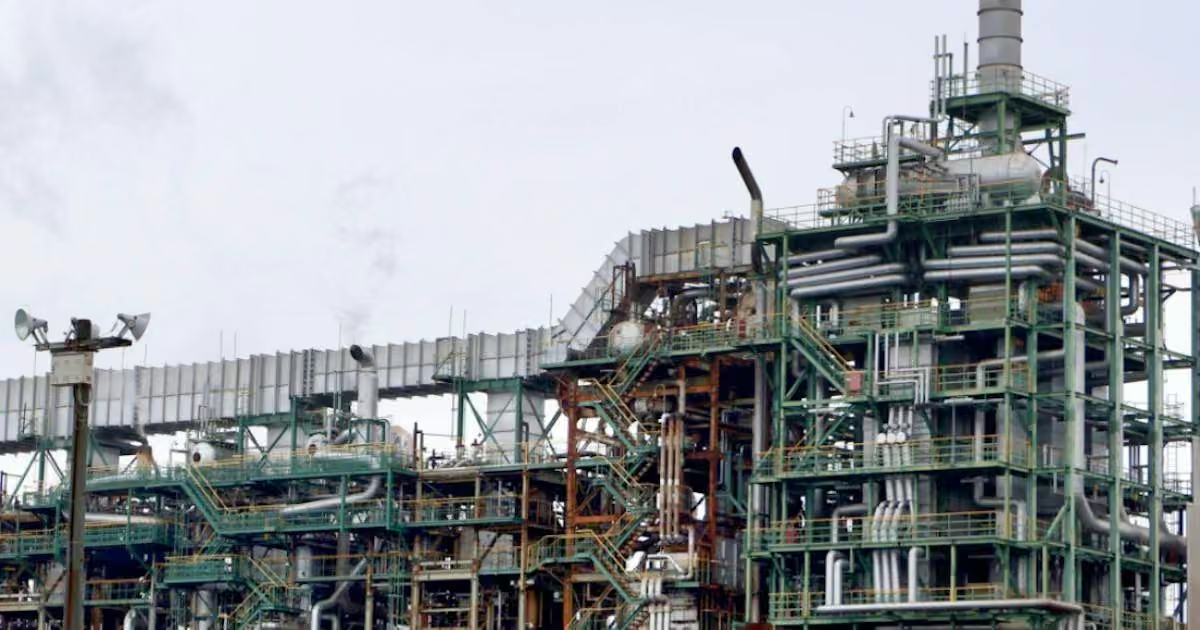
Ethylene production facilities use thermal cracking of naphtha to manufacture ethylene and propylene, which serve as foundational chemicals. These basic chemicals are processed into resins and other materials used in a wide array of consumer products, including food packaging, automotive parts, and home appliances.
Ethylene production in October totaled 413,000 tons. While no facilities were undergoing scheduled maintenance in October of the previous year, production declined by 8.7% year-on-year. Domestic shipments of the four major resins also fell below year-ago levels across all product categories.
At a press conference held the same day, Takashi Takemoto, President of the JPCIA and President of Mitsubishi Chemical Group, stated, "Naphtha procurement has progressed, and we are maintaining normal operations. However, production remains below last year's levels due to sluggish domestic demand and the impact of imported goods."
Japan has a total of 12 ethylene production facilities with a combined capacity of 6.16 million tons, based on scheduled maintenance schedules. Domestic production in 2025 reached 5.14 million tons. Although the operating rate has not approached 90%, it had maintained an average in the high 70% range. Recent figures indicate a further decline from that level.
The primary factor driving Japan's petrochemical industry into structural depression is the capacity expansion by Chinese companies. According to BloombergNEF, a U.S. research firm, China's ethylene production capacity is projected to reach 68.03 million tons in 2026, tripling over the past decade. This now accounts for approximately 30% of global production capacity. By 2030, this figure is expected to rise to 93.76 million tons.
China, once a key export market for Japan, has seen its domestic demand stagnate, narrowing the opportunity for Japanese companies to redirect surplus domestic production to Chinese buyers. Instead, excess production capacity in China has begun to erode the Japanese market.
The naphtha procurement difficulties triggered by the Middle East crisis served as a catalyst for accelerating the influx of Chinese chemicals. Since March, when resin and chemical production in Japan was disrupted, imports have increased, led by China. Shu Hashimoto, Vice Chairman of the JPCIA and Chairman of Mitsui Chemicals, remarked at the same press conference, "Imported goods are entering the market, intensifying competition."
Takemoto noted that the influx of imported goods peaked between June and August and has recently shown signs of calming down. However, he added, "Once products enter the market, they tend to remain to some extent. We will likely have to cede a portion of our market share."
A manufacturer involved in the import and distribution of plastic raw materials noted that while demand for imports from China and Southeast Asia has not reached the panic-buying levels seen before the summer, the company continues to maintain a steady volume of purchases. The executive added that demand would likely decline if the price of domestic products were to undercut that of imported goods, but such a price inversion has not occurred to date.
Should overseas products from China and other regions establish a permanent foothold in the domestic market, the space for homegrown chemical products would shrink further. Mr. Takimoto stated that the industry requires rationalization of excess capacity and the development of new competitive advantages, adding that he hopes for government support in these efforts.
Japanese producers have also been moving to reduce production capacity. By the end of fiscal 2027, three units totaling approximately 1.26 million tons of capacity are scheduled to be shut down. One additional unit is expected to close in fiscal 2030, which would reduce total production capacity by roughly 30% from current levels to 4.4 million tons.
However, an executive at a chemical manufacturer with ethylene production facilities expressed concern that these measures may not be sufficient for structural reform in the petrochemical industry. If overseas products become entrenched in the market, the industry could face pressure to cut capacity further beyond the plans already in place.
A critical factor in sustaining the operation of ethylene production facilities is the competitiveness of intermediate materials, such as resins, located further downstream in the supply chain. Restructuring is already underway not only in ethylene but also in representative resins like polyethylene. An executive at a major chemical company pointed out that, beyond simply balancing supply and demand, the industry increasingly needs strategic alliances to enhance overall competitiveness.
Chnchemicals take
The persistent low utilization rate signals that Japanese producers face structural headwinds that simple feedstock normalization cannot resolve. As cheaper Chinese imports gain a permanent foothold, domestic margins will likely compress further, forcing a painful consolidation of excess capacity. Investors should expect continued pressure on Japanese chemical valuations until the industry successfully rationalizes its overcapacity and establishes new competitive differentiators.
Frequently asked questions
What was the ethylene plant operating rate in Japan in October according to JPCIA?
The operating rate of ethylene production facilities in Japan stood at 71.5% in October on a preliminary basis. This figure is significantly below the 90% threshold generally considered a benchmark for economic health in the industry.
How has the normalization of naphtha sourcing affected Japanese ethylene utilization rates?
Despite the normalization of naphtha procurement following the US-Iran conflict, the utilization rate continues to fall significantly below the 90% benchmark. The industry is increasingly accustomed to operating rates in the low 70% range, which is becoming the new normal.
What structural changes are impacting the Japanese chemical industry's market position?
The supply chain is undergoing structural changes as cheaper imported chemicals from China flood the domestic market. Japanese producers are moving to reduce product lines and seek government support for rationalizing excess capacity to develop new competitive advantages.