Thyssenkrupp nucera starts one of India’s largest caustic soda units for Kutch Chemical
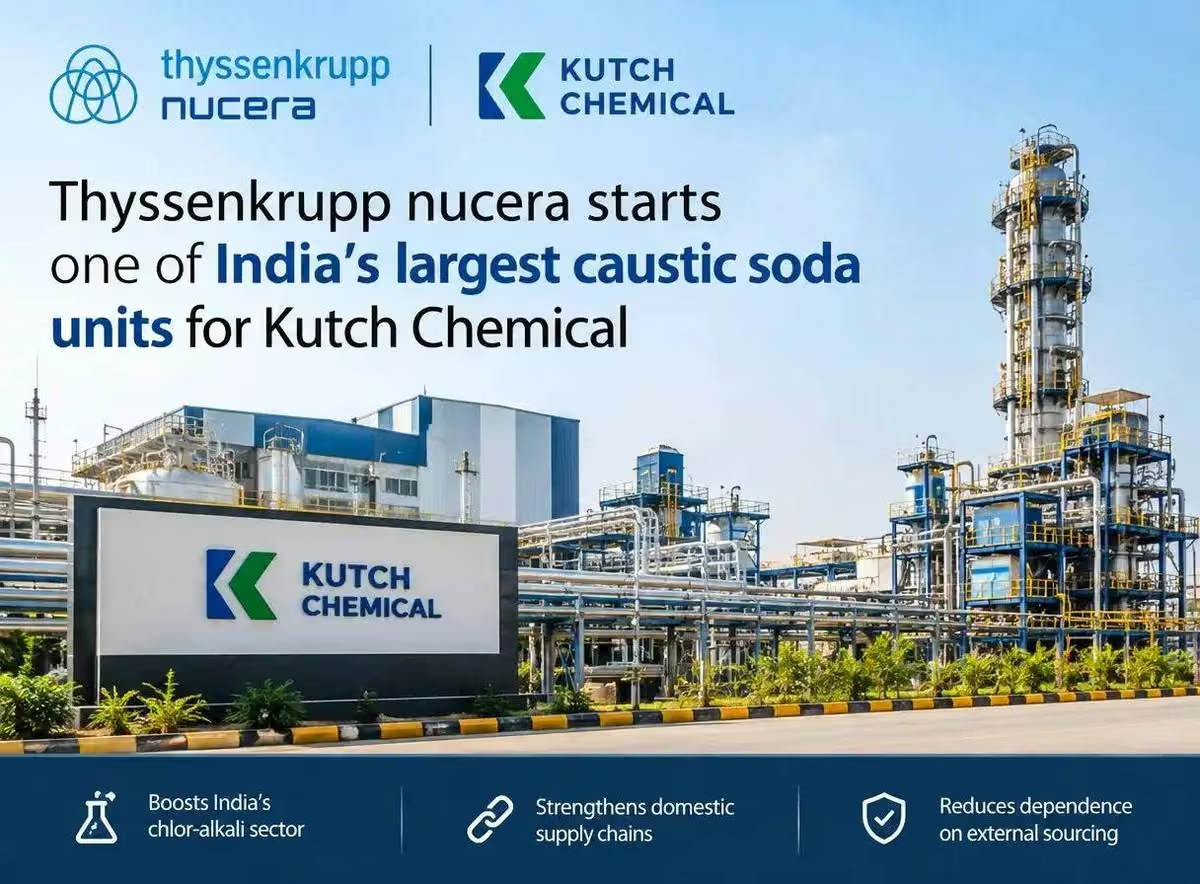
Key facts
- Kutch Chemical Industries commissioned a 220,000 metric ton annual caustic soda plant in Padana, Gujarat, to expand its domestic production capacity
- The new facility utilizes thyssenkrupp nucera BM Generation 6+ electrolyzers, each capable of producing up to 135 metric tons of sodium hydroxide daily
- This installation represents one of the largest single-train chlor-alkali units in India, with a daily output capacity of 675 metric tons of 100 percent NaOH
- The project marks the start of commercial production for the expanded complex, reinforcing the role of imported technology in India's industrial chemical expansion
sector has added another large-scale unit at a time when domestic chemical makers are looking to tighten supply chains and reduce dependence on external sourcing. In
, Kutch Chemical Industries has commissioned a major plant that lifts its
footprint sharply, while also reinforcing the role of imported technology in India’s industrial expansion. According to
, the project has been completed with support from
The new facility in Padana, Gujarat, is built to produce 220,000 metric tons of caustic soda annually. On a daily basis, the plant is capable of making up to 675 metric tons of 100 per cent sodium hydroxide, placing it among the largest single-train chlor-alkali installations in the country, the report said.
’s BM Generation 6+ platform have been installed at the site. Each electrolyzer can generate as much as 135 metric tons a day of 100 per cent NaOH, which the report described as the highest-capacity single electrolyzer currently installed in India. The operation of these units has now begun, marking the start of commercial production at the expanded complex.
Why the project matters for the domestic market
, the new plant is more than a capacity addition. The company plans to use the caustic soda and chlorine produced at the facility both for its own manufacturing requirements and for sales in the Indian market. That dual-use model gives the producer flexibility in serving internal operations while also participating in a market where reliable supply of core industrial chemicals remains important for downstream sectors.
The project also fits into a broader pattern in Indian chemicals, where producers are trying to secure critical inputs closer to home and improve operating resilience. Caustic soda is widely used across chemicals, textiles, paper, alumina and other industrial value chains, so new capacity of this size can have implications beyond one company’s balance sheet.
Technology choice reflects a long-running partnership
The commissioning builds on a relationship that began in 2017, when the two sides first started working together on chlor-alkali expansion. Since the initial plant was implemented, thyssenkrupp nucera has continued to support successive upgrades in line with Kutch Chemical’s growth plans, the report said.
For this latest project, the German engineering group supplied engineering services, proprietary technology, equipment and start-up support. The choice of BM Generation 6+ technology suggests that the customer was focused not only on output, but also on efficiency and operational reliability, two factors that matter heavily in electrochemical production where energy use and uptime strongly influence margins.
, said the project shows why customers expanding capacity continue to look for efficient and dependable chlor-alkali systems. He said the latest BM Generation 6+ platform is designed to improve efficiency and reliability, and added that the company was proud to support the project’s completion.
A Gujarat industrial base with export ambitions
Kutch Chemical Industries Limited is part of the
and operates an integrated chemical complex in Gujarat with activities spanning chlorination, nitration and dye intermediates. That mix gives the business exposure to both bulk and specialty chemical streams, a combination that has become increasingly relevant as Indian producers seek to balance scale with higher-value product lines.
The company is also an exporter of specialty and bulk chemicals, which means expansion at Padana could help it strengthen both domestic and overseas positioning. In a market where customers often look for consistent quality and dependable delivery, a commissioned chlor-alkali plant of this scale can become a strategic asset rather than just a production unit.
, said the technology provider combines established chlor-alkali systems with execution capability, making it a trusted partner for expansion plans. He added that the successful commissioning marks an important step for the company and supports continued growth in the Indian market.
What the commissioning signals for the sector
The new plant underscores how Indian chemical manufacturing is increasingly shaped by a mix of domestic demand, capacity expansion and technology partnerships. Large chlor-alkali units require substantial engineering precision, and the ability to bring such a project online successfully can influence how future investments are structured in the sector.
It also reflects the continuing importance of global technology suppliers in India’s process industries. While the market opportunity is local, the technical know-how, equipment and commissioning expertise often come from specialist providers with international experience. In that sense, the Padana project is as much a story about industrial execution as it is about chemical output.
For Kutch Chemical, the commissioning gives it a larger platform to serve the Indian market and support its own downstream operations. For thyssenkrupp nucera, it adds another reference point in one of the world’s most active chemical markets. And for the wider industry, it is another sign that capacity additions in basic chemicals are still central to India’s manufacturing push.
Chnchemicals take
This expansion signals a strategic shift toward domestic self-sufficiency in basic chemicals, reducing reliance on volatile external supply chains. By deploying high-efficiency electrolyzers, producers can stabilize margins against energy cost fluctuations, which is critical for long-term profitability. Investors should monitor how such capacity additions impact regional pricing dynamics and competitive positioning within the Indian market.
Frequently asked questions
What is the annual production capacity of the new caustic soda unit commissioned by Kutch Chemical Industries in Gujarat?
The new facility is built to produce 220,000 metric tons of caustic soda annually. This capacity places it among the largest single-train chlor-alkali installations in India.
How much 100 percent sodium hydroxide can the thyssenkrupp nucera electrolyzers at the Kutch Chemical plant generate per day?
Each electrolyzer can generate as much as 135 metric tons a day of 100 percent NaOH. The plant is capable of making up to 675 metric tons of 100 percent sodium hydroxide daily.
Why is the commissioning of the Kutch Chemical caustic soda plant significant for Indian chemical industry supply chains?
The project helps domestic chemical makers tighten supply chains and reduce dependence on external sourcing. It reinforces the role of imported technology in India's industrial expansion and manufacturing push.