Brazil: Adama closes factory in Rio Grande do Sul four years after R$300 million investment
Key facts
- Adama will cease production at its Taquari plant in Rio Grande do Sul, four years after a 300 million reais investment
- The closure is part of a global review of industrial assets and active ingredient manufacturing networks by the Syngenta Group
- Adama opened a new manufacturing facility in Taquari in December 2022 to produce active ingredients for fungicides
- The company will maintain commercial operations and the Carazinho Distribution Center in Rio Grande do Sul despite the plant closure
- Adama will continue manufacturing operations at its Londrina facility in Paraná, producing active ingredients like diuron and imazetapir
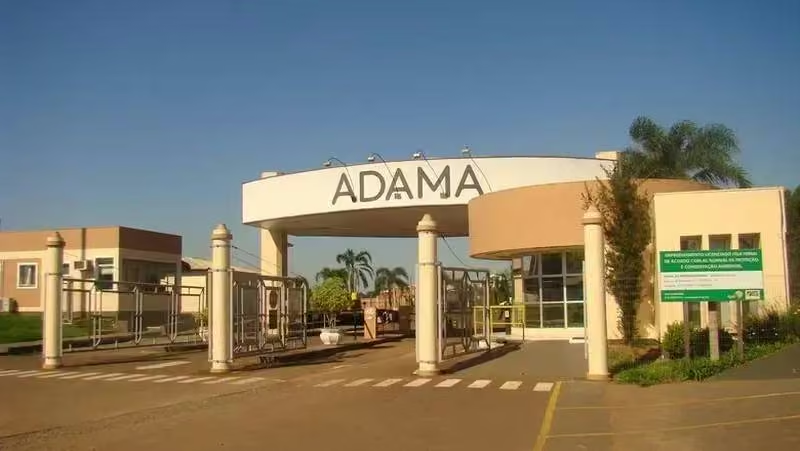
Adama, an agricultural crop protection firm, has announced it will cease production at its Taquari plant in Rio Grande do Sul, four years after investing 300 million reais in expanding the industrial complex in the municipality. The decision comes as traditional crop protection manufacturers face mounting pressure from intensifying competition by Chinese firms and shifting demand patterns in the Brazilian market.
The company, which is part of the Syngenta Group, stated that the closure is part of a global review of its industrial assets and active ingredient manufacturing network. In a statement, the company noted, "the measure reflects changes in market conditions and the need to align production with long-term demand."
The firm did not specify when operations will end or how many employees will be affected. It said the process will be managed with consideration for the impact on workers.
The announcement marks a shift in the company's industrial strategy in Brazil. In December 2022, Adama opened a new manufacturing facility in Taquari, dedicated to producing active ingredients for fungicides, primarily intended for soybean and cotton crops. The R$ 300 million investment was part of a plan to expand its Brazilian operations, with goals to double revenue in the country and launch five new fungicides in the following years.
Among the active ingredients planned for the unit was propiconazole, used in the manufacture of fungicides to control crop diseases. At the time, the company stated that the new multipurpose plant would allow it to strengthen its position among the world's largest producers of the active ingredient.
The project also aimed to reduce reliance on external suppliers and increase the domestic supply of inputs used in the production of crop protection products. During the inauguration, Adama highlighted that local production could mitigate supply risks associated with conflicts and logistical challenges in other countries.
The closure in Taquari will see Adama consolidate its Brazilian manufacturing operations at its facility in Londrina, Paraná. According to the company, no changes are planned for the Paraná plant, which will continue producing active ingredients such as diuron and imazetapir, while also formulating fungicides, herbicides, and insecticides.
In Rio Grande do Sul, the company will maintain its commercial operations and the Carazinho Distribution Center. Adama stated that the state remains strategic for its business, citing the importance of local agriculture and the relationships established with producers and partners.
Brazil remains the company’s largest operation, and Adama intends to continue developing products and maintaining commercial activities across the entire national territory, the company said.
Pressure on manufacturers
The closure of operations in Taquari comes amid a shift in the competitive landscape of the agricultural crop protection market. Established manufacturers are facing the expansion of Chinese firms, which have increased their presence in Brazil primarily through post-patent products, typically sold at lower price points.
Price pressure has intensified following a period of financial constraints for rural producers and a reduction in input investments. During the 2024 inventory crisis and the subsequent decline in revenues, farmers began prioritizing lower-cost alternatives for pest and disease control, a trend that has benefited generic suppliers.
According to a Rabobank analysis published by CNN Brasil, the recovery of the crop protection market is expected to be gradual. The bank projects that the chemical and biological products segment will reach $20.4 billion in 2026, representing a 1% increase from the previous year. For 2027, the forecast calls for a 2.7% growth, bringing the market value to $20.9 billion.
However, the uptick in demand is not expected to translate directly into a proportional recovery in corporate earnings. Competition from Chinese manufacturers has reshaped pricing dynamics and market share, while established firms continue to grapple with the lingering effects of revenue declines and inventory crises.
According to Rabobank, a more sustained sectoral recovery hinges on the financial improvement of rural producers and the resumption of agricultural investments. The bank anticipates that this momentum will build gradually, with broader impacts becoming evident starting with the 2027/28 crop season.
Chnchemicals take
This strategic withdrawal signals that established chemical producers are prioritizing network efficiency over regional market presence in Brazil. The decision reflects the intense competitive pressure from Chinese firms and shifting demand patterns that are eroding margins for traditional manufacturers. Investors should expect further consolidation as companies align production with long-term demand to survive in a highly competitive global supply chain.
Frequently asked questions
Why is Adama closing its Taquari plant in Rio Grande do Sul after a recent investment?
Adama is ceasing production at the Taquari plant as part of a global review of its industrial assets. The decision reflects changes in market conditions and the need to align production with long-term demand.
What was the scale of Adama's investment in the Taquari facility before the closure announcement?
Adama invested 300 million reais in expanding the industrial complex in Taquari. The facility was dedicated to producing active ingredients for fungicides intended for soybean and cotton crops.
How will the Taquari closure affect Adama's operations in other Brazilian states like Paraná?
Adama will maintain its commercial operations and distribution center in Rio Grande do Sul. The company stated that no changes are planned for its Londrina plant in Paraná, which will continue producing active ingredients.