South Korea: Shahin's Assault ①: 9 Trillion Won Shahin Project Nears Launch, Ulsan Business Restructuring Stalls
Key facts
- The Ulsan business restructuring involving S-Oil, SK Geo Centric, and Daehan Fibers has stalled due to lack of consensus
- Dasan and Yeosu Unit 1 restructuring plans are complete or in final stages, while Yeosu Unit 2 negotiations remain open
- Cumulative NCC capacity curtailed through Dasan and Yeosu No. 1 projects has reached 2.49 million tons of ethylene
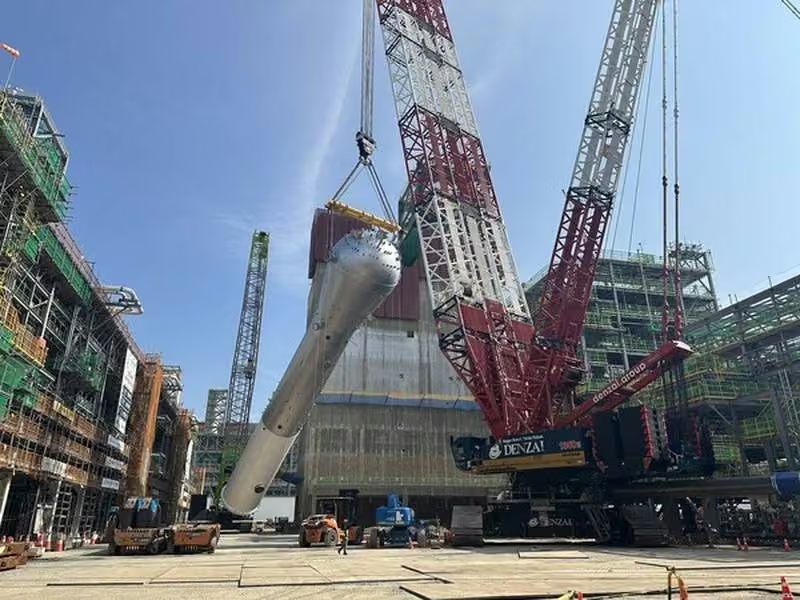
In August 2025, the government and ten petrochemical companies signed an autonomous agreement on business restructuring to revitalize the petrochemical industry. The restructuring plans for Dasan and Yeosu Unit 1 have either been completed or are in their final stages, while negotiations for Yeosu Unit 2 remain open. However, the Ulsan project, involving S-Oil, SK Geo Centric, and Daehan Eucar, has yet to show any progress. This stagnation stems from the inability to reach a consensus among local companies, driven by S-Oil’s push for the Shahin project, the largest petrochemical venture in Asia. The Shahin project, which is the root of the current dispute, is on track to begin trial operations in early next year. What does this project entail, given that it is poised to deliver a significant shock to the domestic and broader Asian petrochemical markets? / Editor’s Note
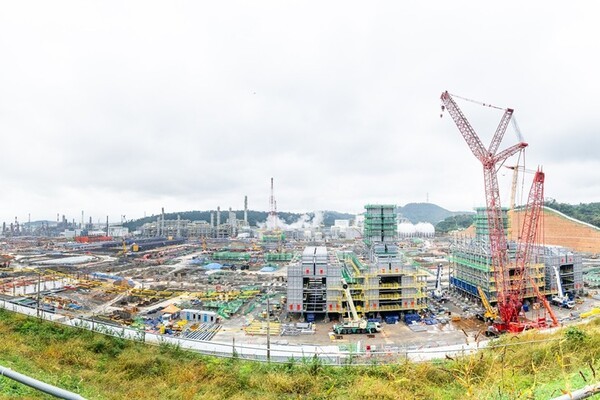
SEOUL — S-Oil unveiled its third-quarter financial results on Tuesday, alongside a detailed roadmap for the Shahin project. The company is preparing to mark its 50th anniversary with a completion ceremony in the fourth quarter of this year. With the mechanical completion of key facilities already achieved, S-Oil is currently conducting sequential commissioning tests, targeting full operational start-up in early next year.
The name “Shahin” derives from the Arabic word for falcon, the national bird of Saudi Arabia, which symbolizes the region’s heritage and wealth. The naming reflects the strategic intent of S-Oil’s parent company, Saudi Aramco. The total construction cost for the project stands at 9.258 trillion won, making it the largest petrochemical undertaking in South Korea. Aramco has provided 2.683 trillion won through loans and credit facilities, while the remaining 6.575 trillion won has been financed primarily through S-Oil’s own operating cash flow.
The Shahin complex incorporates a total conversion of crude to chemicals (TC2C) unit, which produces petrochemical feedstocks directly from crude oil, along with the world’s largest single-train steam cracker and polymer production facilities. Once operational, the plant will have the capacity to produce 1.8 million tons of ethylene, 770,000 tons of propylene, 880,000 tons of linear low-density polyethylene (LLPDE), and 440,000 tons of high-density polyethylene (HDPE) annually.
This production scale would effectively offset the entire volume of naphtha cracker (NCC) capacity that the petrochemical industry has reduced to date. Consequently, S-Oil’s Ulsan-based competitors, SK Geo Centric and Daehan Fibers, have struggled to reach a consensus on business restructuring, citing concerns over competitive fairness.
Industry data indicates that the cumulative NCC capacity (measured in ethylene production) curtailed through the Dasan and Yeosu No. 1 projects has reached 2.49 million tons. This figure approaches the government’s minimum reduction target of 2.7 million tons but falls short of the maximum target of 3.7 million tons.
If the Shahin project comes online, its annual ethylene output of 1.8 million tons would negate 72.3% of the capacity reduced so far. This would leave the effective net reduction at just 690,000 tons, shifting the burden of meeting the remaining reduction targets to rival companies.
The competitive dynamics in Ulsan further complicate the situation. Daehan Fibers currently has an ethylene production capacity of 900,000 tons, while SK Geo Centric operates at 660,000 tons. The combined capacity of these two rivals totals 1.56 million tons, a figure that the Shahin project would significantly surpass. For both companies, the prospect of ceding ethylene market leadership to S-Oil in a single move makes it difficult to agree to further capacity cuts.
SK Geo Centric operates a para-xylene (PX) production capacity of 1.33 million tons, while Daehan Fibers maintains a high-density polyethylene (HDPE) capacity of 650,000 tons. Producing these core products requires a stable supply of feedstocks such as ethylene and propylene. Competitors argue that if the Naphtha Cracking Complex (NCC) is scaled back and raw materials are sourced externally, a guaranteed stable supply price is essential. They contend that without such assurance, they cannot accept any reduction in their operations.
S-Oil, conversely, states that it is securing a competitive foundation for basic feedstock production to support the shift toward high-value-added products in South Korea’s petrochemical sector. In a statement released in August, the company described a competitive basic feedstock production base as a critical element for backing the industry’s transition to high-value-added products. It noted that without cost competitiveness at the basic feedstock stage to compete in the global market, it would be difficult to secure price competitiveness for specialty products in the final market.
The company further emphasized the need to enhance overall industry competitiveness by reducing excess capacity, making competitive equipment investments, and advancing low-carbon and high-value-added transitions while strengthening supply chain stability. S-Oil maintains that since China’s low-price volume offensive is a primary cause of the long-term downturn in the petrochemical industry, reliance on Chinese basic feedstocks should be replaced by domestic production.
Chnchemicals take
The stalled Ulsan restructuring creates a competitive imbalance that undermines the industry's collective effort to reduce excess capacity. Because S-Oil is proceeding with the Shahin project despite local disputes, competitors face heightened pressure to maintain margins against a new, massive domestic supply source. This divergence weakens the sector's ability to coordinate a unified response to global oversupply and low-price competition from China.
Frequently asked questions
When is S-Oil's Shahin project scheduled to begin trial operations and what is its significance for the Asian market?
The Shahin project is on track to begin trial operations in early next year. It is described as the largest petrochemical venture in Asia, poised to deliver a significant shock to domestic and broader Asian petrochemical markets.
How much NCC capacity has been curtailed through the Dasan and Yeosu No. 1 restructuring projects in South Korea?
The cumulative NCC capacity curtailed through the Dasan and Yeosu No. 1 projects has reached 2.49 million tons. This figure approaches the total capacity of the Shahin project, highlighting the scale of the industry's restructuring efforts.
Why have Ulsan-based competitors like SK Geo Centric and Daehan Fibers stalled on business restructuring negotiations?
Negotiations have stalled because local companies have failed to reach a consensus on competitive fairness. S-Oil's push for the Shahin project, which will add massive new capacity, has raised concerns among competitors about the impact on their market position.