China: Yangzi Petrochemical's new project lands in Nanjing
Key facts
- Yangzi Petrochemical signed an agreement on October 15 for a long-chain nylon project in Nanjing's Jiangbei New Area
- The project involves a total investment of approximately 3.198 billion yuan and requires 146,000 square meters of new land
- The facility will include a 50,000-ton-per-year YDA monomer unit and a 18,500-ton-per-year specialty nylon polymerization unit
- Sinopec holds full independent intellectual property rights for the YDA core process used in this new industrial chain project
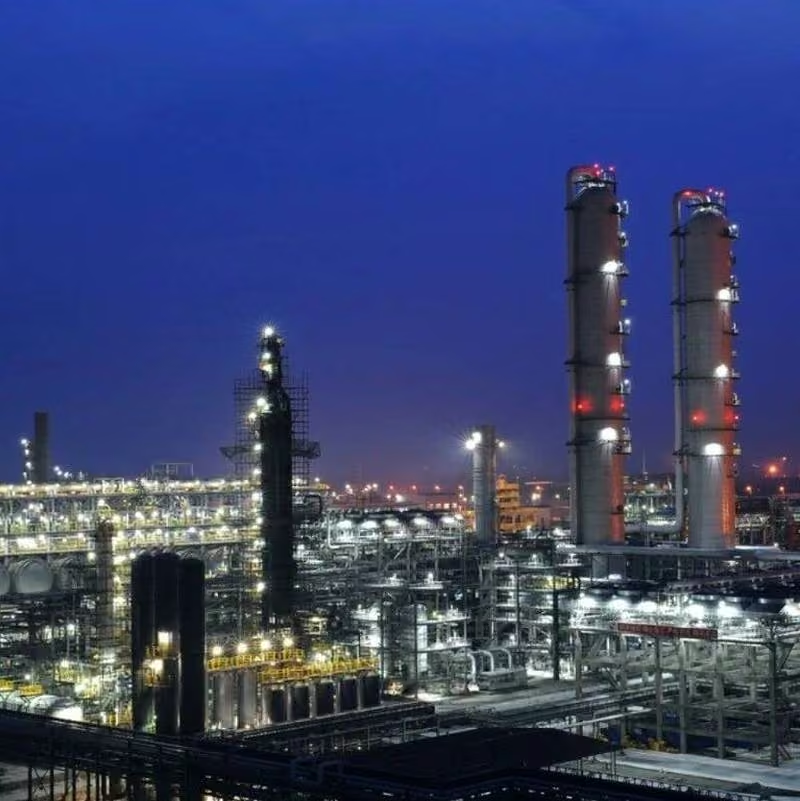
On October 15, Yangzi Petrochemical officially signed the agreement for its long-chain nylon industrial chain project, which will be established in the Jiangbei New Area of Nanjing.
The project involves a total investment of approximately 3.198 billion yuan and requires about 146,000 square meters of new land. It will feature a new 50,000-ton-per-year YDA monomer unit and a 18,500-ton-per-year specialty nylon polymerization unit.
The facility will utilize the YDA core process, for which Sinopec holds full independent intellectual property rights. The resulting products will match the performance of imported equivalents, with the overall technology reaching internationally advanced levels. This initiative fills a domestic gap in the industrialization of long-chain nylon monomers via the YDA method.
If you are not involved in the chemical or manufacturing sectors, the term “long-chain nylon” may not immediately register.
However, if you drive a new energy vehicle or follow developments in hydrogen storage, semiconductors, or high-end equipment, this material is already operating in the background, often unseen.
Conventional nylons, such as the familiar nylon 6 and nylon 66, have short molecular chains, high water absorption rates, and average dimensional stability. They are suitable for fibers and standard plastic components.
Long-chain nylon is different. It contains more than 10 methylene groups between two amide groups in its main molecular chain. This structure significantly reduces water absorption while enhancing low-temperature resistance, chemical corrosion resistance, toughness, and dimensional stability.
Applications include thermal management pipelines, high-voltage connector sheaths, hydrogen storage bottle liners, and liquid cooling pipes in new energy vehicles, as well as aviation components, precision gears, and insulation layers for high-end electronic cables.
Taking PA12 and PA11 as representative examples, the domestic reliance on imports exceeds 90%. The PA12 market is almost entirely controlled by four overseas firms: Evonik, Arkema, EMS, and Ube Industries, with a CR4 approaching 100%.
Global patent barriers for long-chain nylon monomers and complete processes are extremely high, and domestic large-scale independent production capacity has long been scarce.
In essence, the faster downstream high-end manufacturing advances, the more acute the “chokehold” becomes regarding upstream monomers.
Yangzi Petrochemical’s current objective is to produce long-chain diamine monomers independently by starting with long-chain dicarboxylic acids and undergoing nitrilation, rectification, hydrogenation, and purification, before polymerizing them into long-chain nylon.
While the scale of 50,000 tons of monomer and 18,500 tons of polymer is not massive, the significance lies not in tonnage but in closing the “monomer-to-polymer” chain domestically for the first time using an independent process.
Most observers of project news focus on investment amounts, production capacity, and signing dates. However, reviewing the materials reveals a timeline that is less typical for news coverage.
In July 2020, the project passed its completion environmental acceptance. Batch-process pilot products were verified through manufacturer application trials and met market application requirements.
Between 2022 and 2023, the pilot facility underwent continuous process modifications to transition from batch to continuous operation. The goal was clear: to verify whether the process could maintain stability under long-term, continuous industrial conditions.
True independence is not just about having one’s name on patents; it is about cultivating engineering capabilities in-house. Process packages and catalysts can be purchased, but the “feel” of running a process continuously, stably, and economically on an industrial unit cannot be bought.
China has not been inactive in the long-chain nylon sector. However, Yangzi Petrochemical’s project stands out because it is built on the foundation of integrated refining and chemical operations, allowing the company to complete the entire chain from monomer to polymer independently.
One piece of nylon, eight years of pilot testing, and 3.2 billion yuan. It is expected that in five years, the vehicles running on roads in the Yangtze River Delta, the blades turning in the wind, and the cables laid on the seabed will all bear the imprint of this industrial chain.
Chnchemicals take
This development significantly reduces supply chain risks for high-end manufacturers by securing a domestic source for critical long-chain nylon monomers. The project addresses a historical gap in independent production capacity, which has previously exposed buyers to high global patent barriers and limited supply options. By establishing a reliable local supply base, the initiative strengthens the resilience of the chemical supply chain for advanced manufacturing sectors.
Frequently asked questions
What is the total investment and location of Yangzi Petrochemical's new long-chain nylon project?
The project is located in the Jiangbei New Area of Nanjing with a total investment of approximately 3.198 billion yuan. It requires about 146,000 square meters of new land for construction.
What are the specific production capacities for the YDA monomer and specialty nylon units in this project?
The facility will feature a 50,000-ton-per-year YDA monomer unit and a 18,500-ton-per-year specialty nylon polymerization unit. These units utilize the YDA core process for which Sinopec holds full independent intellectual property rights.
How does this new capacity impact the domestic supply of long-chain nylon monomers for high-end manufacturing?
This initiative fills a domestic gap in the industrialization of long-chain nylon monomers via the YDA method. It reduces reliance on imports for critical materials used in new energy vehicles, hydrogen storage, and semiconductors.