Global Fertilizer Prices Skyrocket, Yet China Sells at Low Prices Worldwide: What's the Strategy Behind It?
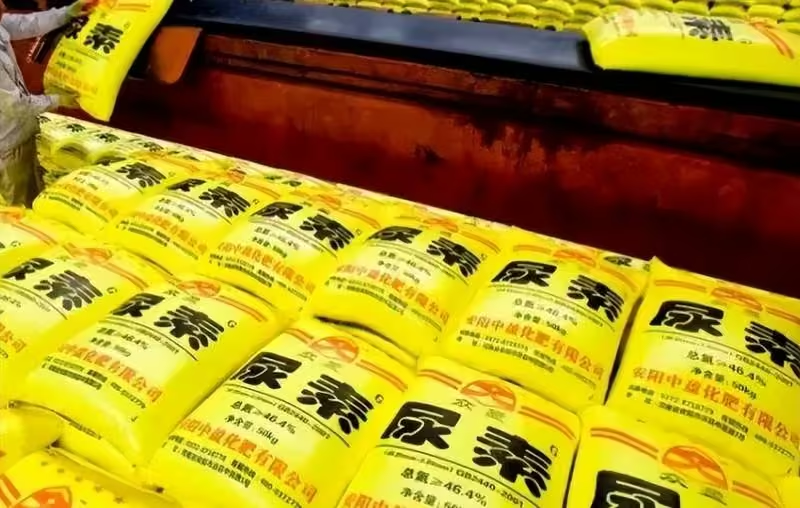
Key facts
- Global urea prices surged from under $500 to $850 per ton, with Middle East offshore prices jumping over 70 percent
- China's domestic urea prices remain between 1,800 and 1,870 yuan per ton, creating a significant price gap with global markets
- Approximately 70 percent of global urea production relies on natural gas, making costs highly sensitive to energy price fluctuations
- China's coal-based urea capacity accounts for nearly 80 percent of its total production, anchoring lower domestic production costs
- China's annual urea export quota expanded to between 5 and 6 million tons by the end of September
Global urea prices have surged from under $500 per ton to $850, with Middle East granular urea offshore prices jumping by more than 70 percent. Any tension in the Strait of Hormuz immediately rattles a third of the world’s seaborne fertilizer trade and nearly half of global sulfur exports. Meanwhile, mainstream domestic factory-gate prices for small and medium granular urea remain in the range of 1,800 to 1,870 yuan per ton. Two distinct markets exist on either side of the border.
The overseas price spike is driven by gas costs. Approximately 70 percent of global urea production capacity relies on natural gas. In Europe, the Middle East, and South Asia, a single jump in gas prices pushes factory costs past the breaking point. A fertilizer plant in northern France has already shut down, U.S. fertilizer supply has fallen by nearly a quarter compared with previous years, and India has been forced to issue emergency tenders at double the usual prices.
China is operating on a different economic model. The country’s long-standing resource profile—rich in coal, poor in oil, and limited in gas—has shaped its industry. Coal-based capacity now accounts for nearly 80 percent of China’s urea production. In 2025, national urea output reached 72.013 million tons. As of August 2026, daily national production still exceeds 200,000 tons, with an overall operating rate of about 81.45 percent. The operating rate for coal-based plants stands at 81.80 percent.
More than 80 percent of the coal used by coal-based urea producers is locked in at fixed prices through medium- and long-term contracts. The delivered price of anthracite lump coal hovers just above 900 yuan per ton, while bituminous coal sits in the 700-yuan range, with minimal volatility. Raw material costs represent roughly 70 percent of urea production expenses. Stable coal prices translate directly into stable factory-gate prices. Consequently, the 40 to 50 percent cost advantage of Chinese coal-based urea over international gas-based urea is not a temporary anomaly. It is the cumulative result of resource endowments and industrial structure.
Capacity alone is not enough; the final gate is controlled by policy. During the critical spring planting period in March 2026, phosphate fertilizer exports were suspended first, with the export window locked until August 31. Urea is not subject to a “ban,” but it operates under a “quota plus legal inspection” regime. Small-package shipments were halted until the end of April, and the overarching principle is singular: domestic farmland must be supplied first.
The state also maintains a commercial fertilizer reserve pool on the scale of tens of millions of tons. Before spring planting, reserve-holding enterprises are required to release nearly 10 million tons, following a pattern of stockpiling during off-peak seasons and releasing during peak demand to smooth out market rhythms. Prices are not entirely left to market forces. The mainstream ex-factory price cap is anchored around 1,850 yuan per ton, with industry associations monitoring the market daily. If the daily price increase exceeds 50 yuan, new legal inspections are temporarily suspended. Enterprises may operate at full capacity, but the goods must be reserved for domestic users first.
So why not capitalize on the high overseas prices? In reality, exports are not banned, but they are managed by timing, volume, and target. In March, controls were strict. By the end of May, as spring planting concluded, an initial self-discipline quota of approximately 2 million tons was released. In June, only half of the quota was permitted for execution, with balanced shipments to resume in July and August. Actual exports in June were 7,000 tons, rising to 403,000 tons in July and 520,000 tons in August, following a “squeezing the toothpaste” pace.
A third batch of export quotas, ranging from 2 to 2.5 million tons, was issued in mid-September. By the end of the month, the annual urea export quota had expanded to between 5 and 6 million tons, yet regulatory inspections and release schedules remained strict constraints. Chinese supply has indeed become a price low point in the global market. On September 18, the Chinese offshore price for small-particle urea stood at $355 to $365 per ton, while the same grade from the Middle East traded at $430 to $460 per ton. Large-particle urea was priced at $420 to $435 per ton, with Southeast Asian delivered prices reaching $450 to $470 per ton. Although a stable margin existed, it was not sufficient to trigger a rush of aggressive buying by foreign firms.
The fertilizer flowing outward is primarily destined for Southeast Asia, Africa, and Latin America. These regions are not suffering from a lack of capital, but from a shortage of supply. Following the disruption of Middle Eastern flows, the Philippines has been seeking long-term suppliers, while food-importing nations in East Africa have been the first to feel the strain. China’s strategy of offering competitive prices and maintaining a steady release schedule is not filling a “high-profit market,” but rather addressing a “supply gap.”
The underlying logic is not charity, but strategic exchange. The uninterrupted supply of fertilizer is bundled with hybrid rice seeds, soil improvement measures, and agricultural technology training. Farmers in Southeast Asia and Africa are gradually forming a habit: Chinese products may not always be the cheapest option, but they reliably meet planting schedules and honor contracts. China still faces vulnerabilities in potash and sulfur. Potash remains partially dependent on imports, and the external dependency rate for sulfur is approximately 45%, meaning phosphate fertilizer raw material costs are subject to international market fluctuations. Therefore, the domestic position is not one of total immunity, but rather a strategy that uses coal as the foundation for nitrogen fertilizer, relies on reserves and quotas to stabilize phosphate fertilizer, and employs diversified procurement to manage potash risks.
Domestic urea production capacity is set to continue expanding in 2026, with year-end output projected to reach 77.8 million metric tons, creating a slight oversupply. A modest increase in exports serves to alleviate domestic inventory pressure, provided that local prices remain stable. As the autumn fertilization season winds down and winter stockpiling has not yet gained momentum, compound fertilizer production rates have dropped to approximately 30 percent, while downstream buyers remain cautious. If export volumes were to surge prematurely, domestic prices would likely rise, thereby increasing fertilization costs for farmers.
China has neither dumped its entire inventory at peak prices nor rushed to secure orders during price troughs. This measured approach reflects the management of fertilizers as strategic reserves rather than ordinary commodities. The supply chain for a single bag of urea is constrained by eight interdependent factors: coal, natural gas, sulfur, port logistics, state reserves, legal inspections, agricultural cycles, and grain prices.
While foreign farmers worry about availability, domestic farmers are concerned with price stability. This dual assurance is not a matter of chance but the result of decades of infrastructure development. Coal-based production capacity anchors costs, state reserve buffers absorb market volatility, and controlled export mechanisms prevent arbitrage-driven price spikes. Fertilizer stability removes a key variable from grain price equations. The outcome is unremarkable but critical: field fertilization has never been interrupted.
Chnchemicals take
The divergence between soaring global prices and stable Chinese costs highlights a structural advantage for coal-based producers in volatile energy markets. By decoupling production from gas price shocks, China maintains export competitiveness while ensuring domestic supply security. This dynamic forces global buyers to reassess long-term sourcing strategies, as energy-intensive regions face persistent cost pressures that erode margins and disrupt traditional trade flows.
Frequently asked questions
Why have global urea prices surged to $850 per ton while China maintains low domestic prices?
Global prices rose due to high natural gas costs affecting 70 percent of production capacity, while China relies on coal-based production for 80 percent of its urea. This structural difference allows China to keep domestic factory-gate prices stable at 1,800 to 1,870 yuan per ton despite global spikes.
How did China manage urea export volumes in June, July, and August 2024?
Actual exports were 7,000 tons in June, rising to 403,000 tons in July and 520,000 tons in August. This controlled release followed a strategy of balanced shipments to prevent arbitrage-driven price spikes and ensure domestic supply stability.
What impact did the expansion of China's annual urea export quota have on global trade flows?
The annual urea export quota expanded to between 5 and 6 million tons by late September. This increase allowed for controlled international supply while maintaining domestic price stability, preventing the kind of volatility seen in gas-dependent regions like Europe and the Middle East.