Fertilizer Market: Urea Prices Expected to Rise Further Amid Absence of Imports from Algeria and Continued Surge in Natural Gas Prices
Key facts
- French urea prices rose by €20 per tonne since early November, reaching €580 per tonne on the local market
- Algeria supplied nearly 30% of the urea used by French farmers in 2025, according to data from Afcome
- The French government announced on November 13 that it would seek European Commission action regarding the Algeria-EU agreement
- Algerian producers reportedly instructed traders to stop selling urea cargoes to French buyers, citing specific contract clauses
- Reduced global urea availability is a primary driver behind current price increases, according to industry reports from Agryco
Urea price drivers are tilting further toward continued increases rather than the opposite.
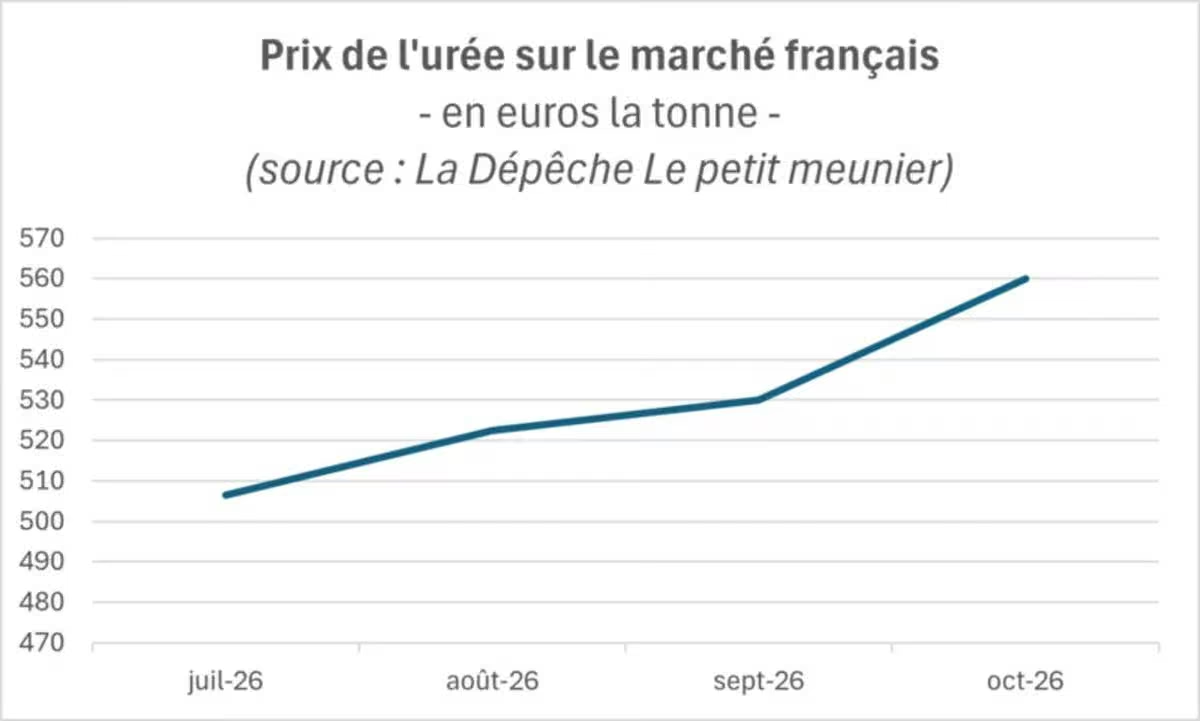
Urea prices, already under pressure from the surge in natural gas costs—a key input in its production—could climb even higher if France can no longer import the fertilizer from Algeria. Since the start of November, the price of urea on the French market (see chart above) has already risen by €20 per tonne, reaching €580 per tonne.
This is the concern of the French government, following reports from diplomatic and industry sources that Algeria has banned its main urea producer from exporting to France. It is worth noting that Algeria supplied nearly 30% of the urea used by French farmers in 2025, according to Afcome (the French Association for Fertilizer Marketing and Blending).
Algerian urea imports: a factor to watch
The Afcome has been on alert since mid-October, with several of its members reporting the existence of trade restrictions. "One of Algeria's largest urea producers is said to have asked multiple traders to stop selling their cargoes to French buyers. This request is even specified in the contracts, in the form of a clause," RFI reported. It added: "The information is confirmed by the agency Reuters, which relies on three diplomatic sources."
However, Algerian authorities have not announced any official measure, and the volumes allegedly interrupted have not yet been publicly established. In fact, "import customs data are generally accessible with a two-month lag," explains Emmanuel Nizon, head of public affairs at the Afcome.
It will therefore be necessary to closely monitor the upcoming published figures "to confirm the reality of these limitations on urea trade," indicates the spokesperson for the professional organization.
France's concerns over urea supply
To prepare for a potential confirmed drop in urea imports from Algeria, France intends to request that the European Commission review provisions within the association agreement between Algeria and the European Union that could be triggered if commitments are not met, according to an announcement made on Friday, November 13, by Pascal Confavreux, the spokesperson for the French Ministry of Foreign Affairs.
This French decision to seek action from the European executive marks a new development in the dispute between France and Algeria, which was sparked in July 2024 by French President Emmanuel Macron’s support for the Moroccan autonomy plan for Western Sahara.
For its part, Algeria, which has criticized the trade imbalances in the association agreement signed in 2002 and entered into force in 2005, has repeatedly called for its renegotiation.
Chnchemicals take
The suspension of Algerian exports to France creates a significant supply shock that will likely force European buyers to seek alternative, more expensive sources. This disruption highlights the vulnerability of regional fertilizer markets to geopolitical trade restrictions, as the loss of a major supplier directly impacts local pricing structures. Producers and traders must now navigate a tighter global market where reduced availability is the dominant factor driving cost increases.
Frequently asked questions
Why are urea prices in France expected to rise further despite current market conditions?
Prices are expected to rise due to a reported ban on Algerian urea exports to France and surging natural gas costs. These factors have already pushed French urea prices up by €20 per tonne to €580 per tonne since November.
What percentage of French agricultural urea usage was supplied by Algeria in 2025?
Algeria supplied nearly 30% of the urea used by French farmers in 2025. This significant dependency makes the recent export restrictions a critical supply risk for the French agricultural sector.
How does the absence of Indian imports affect global urea supply and pricing dynamics?
The absence of India, the world's largest buyer, reduces global market availability and drives up prices. Chinese producers may seek other customers to offset logistics costs, potentially lowering their prices to remain competitive in broader markets.