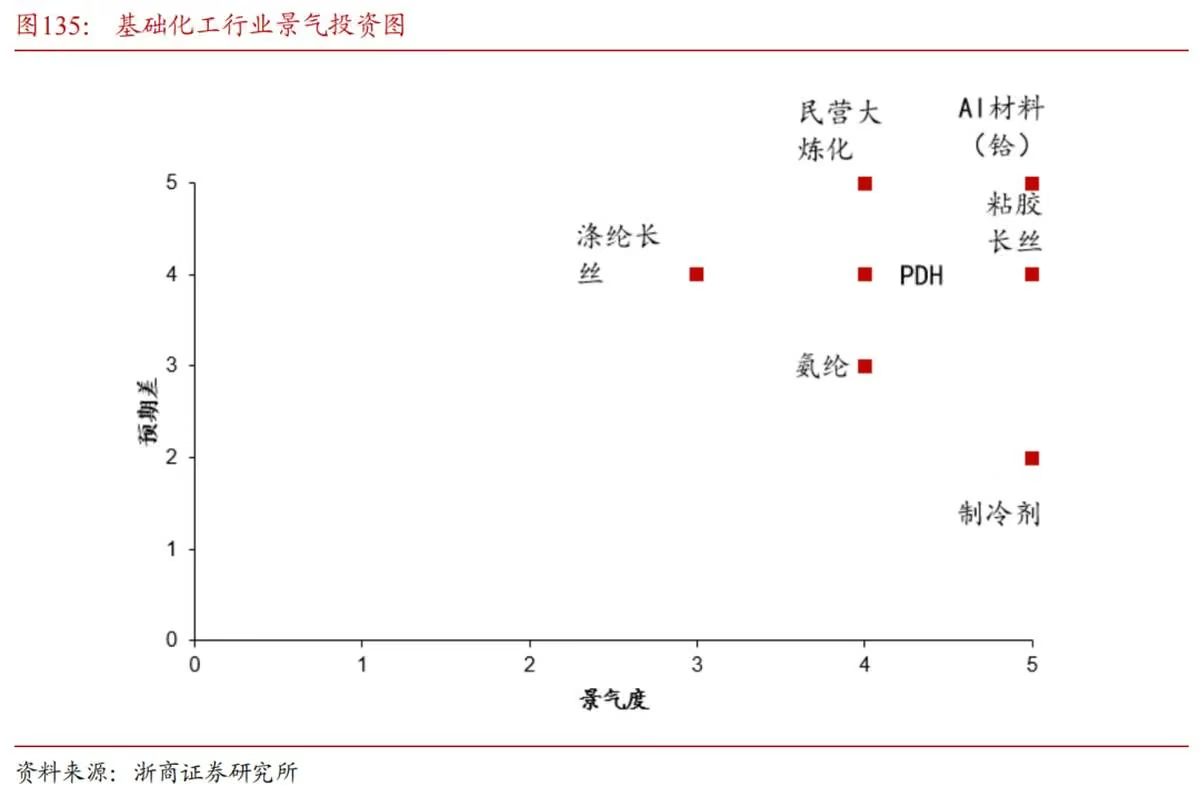
China: Zheshang Chemicals | 2027: Full Conviction in Large-Scale Refining, Chemical Fibers, PDH, Refrigerants, and AI Materials
Key facts
- Xinxiang Chemical Fiber will suspend its northern biomass cellulose filament line starting October 12, 2026, affecting 31,200 tons of annual viscose capacity
- Industry operating rates for chemical fibers have remained at historically high levels between 88% and 90% since the beginning of 2026
- Analysts project that if geopolitical conflicts conclude, oil prices may revert to oversupply expectations and decline to a center of $70 per barrel
- Short-term oil price volatility is increasingly driven by rising trade costs and risk premiums from geopolitical conflicts rather than physical output losses
The core short- to medium-term dynamic is no longer solely defined by the magnitude of physical output losses in the Gulf region. Instead, it is increasingly driven by rising trade costs and risk premiums stemming from geopolitical conflicts, with low inventory levels amplifying the elasticity of these short-term risk premiums. We believe that if geopolitical disruptions persist, oil prices are likely to remain elevated and volatile in the short to medium term. Market sentiment is highly susceptible to event-driven shocks; developments in US-Iran diplomatic mediation or sudden incidents such as tanker attacks in the strait can trigger phased, pulse-like surges or pullbacks in oil prices. In the long run, if the conflict concludes substantively, the market may revert to trading on oversupply expectations, potentially causing the price center to decline to $70 per barrel.
Currently, market understanding of the performance improvement among private large-scale petrochemical companies remains limited to the notion that "rising oil prices boost inventory gains." There is still insufficient appreciation for the improvement in the global refining and chemical competitive landscape and the competitive advantages held by domestic private major petrochemical players. We argue that the benefits from the external industry restructuring are gradually materializing as incremental corporate performance, and the valuation framework is poised for a reassessment. This judgment rests on three primary factors: 1) 2026 marks the return of the profit center to higher levels under elevated oil prices, following the industry's "pain period," with cross-cycle core competitiveness gradually emerging; 2) The core advantages of private major petrochemical firms in scale, process technology, and supply chain constitute a highly scarce industrial barrier; 3) Benefiting from improved supply-demand dynamics, full-chain price spreads continue to widen, potentially establishing a turning point in refining and chemical sector prosperity. Relevant stocks include: [Rongsheng Petrochemical], [Hengli Petrochemical], [Dongfang Shenghong], [Hengyi Petrochemical], and others.
In June 2026, the per-ton profit for the domestic PDH process recovered to approximately 300 yuan/ton, achieving a turnaround to profitability. We believe the PDH process profit center is poised to rise in the long term for two reasons: 1) The long-term propane price center is expected to decline. The US faces a propane surplus with a strong incentive for export. Between 2026 and 2028, a series of LPG export facilities, including the Enterprise EHT expansion and the new Texas City terminal, are scheduled to come online along the US Gulf Coast, adding nearly 1.3 million barrels per day of LPG export capacity. Concurrently, multiple LPG/NGL projects, such as the Jafurah and North Field expansions in the Middle East, are set to commence operations sequentially between 2026 and 2030. 2) As of August 2026, China's propylene production capacity stood at 79.05 million tons, a year-on-year increase of 2.42%. An additional 2.5 million tons of capacity is expected to be commissioned by December 2026, with no further capacity plans currently in place. This indicates a marked slowdown in industry supply growth, suggesting an improvement in the supply-demand landscape. Relevant stocks include: [Wanhua Chemical], [Satellite Chemical], [Jinneng Technology], [Donghua Energy], [Weiyuan Shares], [Dongfang Shenghong], and others.
The peak of new spandex capacity additions has already passed. As of August 2026, domestic production capacity stands at approximately 1.459 million tons, representing a year-on-year increase of 1.79%. This growth rate is significantly lower than the compound annual growth rate of approximately 10% observed between 2021 and 2024. Furthermore, Huahai, the industry’s second-largest producer with 225,000 tons of capacity, has filed for bankruptcy. If the company ultimately exits the market, it would result in an immediate contraction of approximately 15% of total industry capacity. Additionally, cumulative capacity eliminated since 2019 has exceeded 200,000 tons, indicating a continuous process of supply-side rationalization.
On the demand side, the recovery in end-use textile and apparel consumption, coupled with increasing spandex penetration rates, has supported robust demand resilience. Apparent consumption from January to July 2026 rose 15.48% year-on-year. Industry operating rates have steadily recovered from the cyclical low of 70.17% recorded in 2022, with the average rate rising to 86.48% since the beginning of 2026.
Looking ahead to 2027, if Huahai does not exit the market, operating rates could reach 89.47%, a five-year peak. However, if Huahai exits and the industry operating rate is assumed to be 90%, a supply gap of approximately 190,000 tons is projected. This suggests a structural shift in the supply-demand balance from "overall oversupply" to "tight equilibrium." Relevant stocks: [Huafon Chemical], [Xinxiang Chemical Fiber].
According to data from Baichuan Yingfu, only four companies maintain effective production in the domestic viscose filament sector, with a CR3 (concentration ratio of the top three firms) of approximately 95%. The only confirmed new capacity additions are 15,000 tons from Jilin Chemical Fiber and 20,000 tons from Xinxiang Chemical Fiber, highlighting the extreme rigidity of supply.
As disclosed in Xinxiang Chemical Fiber’s announcement, the company will suspend operations of its northern biomass cellulose filament production line starting October 12, 2026. This suspension involves an annual capacity of 31,200 tons of viscose filament. Since the beginning of 2026, industry operating rates have remained at historically high levels between 88% and 90%. As of the week ending October 10, the operating rate stood at 88%, maintaining this elevated position.
Demand is characterized by a dual structure of "domestic upgrading and stable external demand." Apparent consumption increased from 77,600 tons in 2022 to 142,400 tons in 2025. The export share of apparent consumption rose to 52% in the first nine months of 2026. In terms of pricing, the average price of viscose filament was 45,000 yuan per ton as of early September.
Supply-demand balance sheets indicate that, driven by strong demand, implied operating rates for 2027 and 2028 are expected to remain above 80%, even after accounting for all planned new capacity. This level is significantly higher than the bottom of the previous economic cycle. The combination of rigid supply and structural demand upgrades, alongside a tight supply-demand balance and moderate raw material costs, suggests that price spreads may continue to operate at high levels. This provides strong certainty for the profitability of leading industry players. Relevant stocks: [Jilin Chemical Fiber], [Xinxiang Chemical Fiber].
In the short term, the polyester filament sector is expected to remain in a state of tight equilibrium characterized by weak demand and constrained supply. On the demand side, fragmented orders and sustained high raw material costs continue to pressure downstream factories. Consequently, downstream weaving machine operating rates are expected to remain at low levels. According to Wind data, the operating rate for weaving machines in the Jiangsu-Zhejiang region was 51.38% in the week ending October 22.
On the supply side, if current production cuts are maintained, the polyester filament market is projected to remain in a tight equilibrium with weak demand and supply in the fourth quarter. This dynamic is expected to provide resilience to filament processing margins. Additionally, current downstream inventory levels are at historical lows. If crude oil prices stabilize in the coming period, restocking across various downstream segments is anticipated, which could further enhance industry profitability.
From a medium- to long-term perspective, the peak period for new polyester filament capacity additions has passed. This is compounded by the accelerated elimination of outdated capacity. According to Zhuochuang Information, as of the first half of 2026, the total capacity of polyester filament plants operating for more than 20 years in China stood at 6.15 million tons, accounting for 12.4% of the national total. Coupled with a shift in overall industry operating strategies, the profit center for the polyester filament sector is expected to gradually rise. Relevant stocks: [Tongkun Group], [Xinfengming].
Supply in the refrigerant sector continues to tighten under the constraints of the Montreal Protocol and the Kigali Amendment. In China, second-generation products such as R22 are being phased down according to the elimination schedule, while third-generation hydrofluorocarbons (HFCs) were frozen in 2024 and will begin to be reduced from 2029. This trajectory suggests a long-term improvement in the industry's supply-demand balance. On the demand side, domestic production of air conditioners and automobiles is growing steadily. Additionally, global cooling demand is rising due to climate warming, and there remains significant room for increased air conditioner penetration in overseas markets. Consequently, refrigerant demand is expected to expand continuously. Driven by these factors, prices and margins for third-generation refrigerants have risen consistently since 2023 and remain at high levels. The industry's strong performance is likely to persist. Key stocks to watch include Juhua Group, Haohua Technology, and Sanmei Chemical.
The application of hafnium in advanced manufacturing processes and memory storage is expanding, positioning the material to benefit from the growth in memory chips and the semiconductor industry driven by artificial intelligence. However, supply-side increments for hafnium are expected to remain limited, suggesting that the supply-demand landscape will stay tight and that price increases may continue. According to Strategic Metals Invest, as of October 28, 2026, the overseas price for hafnium metal was $9,576.7 per kilogram (approximately 64 million RMB per ton), representing a year-on-year increase of 88.5%. On November 2, the zirconium-hafnium separation project line at Sanxiang New Materials was fully completed and entered the equipment commissioning phase. The facility has successfully produced electronic-grade hafnium oxychloride with a purity of 4N5 to 5N, advancing the domestic substitution of high-end zirconium and hafnium materials. Key stock to watch: Sanxiang New Materials.
Potential risks include oil price volatility, geopolitical instability, macroeconomic fluctuations, overcapacity, project capital expenditure issues, and project delays.
Chnchemicals take
The suspension of significant viscose capacity highlights how geopolitical risk premiums are distorting normal supply-demand dynamics in the chemical sector. Producers must recognize that current margins are inflated by temporary risk factors rather than structural demand improvements. Investors should monitor geopolitical de-escalation signals, as a return to oversupply expectations could rapidly compress profit margins across the refining and chemical value chain.
Frequently asked questions
What specific business segments does Zheshang Chemicals prioritize in its 2027 strategic outlook?
Zheshang Chemicals prioritizes large-scale refining, chemical fibers, PDH, refrigerants, and AI materials. This focus reflects a strategic shift toward high-value segments to mitigate geopolitical risks and enhance long-term profitability.
How do geopolitical conflicts and low inventory levels influence short-term oil price dynamics?
Geopolitical conflicts and low inventory levels amplify the elasticity of short-term risk premiums in oil prices. Rising trade costs and risk premiums are increasingly driving market dynamics rather than just physical output losses.
What is the potential long-term impact on oil prices if geopolitical conflicts conclude substantively?
If geopolitical conflicts conclude substantively, the market may revert to trading on oversupply expectations. This shift could cause the oil price center to decline to $70 per barrel in the long run.