Malaysia: Asian petrochemical downturn to persist... Lotte Chemical's Malaysian BTX utilization rate drops to single digits
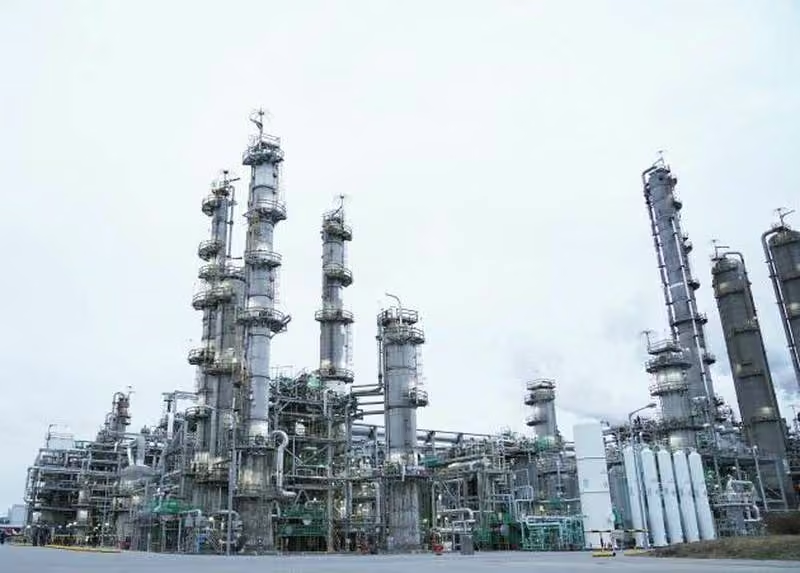
The utilization rate of the aromatics unit at LC Titan, a Malaysian subsidiary of Lotte Chemical, has fallen into single digits. Industry observers attribute this production adjustment to deteriorating profitability, as the price of naphtha, a key feedstock, has risen more sharply than product prices amid a prolonged downturn driven by supply oversupply originating from China.
According to Lotte Chemical's third-quarter report released on the 17th, the cumulative utilization rate of LC Titan's benzene, toluene, and xylene (BTX) facilities for the first nine months of this year stood at 8.5%. This represents a 21.7 percentage point drop from the 30.2% annual utilization rate recorded last year. Production data shows that cumulative output for both the first quarter and the first nine months of the year was identical at 18,397 tons. This suggests that no additional production took place during the second and third quarters. Consequently, the cumulative utilization rate declined from 25.8% in the first quarter to 12.7% in the first half, and further down to 8.5% by the end of the third quarter.
Lotte Chemical explained that, similar to its domestic operations where production facilities are occasionally suspended or restarted based on market conditions, LC Titan has temporarily halted operations in response to current market circumstances.
This production adjustment coincides with broader profitability declines across the Asian petrochemical sector. The prolonged oversupply of commodity petrochemical products, driven by large-scale capacity expansions centered in China, has been compounded by feedstock supply instability resulting from the Middle East conflict earlier this year. Analysts note that unstable naphtha supply in the region has increased freight and logistics burdens.
BTX is produced by processing pyrolysis gasoline, a byproduct of naphtha cracking. Even if product prices rise, processing margins inevitably shrink if feedstock costs increase at a faster rate. Indeed, the international price of benzene rose by $213 per ton, from $749 last year to $962 by the end of the third quarter this year. Over the same period, naphtha prices increased by $236 per ton, from $596 to $832. The simple price differential between benzene and naphtha narrowed from $153 to $130.
LC Titan's other basic chemical facilities also recorded low utilization rates. On a cumulative basis for the first nine months of this year, the naphtha cracking complex (NCC) operated at 38.5% utilization, while polypropylene (PP) stood at 32.7%. These figures represent declines of 6.5 percentage points and 10.1 percentage points, respectively, compared to last year's annual levels.
Market observers anticipate that Lotte Chemical will accelerate its restructuring of overseas operations, including the divestiture of LC Titan. However, a company representative stated that no specific decisions have been finalized to date, adding that the firm is examining various options to transition its business portfolio.
Chnchemicals take
The sharp decline in LC Titan's utilization signals that Asian petrochemical margins are under severe pressure from Chinese oversupply and volatile feedstock costs. Producers and traders should anticipate further capacity rationalization as firms like Lotte Chemical explore divestitures to stabilize portfolios. This structural shift suggests that regional supply chains will continue to tighten, forcing buyers to seek alternative sources and investors to reassess the viability of marginal overseas assets.
Frequently asked questions
What was the cumulative utilization rate of Lotte Chemical's LC Titan BTX unit for the first nine months of this year?
The cumulative utilization rate stood at 8.5% for the first nine months of the year. This represents a significant drop from the 30.2% annual utilization rate recorded in the previous year.
How did the production output of LC Titan change between the first quarter and the end of the third quarter?
Cumulative output remained identical at 18,397 tons for both the first quarter and the first nine months. This indicates that no additional production took place during the second and third quarters of the year.
What factors are cited as the primary drivers for the production adjustment at Lotte Chemical's Malaysian subsidiary?
Deteriorating profitability is the main driver, with naphtha feedstock costs rising more sharply than product prices. This is compounded by a prolonged downturn driven by supply oversupply originating from China.