South Korea: Chinese Overcapacity Pushes Korean and Japanese Chemical Firms to Diversify, Seeking Breakthrough in Semiconductor Materials
Key facts
- LG Chem is evaluating an isopropyl alcohol production line for semiconductor cleaning at its Yeosu plant, with details on scale and timeline still undecided
- The company currently produces 165,000 tons annually of propylene-based C3-IPA at Yeosu and signed an MOU with Zhanghuawei for ultra-high-purity IPA collaboration
- Japan reduced its ethylene production capacity from 7.4 million tons to 6.2 million tons annually to pivot toward high-value materials
- Industry observers state that expanding production facilities alone is insufficient for profitability, as securing customers requires navigating rigorous quality verification processes
As excess supply from China erodes margins in the commodity petrochemical sector, major chemical companies in South Korea and Japan are expanding their operations in semiconductor materials. The industry is undergoing a structural shift toward high-value-added products, driven by capacity expansions, joint venture investments, and corporate acquisitions.
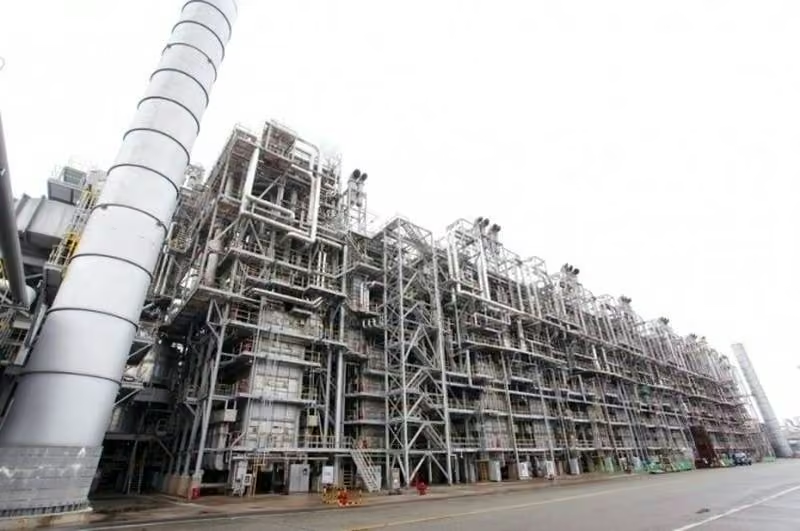
According to industry sources on the 15th, LG Chem is considering the construction of an isopropyl alcohol (IPA) production line for semiconductor cleaning at its Yeosu plant. The specific location for this potential expansion is the site of the company’s existing neopentyl glycol (NPG) facility. Details regarding the investment decision, scale, and timeline have not yet been finalized.
IPA serves as a critical cleaning material for removing impurities from wafer surfaces. LG Chem currently produces 165,000 tons annually of propylene-based C3-IPA at its Yeosu facility. In September, the company signed a memorandum of understanding (MOU) with Zhanghuawei, a Chinese specialty chemical firm, to collaborate on ultra-high-purity IPA. Under this agreement, LG Chem will supply the raw materials, while Zhanghuawei will handle the purification process to produce the ultra-high-purity product.
Lotte Chemical is also expanding its semiconductor materials footprint through its joint venture with Japan’s Tokuyama, known as Handok Chemical. In June, Handok Chemical broke ground on a 130 billion won facility in the Pocheon Industrial Complex in Pyeongtaek, Gyeonggi Province, dedicated to producing tetramethylammonium hydroxide (TMAH) for semiconductor and display applications. Tokuyama stated that the target for commercial operation is September of next year.
Handok Chemical, in which Lotte Chemical and Tokuyama hold equal 50% stakes, has been producing semiconductor developing solutions in Ulsan since 1995. The new Pyeongtaek plant will mark the company’s second production site. The operational structure involves Lotte Precision Chemical supplying the raw material tetramethylammonium chloride (TMAC), which Handok Chemical then processes into the final TMAH product.
Japanese chemical firms have previously consolidated and downsized their commodity petrochemical operations to pivot toward high-value materials. According to the Overseas Economic Research Institute of the Export-Import Bank of Korea, Japan reduced its ethylene production capacity from 7.4 million tons to 6.2 million tons annually since 2014. Recently, the sector has intensified its focus on semiconductor materials through acquisitions and capital investments.
Mitsui Chemicals signed an acquisition agreement for semiconductor materials firm JSR on the 9th. The total transaction value, including debt, stands at 1.84 trillion yen (approximately 15.3 trillion won). JSR is a key player in the photolithography market, specifically in the photolithography resists used for forming fine circuits in semiconductors. Mitsui Chemicals plans to expand its semiconductor materials portfolio across both front-end and back-end processes by integrating JSR’s photolithography resist lineup with its existing Pellicle and process tape products.
Mitsubishi Chemical has committed to commercializing its ultra-high-purity colloidal silica business for semiconductor applications, a decision finalized in August. The company plans to construct a new facility in Kitakyushu, Fukuoka Prefecture, with commercial operations slated to commence in October 2028. This material serves as a key raw ingredient for the slurry used in the chemical mechanical planarization (CMP) process, which is essential for flattening wafer surfaces.
While Japanese and South Korean chemical firms are expanding their semiconductor materials portfolios, China’s petrochemical production capacity continues to swell. A report released this year by the China National Petroleum Corporation’s Economic and Technology Research Institute indicates that China’s annual ethylene production capacity reached 62.7 million tons last year, marking an increase of 8.15 million tons from the previous year.
The semiconductor materials sector demands exceptional levels of purity and consistent quality, meaning that securing new customers requires significant time and technical expertise. Industry observers note that merely expanding production facilities is insufficient for achieving tangible profitability improvements; instead, companies must navigate rigorous customer quality verification processes to secure stable supply volumes.
Chnchemicals take
The structural shift from commodity petrochemicals to semiconductor materials signals a necessary pivot for Asian producers facing margin erosion from Chinese overcapacity. This transition demands significant capital investment and technical expertise, as the high purity standards required for semiconductor applications create substantial barriers to entry. Consequently, companies must prioritize long-term customer qualification over short-term volume expansion to secure stable supply contracts and sustainable profitability in this high-value segment.
Frequently asked questions
Why are Korean and Japanese chemical firms diversifying into semiconductor materials amid Chinese overcapacity?
Excess supply from China is eroding margins in the commodity petrochemical sector, prompting a structural shift. Companies are expanding into high-value-added products like semiconductor materials to secure profitability and navigate changing market dynamics.
What is LG Chem's current annual production capacity for propylene-based C3-IPA at its Yeosu facility?
LG Chem currently produces 165,000 tons annually of propylene-based C3-IPA at its Yeosu facility. The company is considering constructing a new isopropyl alcohol production line for semiconductor cleaning at this site.
How does the shift to semiconductor materials impact the strategy of Japanese chemical firms?
Japanese firms have consolidated and downsized commodity petrochemical operations to pivot toward high-value materials. This strategy involves reducing ethylene capacity to focus on products requiring exceptional purity and consistent quality.