South Korea: Q3 Results: Robust Performance for Refiners, Sluggish for Petrochemicals
Key facts
- SK Energy, GS Caltex, and S-OIL each reported operating profits exceeding 1 trillion won in the third quarter of 2026
- HD Hyundai Oilbank recorded an operating profit of 900.9 billion won in the third quarter of 2026, approaching the 1 trillion won threshold
- SK Innovation achieved its highest-ever quarterly result for the third quarter, with revenue reaching 28.7738 trillion won and operating profit at 3.7043 trillion won
- Petrochemical companies largely posted losses in their petrochemical segments during the third quarter of 2026, creating a stark performance divergence
- A sharp spike in naphtha prices forces petrochemical firms to buy feedstock at high costs while product prices do not adjust immediately
In the third quarter of 2026, major refiners including SK Energy, GS Caltex, and S-OIL reported operating profits exceeding 1 trillion won. HD Hyundai Oilbank also posted a strong result, with operating profit reaching 900.9 billion won, approaching the 1 trillion won mark. In contrast, petrochemical companies largely posted losses in their petrochemical segments, creating a stark divergence in performance across the sector. This report examines the factors behind these results and provides an outlook for the fourth quarter. / Editor’s Note
Amid heightened interest in the third-quarter 2026 results of refiners, driven by rising international oil prices and the implementation of a maximum price cap on petroleum products, SK Energy, GS Caltex, and S-OIL demonstrated robust performance by surpassing 1 trillion won in operating profit. Notably, SK Innovation recorded its highest-ever quarterly result for the third quarter of this year, buoyed by strong export margins for petroleum products and favorable conditions in the lubricants business. The company announced that its third-quarter 2026 revenue reached 28.7738 trillion won, while operating profit hit 3.7043 trillion won.
Although revenue declined by 38.34 billion won from the previous quarter, operating profit increased by 21.70 billion won. Compared with the same period last year, revenue rose by 8.1819 trillion won and operating profit by 3.1186 trillion won. This improvement was attributed to tight global petroleum product supply, resulting from reduced utilization rates of refining facilities in the Middle East and export restrictions on diesel from Russia, which pushed export margins higher. Additionally, the lubricants division drove overall performance gains by achieving its highest-ever quarterly operating profit amid global supply disruptions in lubricant base oils.

The oil business benefited from sustained global supply disruptions driven by geopolitical factors, alongside a surge in transportation fuel demand during the summer driving season. This period also saw firm international product prices and refining margins, while operating volumes increased due to the base effect from the previous quarter's scheduled maintenance. Driven by improved export profitability, SK Energy’s operating profit for the third quarter rose by 554.6 billion won to 1.2058 trillion won, with total revenue reaching 15.9276 trillion won.
GS Caltex also reported strong results, posting revenue of 17.7641 trillion won, operating profit of 1.1447 trillion won, and net income of 913.5 billion won. While revenue increased by 61% and operating profit by 208% year-on-year, operating profit declined by 55% compared to the previous quarter. The refining segment generated 14.4404 trillion won in revenue and 696.8 billion won in operating profit, with the latter surging 183% year-on-year on strong refining margins. Notably, the lubricants division achieved a record quarterly high with 903.7 billion won in revenue and 448.9 billion won in operating profit.
S-OIL recorded revenue of 11.9687 trillion won, supported by rising international crude oil prices despite a sharp drop in the won-dollar exchange rate. Operating profit also benefited from sustained high international crude prices and strong export refining margins, leading to robust performance in the refining segment. In particular, the strength in the lubricant base oil spread was a key driver of results, resulting in an operating profit of 1.4067 trillion won.
In S-OIL’s third-quarter 2026 segment results, the refining division reported 9.0647 trillion won in revenue and 690.4 billion won in operating profit. Although crude oil prices spiked due to heightened geopolitical tensions in the Middle East, refining margins remained elevated as the tight supply situation for refined products persisted. Conversely, the petrochemical segment posted an operating loss. In this division, aromatics production was constrained by reduced supply from major regional facilities undergoing maintenance, while demand for gasoline blending expanded, limiting raw material availability.
Consequently, the petrochemical segment generated 1.3616 trillion won in revenue but recorded an operating loss of 26.4 billion won. In contrast, the lubricants division performed well. Lubricant base oil spreads rose, primarily for Group 3 products, as production disruptions and logistics constraints in the Middle East continued. As a result, the lubricants division achieved 1.5424 trillion won in revenue and 742.7 billion won in operating profit.
S-OIL is currently conducting sequential commissioning tests for the Shahin Project, a core strategic initiative, following the mechanical completion of its primary facilities. The project is on track to commence operations in early 2027 as originally planned. The company intends to host a commemorative event in the fourth quarter of 2026 to mark both its 50th anniversary and the completion of the Shahin Project.
SK Energy, GS Caltex and S-OIL each posted operating profits exceeding 1 trillion won in the third quarter.
Most of the petrochemical sector posted losses in the third quarter
The outlook for the fourth quarter points to sustained strength in the refining sector, while the petrochemical industry is expected to face significant hurdles in its attempt to recover.
HD Hyundai Oilbank reported a quarter-on-quarter increase in third-quarter revenue, yet its operating profit declined due to falling petroleum product prices and oversupply in the petrochemical sector. According to key management disclosures from HD Hyundai, the subsidiary’s third-quarter revenue reached 10.437 trillion won. This figure represented a 6.0% rise from the previous quarter’s 9.4774 trillion won and a 37.0% increase compared with the 7.3285 trillion won recorded in the same period last year. Operating profit, however, fell 50.6% from 1.8241 trillion won in the prior quarter to 900.9 billion won, although it surged 371.2% from 191.2 billion won a year earlier.
Supply of petroleum products is expected to contract further in the fourth quarter of 2026, driven by scheduled maintenance at major refining facilities and export restrictions from key countries. With rising winter demand coinciding with these supply constraints, refiners are poised to benefit from a strengthening market. In contrast, petrochemical firms continue to struggle, posting losses in their chemical divisions.
LG Chem posted consolidated third-quarter revenue of 15.496 trillion won and operating profit of 561.2 billion won. Revenue climbed 34.0% year-on-year, while operating profit dropped 17.4% over the same period. Compared with the previous quarter, revenue rose 9.3% and operating profit declined 6.4%. The petrochemical segment was a particular drag, generating 4.7547 trillion won in revenue but incurring an operating loss of 175.6 billion won, which weighed on overall performance. The primary factors behind this result included the narrowing of key product spreads due to raw material lagging effects, higher transportation costs, and the impact of currency depreciation.
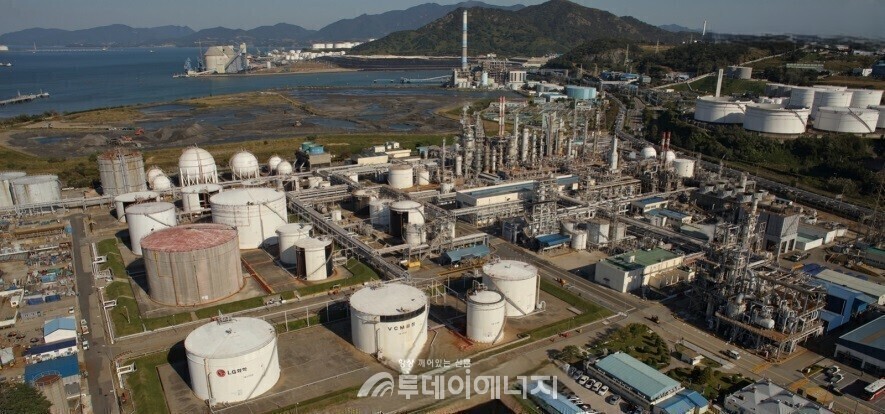
Lotte Chemical posted a 281.4 billion won loss in its petrochemical segment, while Hanwha Solutions recorded a 44.7 billion won deficit in its chemical division. Kumho Petrochemical, which had previously demonstrated resilience during downturns due to the absence of a naphtha cracking complex, also reported a 20.8 billion won loss. The deterioration in results across the petrochemical sector stems from rising naphtha prices and an oversupply of products originating from China. The ethylene spread, a key indicator of profitability, averaged $68.87 per ton in July, falling significantly short of the $250 per ton break-even threshold.
Although the sector achieved profitability in the second quarter with the support of government import subsidies, the "reverse lag" phenomenon emerged as a primary driver of the earnings decline in the third quarter. Petrochemical companies currently face significant hurdles in reversing their performance, largely due to the persistent oversupply from China. The situation is expected to worsen further, as S-OIL is set to commence operations of its large-scale Shahin Project petrochemical facility starting in January next year, which is likely to intensify the burden of market oversupply.
Chnchemicals take
The stark divergence between record refiner profits and widespread petrochemical losses signals a severe margin squeeze for downstream producers. This imbalance arises because rising naphtha feedstock costs are not being offset by immediate adjustments in petrochemical product prices. Investors should expect continued volatility in the petrochemical segment as these structural cost pressures persist, while refiners benefit from favorable export margins and regulatory caps.
Frequently asked questions
What were the operating profit results for SK Energy, GS Caltex, and S-OIL in the third quarter of 2026?
SK Energy, GS Caltex, and S-OIL each posted operating profits exceeding 1 trillion won in the third quarter of 2026. SK Innovation recorded its highest-ever quarterly result, with operating profit reaching 3.7043 trillion won.
Why did petrochemical companies in South Korea report losses in their petrochemical segments during the third quarter of 2026?
Petrochemical companies posted losses because a sharp spike in naphtha prices forced them to purchase feedstock at high costs. Product prices did not adjust immediately to these increased input costs, which deteriorated their operating margins.
How did the implementation of a maximum price cap on petroleum products affect refiner performance in the third quarter?
The implementation of a maximum price cap on petroleum products contributed to robust performance for refiners like SK Energy and GS Caltex. These companies leveraged strong export margins and favorable conditions in their lubricants businesses to achieve high operating profits.