United States: BASD Doubles US MDI Capacity: Power Struggle with China's Wanhua
Key facts
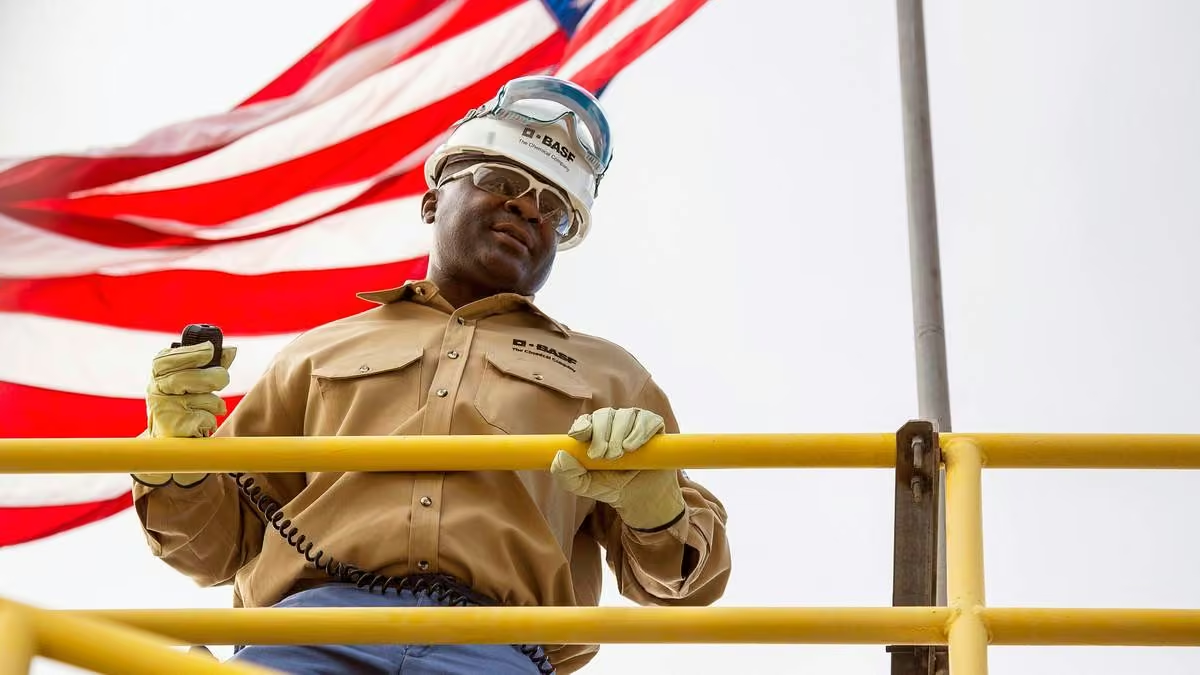
- BASF inaugurated a new MDI plant in Geismar, Louisiana, doubling the site's annual production capacity
- Wanhua Chemical secured an annual MDI production capacity of 3.8 million tonnes by the end of 2025
- Wanhua's 3.8 million tonne capacity represents approximately one-third of the global MDI total
- Wanhua announced plans to add 700,000 tonnes per year to its Fujian facility in its 2025 report
- BASF operates MDI manufacturing sites in Antwerp, China, South Korea, and Geismar, Louisiana
BASF has completed its new production facility, and the company’s leadership appears to be in high spirits. At the start of the week, Chief Executive Officer Markus Kamieth posted a photograph on the professional networking platform LinkedIn. The image showed him wearing a purple cap emblazoned with the slogan “MDI 3 Making a difference.”
Methylenediphenyl diisocyanate, commonly known as MDI, is a fundamental chemical precursor used in the manufacture of polyurethane, a versatile plastic material. The compound is most frequently found in foam products, serving as rigid insulation in residential walls and refrigerators, or as soft cushioning in mattresses and automotive seats. MDI also finds application in the production of adhesives and coatings.
The chemical giant currently operates MDI manufacturing sites in Antwerp, Belgium; Chongqing and Caojing, near Shanghai, in China; Yeosu, South Korea; and Geismar, in the US state of Louisiana.
BASF has significantly expanded its MDI output at the Geismar location in recent years. On Wednesday, Kamieth inaugurated a new plant for the plastic precursor at the site. The facility will double the site’s annual production capacity from the previous 300,000 tons to 600,000 tons of MDI. According to the company, this expansion establishes BASF as the largest MDI producer in the United States.
BASF has executed the expansion in three phases since 2018. In October 2020, the company commissioned a new MDI synthesis unit, followed in 2021 by the expansion of existing facilities to produce the necessary precursors. The final phase added further precursor units and a separation plant. This phased approach was designed to optimize resource utilization and align capacity growth with evolving demand trends.
The three-stage expansion cost the company approximately one billion euros, making it the largest standalone investment BASF has made in North America to date.
BASF cited rising demand from its US customers as the rationale for the investment. Key drivers include energy-efficient construction and renovation, modern household appliances, and applications in leisure and consumer goods. MDI-based plastics can help reduce energy consumption and CO2 emissions, for instance through improved thermal insulation in buildings and refrigerators, or through lightweight components for automobiles.
The expanded capacity secures customer supply, reduces production costs, and provides pricing flexibility. These measures also strengthen BASF's position in a fiercely contested market. The major MDI producers are few in number. Alongside BASF, the group includes the Leverkusen-based chemical company Covestro and the US manufacturer Huntsman. However, BASF's largest competitor is the Chinese chemical firm Wanhua.
How the Chinese state-owned enterprise Wanhua dominates the market
Although Wanhua is publicly traded, ultimate control rests with the municipal government of Yantai in Shandong province, eastern China. The state-owned investment vehicle Yantai Guofeng holds the largest stake, accounting for just under 22 percent of the shares.
The company’s trajectory began in the 1980s in Shandong, a key hub for China’s chemical industry. Initial production focused on MDI of relatively low quality. As late as 1999, annual capacity stood at only 20,000 tons, representing less than one percent of global output. In the years that followed, Wanhua significantly expanded its facilities.
A pivotal move into international markets came with the 2011 acquisition of Hungarian isocyanate producer BorsodChem. Today, the group operates subsidiaries in the United States, India, Brazil, Japan, and South Korea, maintaining a substantial capacity lead over its competitors.
By the end of 2025, Wanhua had secured an annual MDI production capacity of 3.8 million tonnes, representing approximately one-third of the global total. In its 2025 annual report, the company announced plans to add another 700,000 tonnes per year to its Fujian facility by the second quarter of 2026. This expansion would push Wanhua’s total capacity to 4.5 million tonnes, elevating its estimated share of the global MDI market to over 35 percent. However, no official confirmation has yet been issued that this expansion has been completed.
For context, following the successful completion and commercial start-up of its new MDI plant in Geismar, BASF’s global MDI production capacity now stands at 2.2 million tonnes per year. Meanwhile, Covestro currently maintains an annual MDI production capacity of just under 1.8 million tonnes.
BASF and Covestro are ramping up their investment activities across Asia.
BASF had not yet completed its MDI facility in Geismar when the company announced it was evaluating a new MDI production complex, this time in India. In September, BASF stated that it had secured an industrial site in Dahej, Gujarat, as part of an advanced feasibility study. The final investment decision, however, remains contingent on the study’s findings and the necessary regulatory approvals.
Covestro also unveiled a strategic investment program for MDI in the middle of the year. The company is preparing to construct a new plant at its integrated site in Shanghai, which is designed to produce 660,000 tons of MDI annually and is expected to come online by the end of the current decade. Concurrently, Covestro is assessing a similar-scale facility in the United Arab Emirates through a feasibility study. The company estimates that each of these two projects will require an investment in the low single-digit billions.
Covestro chief executive Markus Steilemann cited robust and sustainable demand, alongside rising expectations for supply security, as the rationale behind the company's plans. He stated that the proposed investments would bolster the firm's capacity to reliably serve customers at scale, while simultaneously leveraging its technological and operational strengths.
Covestro’s abandoned US ambitions and the subsequent strategic pivot
Covestro had initially prioritized expansion in the United States. In 2018, the company's supervisory board approved an investment of approximately 1.5 billion euros for a new large-scale MDI facility at its existing site in Baytown, Texas. The plant was designed for an annual capacity of 500,000 tons and was scheduled to begin operations in 2024. At the time, the company stated that this would have been its largest single investment in its history.
However, the onset of the coronavirus pandemic in 2020 stalled these plans. The market environment deteriorated further in the subsequent years. Rising interest rates slowed construction activity in North America, China's real estate sector entered a crisis, and European industry weakened. Meanwhile, facilities in other regions came online that had been approved before the pandemic. The additional capacity met weak demand, putting pressure on prices and margins. Customers reduced their inventory levels rather than placing new orders, which further weighed on demand.
Covestro initially shelved its MDI project in January 2020. The company resumed planning in September 2021 but, facing sharply increased construction costs in the United States, re-evaluated its site selection. China emerged as a potential alternative. With the current plans for Shanghai and a possible additional facility in the United Arab Emirates, the strategic focus is now shifting toward Asia and the Middle East.
Chnchemicals take
The expansion of US-based MDI capacity by BASF signals a strategic shift to counter the dominant market share held by Chinese producers. This move reduces supply chain vulnerability for North American buyers by increasing local availability of a critical polyurethane precursor. However, the continued aggressive capacity growth by Wanhua in Asia suggests that global pricing power remains concentrated in the region, limiting the long-term impact of Western expansions on overall market dynamics.
Frequently asked questions
What is the impact of BASF's new Geismar facility on its US MDI production capacity?
The new facility doubles the site's annual MDI production capacity. This expansion allows BASF to increase its output in the United States, a key market for polyurethane applications.
How does Wanhua Chemical's MDI capacity compare to BASF's global position?
Wanhua Chemical secured 3.8 million tonnes of annual MDI capacity by the end of 2025. This represents approximately one-third of the global total, maintaining a substantial lead over competitors like BASF.
What strategic shift is BASF making regarding its MDI project locations?
BASF is shifting its strategic focus toward Asia and the Middle East for new MDI projects. This follows a re-evaluation of site selection due to sharply increased construction costs in the United States.