Russia: Roskhim Takes Over Management of 3 Million Tons Per Year Polyethylene Gas Chemical Project
Key facts
- Rokhim assumed management of the Baltic Chemical Complex, a joint venture between Gazprom and the Baltic Agricultural Complex, on October 5, 2026
- The Baltic Chemical Complex is the construction operator for a polyethylene facility with a capacity of up to 3 million tons annually
- The polyethylene plant is part of the Ethane-Containing Gas Processing Complex under construction in Kingiseppsky District, Leningrad Oblast
- The Ethane-Containing Gas Processing Complex integrates a gas processing unit operated by Ruskhimalyans and a petrochemical complex managed by the Baltic Chemical Complex
Market Report -- Roskhim has assumed the role of managing entity for the Baltic Chemical Complex, a joint venture between Gazprom and the Baltic Agricultural Complex, according to records from the Unified State Register of Legal Entities. The relevant entry was registered on October 5, 2026. Roskhim’s press office declined to provide comments.
The Baltic Chemical Complex serves as the construction operator for a polyethylene production facility with a capacity of up to 3 million tons annually. This facility is part of the Ethane-Containing Gas Processing Complex (EGPC) currently under construction in Kingiseppsky District, Leningrad Oblast. The EGPC integrates two technologically linked facilities: an integrated natural gas processing and liquefaction complex, operated by Ruskhimalyans, and a petrochemical complex managed by the Baltic Chemical Complex. The former is designed to extract the ethane fraction from natural gas, while the latter will process it into polyethylene. The Baltic Chemical Complex is designed for an annual polyethylene output of up to 3 million tons.
China National Chemical Engineering & Construction Corporation Seven (CC7) has been appointed as the EPC contractor for the construction. The technological scheme for the Baltic Chemical Complex involves producing ethylene through ethane pyrolysis, followed by polymerization. The product lineup is expected to include three categories: polyethylene
The facility will produce high-density polyethylene, linear low-density polyethylene, and metallocene linear low-density polyethylene. According to the operator, the existing long-term contract guarantees a raw material supply for the complex for a period of at least 20 years. Gazprom and the Baltic Agricultural Complex each hold a 50% stake in the authorized capital of BHK. Eduard Davydov serves as the general director of the Baltic Agricultural Complex, which replaced Rusgazdobycha as a shareholder in BHK, and also leads Roskhim. The project passport, approved in early 2024, scheduled the commissioning of the first phase for 2026 and the second phase for 2027. The current status of the project is not disclosed in public sources. Roskhim has been consolidating chemical assets in Russia since 2022. The group integrates existing production facilities and new investment projects, with participation mechanisms varying from management contracts to equity ownership. This includes enterprises such as Bashkir Soda Company, Metafrax Chemicals, Nakhodka Fertilizer Plant, Volzhsky Orgsintez, DonBioTech, and Kuchuksulfat, among others. mrc.ru
Chemical imports into Russia rose by 11.3 percent during the first nine months of the year, reaching a total of 44.8 billion US dollars.
Moscow, Russia — Imports of chemical industry products into Russia rose 11.3% in value terms during the first three quarters of 2026 compared with the same period last year, reaching $44.8 billion, according to data from the Federal Customs Service. Chemical products emerged as the second-largest category in Russian imports, trailing only machinery, equipment, and transport vehicles, which totaled $112.4 billion, a 16.1% increase. Total import volume reached $229.7 billion, while exports amounted to $346.5 billion. For the first eight months of 2026, the value of chemical product imports was estimated at $39.8 billion, representing a 10.8% year-on-year growth. mrc.ru
Propylene and polypropylene prices in Asia have reached a 12-year high.
Chemweek reported that propylene prices in Northeast Asia hit record annual highs in October, driven by a sharp contraction in supply and elevated feedstock costs. The market shortage stems from a significant drop in operating rates in China and geopolitical tensions that have pushed up prices for raw naphtha and propane. In China, propylene prices reached $1,420 per ton, while polypropylene costs climbed to $1,370 per ton, marking the highest levels since 2014.
The utilization rate of propane dehydrogenation (PDH) units in China plummeted from approximately 79% in mid-September to around 66% by the end of the month, as margins deteriorated. Meanwhile, operational loads at methanol-to-olefins (MTO) plants fell from roughly 78% to below 40% in October. The supply deficit was further exacerbated by unplanned shutdowns and maintenance activities at facilities in Tianjin, Shandong, and other regions across Northeast Asia.
Geopolitical escalation surrounding the conflict between the United States and Israel and Iran has driven up oil and naphtha prices, worsening the economics of cracking units and the propylene sector overall. It was previously reported that Zhejiang COMY Environmental Technology announced the official launch of a pilot
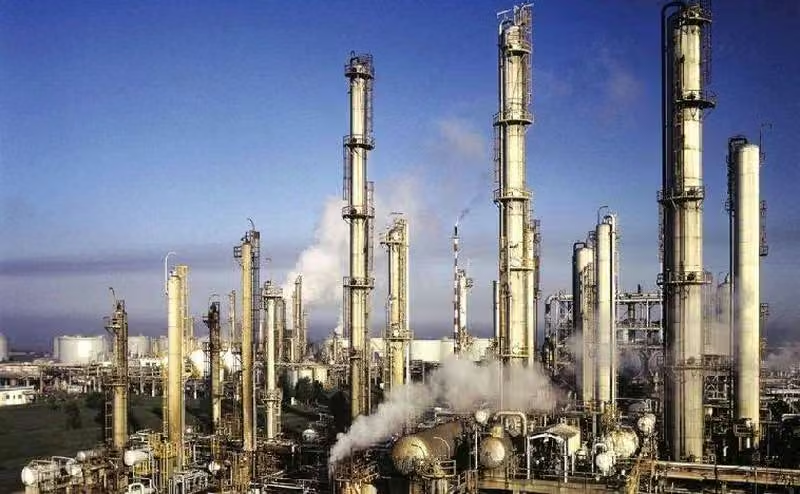
Roskhim has taken over the management of a gas-chemical project with an annual production capacity of 3 million tons of polyethylene.
The project involves the chemical recycling of plastic waste into propylene (PTP) at the Yancheng Green Chemistry Laboratory in Cangzhou, China. mrc.ru
Utilization rates at European chlor-alkali plants declined in September.
Chemweek reports that the European chlor-alkali industry is facing severe headwinds driven by elevated energy costs, sluggish industrial demand, and intensified competition from U.S. imports. In September, plant utilization rates dropped to 56.7%, while caustic soda inventories surged by 25.8% compared to the previous month. Producers are currently operating at reduced capacity levels, hovering around 65% in the first half of 2026, a trend that mirrors the broader weakening of demand across the continent.
The high cost of electricity in Europe creates a significant competitive disadvantage compared to regions with cheaper energy, such as the U.S. Gulf Coast. The increase in caustic soda shipments from the United States is altering trade balances and influencing price dynamics within the European market. Under pressure on profitability, companies are undertaking restructuring efforts and shutting down energy-intensive facilities. This includes INEOS’s plans to close its plants in Rheinberg, Germany, alongside other regional capacity reductions.
Belarus is planning to increase the production of nitrogen and phosphate fertilizers.
Marek Report -- Belarusian President Alexander Lukashenko announced plans to construct a nitrogen fertilizer plant within the country, according to Rupec. He noted that active work is also underway regarding phosphorus during a meeting in Mogilev Region. "I personally want to see a larger volume of phosphorus fertilizers produced here. That way, we will have a complete complex," Lukashenko said, as reported by the BelTA news agency. The president urged local district leaders to establish bases and warehouses for fertilizer storage and to bring existing facilities up to standard. Lukashenko also reiterated the status of a trial shipment of potash fertilizers sent to the United States. Following the dispatch of the trial batch, he stated that there were no surplus fertilizers available for regular deliveries to America. mrc.ru
Chnchemicals take
This management transition signals a critical consolidation phase for a major Russian petrochemical expansion, potentially stabilizing project execution for global buyers. By centralizing oversight under a single entity, the project may mitigate coordination risks inherent in joint ventures, which is essential for ensuring the timely delivery of 3 million tons of polyethylene. Investors should monitor how this structural change impacts the project's ability to meet its ambitious output targets amidst broader supply chain pressures.
Frequently asked questions
Which entity has assumed management of the Baltic Chemical Complex for the polyethylene project?
Rokhim has assumed the role of managing entity for the Baltic Chemical Complex. This change was registered in the Unified State Register of Legal Entities on October 5, 2026.
What is the annual production capacity of the polyethylene facility under the Baltic Chemical Complex?
The facility is designed for an annual polyethylene output of up to 3 million tons. It is part of the Ethane-Containing Gas Processing Complex in Kingiseppsky District, Leningrad Oblast.
How does the management change at the Baltic Chemical Complex affect global polyethylene supply dynamics?
The change clarifies the operational structure for a major new capacity addition in Russia. This project is part of a larger integrated complex that processes ethane into polyethylene, potentially influencing future supply balances.