United States: Port of Longview approves ‘transformational’ deal with Canadian company Nutrien for fertilizer export terminal
Key facts
- Port of Longview commissioners unanimously approved site development and lease agreements with Canadian fertilizer company Nutrien for a potash export terminal
- Nutrien, the world's largest potash producer, will use the terminal to export potassium minerals primarily used as agricultural fertilizer
- The port is required to pay $110 million to prepare the former Continental Grain Terminal site for Nutrien's operations
- The agreement is expected to create hundreds of skilled trade jobs in Southwest Washington and generate millions in annual revenue
- The project marks the culmination of over a decade of planning for Berth 4, which closed in 1989 after 60 years of grain service
The agreement is expected to create hundreds of skilled trade jobs in a community that suffered a deadly workplace disaster 6 months ago.
The Port of Longview has signed off on a project that’s expected to generate millions of dollars in annual revenue and create hundreds of Southwest Washington trade jobs in the coming years.
Port commissioners unanimously approved site development and lease agreements Monday with Canadian fertilizer company Nutrien for a potash export terminal.
Nutrien is the world’s largest producer of potash — a group of minerals containing potassium that is primarily used as an agricultural fertilizer. Port officials and industry representatives are celebrating the agreement as a major achievement for Longview.
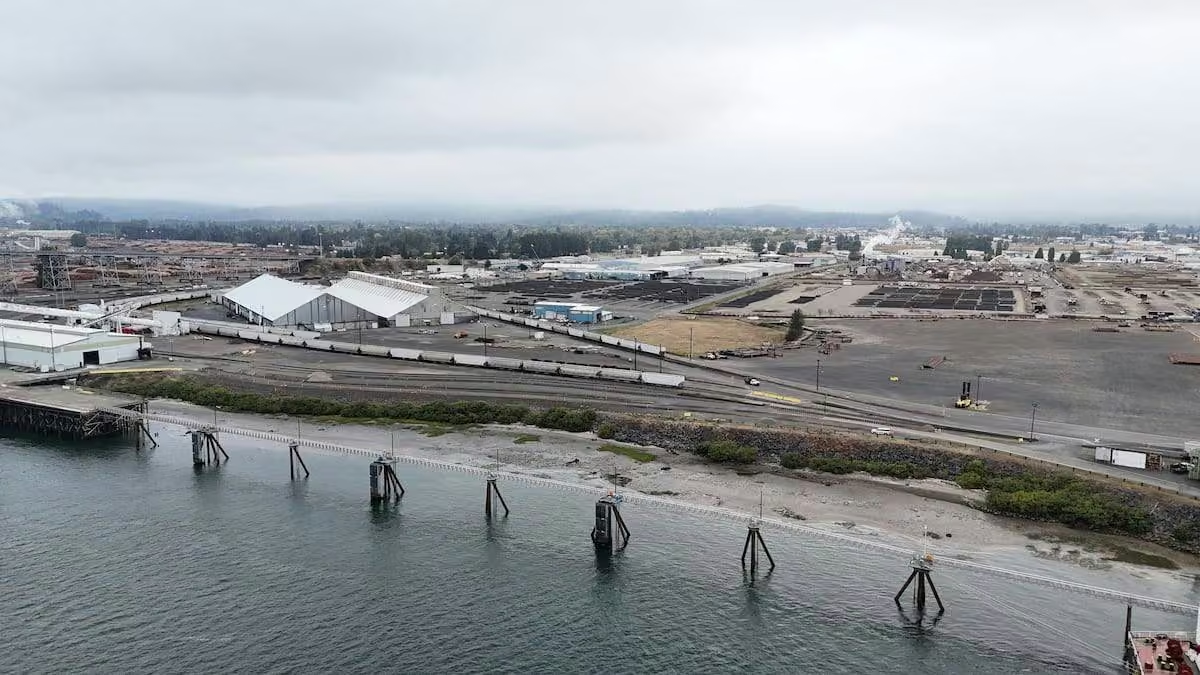
The Nutrien deal marks the culmination of more than a decade of planning for the vacant waterfront terminal known as Berth 4, which served as the Continental Grain Terminal for 60 years before shutting down in 1989.
“Here we are after all these years,” Port Commission President Allan Erickson said during the Nov. 16 meeting. “Exciting, certainly, for sure.”
The commission approved two agreements with Nutrien on Monday.
The site development agreement governs the planning, permitting and construction period, which is expected to last until 2032 or 2033. Under that agreement, the port is responsible for preparing the site and building a dock, while Nutrien is responsible for building its fertilizer terminal — which is expected to handle 5 to 8 million metric tons of potash each year.
The port also approved a 50- to 80-year lease with Nutrien that would go into effect once both sides’ construction work is “substantially complete.”
“This is like a marriage, and we’re gonna be doing this well past a lot of our lifetimes,” said Port Commissioner Jeff Wilson during the meeting.
“The things we have to do between now and that first rail shipment of potash…that’s gonna be a whole ‘nother story,” Wilson added, “but that’s gonna be the fun part.”
To uphold its end of the deal, the port will have to pay $110 million to prepare the terminal for Nutrien’s facility, which will involve acquiring land, cleaning contaminated areas and building a dock, among other things.
The agreement will require the port to take out bonds and put it in debt “for an extended period of time,” noted Erickson. The project is also expected to generate significant tax revenue and lucrative jobs.
Starting in 2032, Cowlitz County could see an additional $9.6 million in tax and fee revenue per year and the creation of 193 long-term high-paying jobs, according to an economic analysis by ECOnorthwest. The Portland-based public policy research firm estimates the project would create another 650 jobs during the construction phase, from 2027 to 2032.
About one-third of the port’s total revenue could come from the Nutrien partnership once it’s up and running, according to port spokesperson Dale Lewis.
“It’s transformational for Longview, just the tax revenue alone,” he told OPB Monday, “and then the ripple effects for the economy.”
Officials lauded the agreement as an important win for the community that experienced a deadly chemical tank implosion at a paper mill in May. Mills have long been important to Longview’s identity, but the implosion marked the latest downturn for the industry, which has seen declining jobs for years.
Local labor leaders say they expect to see high-wage jobs from the Nutrien partnership.
“This is a leap of faith for everyone,” said Darin Norton, President of the International Longshore and Warehouse Union Local 21, during public comment at the Nov. 16 port meeting. “ Let’s all make some money and have some fun.”
Now, the port and Nutrien will move forward to the next stage of the project, design and permitting.
Chnchemicals take
This development signals a significant shift in North American potash logistics, as Nutrien secures a dedicated export channel in the Pacific Northwest. For traders and investors, the $110 million infrastructure investment reduces reliance on existing saturated routes, potentially stabilizing supply chains for agricultural buyers. The long-term lease structure indicates a commitment to regional capacity expansion, which may influence global fertilizer pricing dynamics by diversifying export origins.
Frequently asked questions
What did the Port of Longview approve regarding the Nutrien potash export terminal project?
The Port of Longview unanimously approved site development and lease agreements with Nutrien for a potash export terminal. This decision marks the culmination of over a decade of planning for the vacant Berth 4 waterfront facility.
How much will the Port of Longview invest to prepare the terminal for Nutrien's operations?
The port is required to pay $110 million to prepare the terminal for Nutrien's use. This investment is part of the broader agreement to transform the former grain terminal into a fertilizer export hub.
What are the expected economic impacts of the Nutrien potash terminal for the local community?
The project is expected to create hundreds of skilled trade jobs in Southwest Washington. It is also projected to generate millions of dollars in annual revenue for the port and the local economy.