Brazil Sells Soya to China Yet Spends Billions on Pesticides: Is Its Agricultural Lifeline in Chinese Hands?
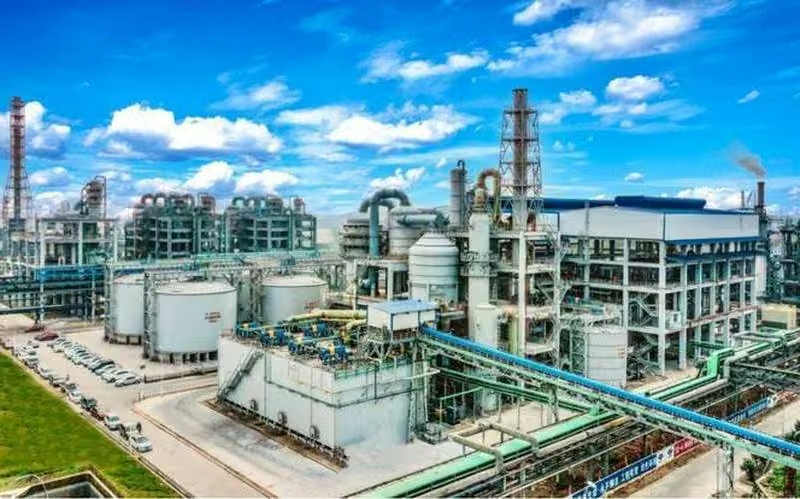
Key facts
- Brazil exported 108.18 million metric tons of soybeans in 2025, with 85.4 million metric tons shipped to China
- China accounted for nearly 80 percent of Brazil's total soybean exports in 2025, setting a new record for bilateral grain trade
- The port of Santos processed 186.4 million metric tons of cargo in 2025, up from 179.8 million metric tons in 2024
- Brazil and China signed a joint research memorandum in 2025 to assess the feasibility of a transcontinental railway linking grain corridors
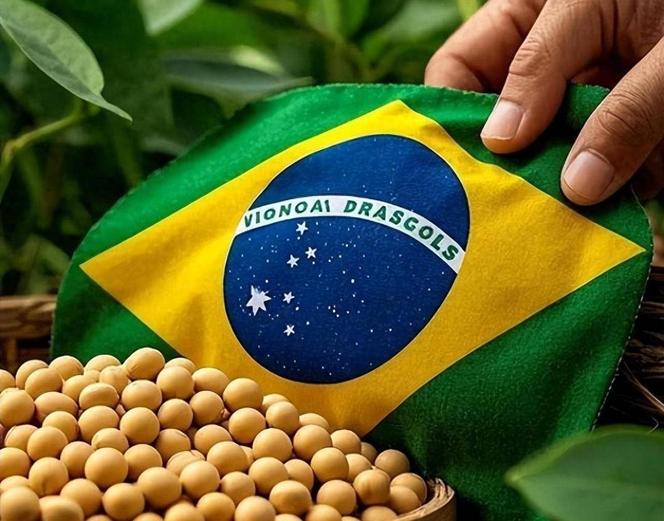
The transcontinental supply chain, stretching from Brazil’s inland grain belt to the port of Santos on the Atlantic coast and across the Pacific to crushing facilities in East Asia, reached a fever pitch in 2025. Brazil exported approximately 108.18 million metric tons of soybeans globally that year, with roughly 85.4 million metric tons destined for China. This volume accounted for nearly 80 percent of total exports, setting a new record for bilateral grain trade.
This surge was not a fleeting spike but the result of converging factors, including port infrastructure, railway capacity, financial mechanisms, and long-term procurement agreements. For China, the flow represents a critical component in securing stable supplies of food and feed protein. For Brazil, it underscores the accelerating momentum of an economic model driven by agriculture, livestock, and primary commodities.
The infrastructure handling this volume is expanding. In 2024, the port of Santos processed 179.8 million metric tons of cargo. In 2025, that figure climbed to a new high of 186.4 million metric tons, continuing a multi-year upward trend.
COFCO International is advancing plans for a new agricultural bulk terminal in the region. Once fully operational, the facility is projected to handle an annual throughput of approximately 14 million to 14.5 million metric tons, creating a broader corridor for the movement of grains, sugar, and oilseed meals.
Official and local sources in Brazil indicate that the facility is being built in phases, with capacity expected to come online around 2026. The primary objective is to alleviate congestion in agricultural loading operations and improve the efficiency of consolidating and distributing cargo to Asian markets. This development promises more predictable delivery schedules for Chinese importers and more predictable export costs for Brazilian producers.
While the massive export flow moves eastward, an invisible counterflow of industrial goods moves in the opposite direction. Fertilizers, pesticides, machinery parts, spraying equipment, and related services travel along the same shipping routes to reach the interior of South America.
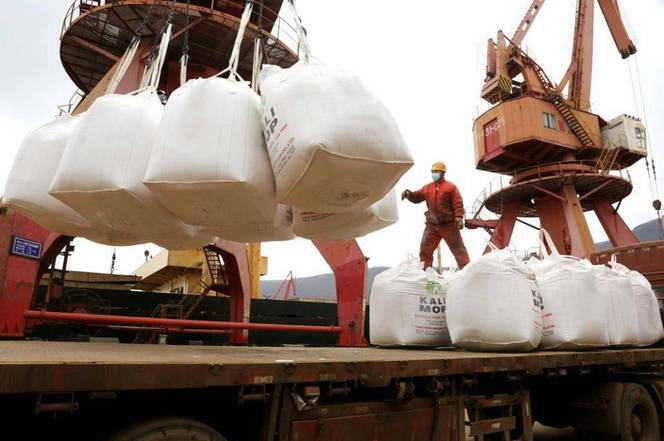
Between January and October 2026, Russia, China, and Canada ranked as the top three suppliers, with market shares fluctuating but total volumes remaining at elevated levels. For corporate balance sheets, this represents a cost line that must be locked in before the planting season. From a supply security perspective, it reflects a rebalancing across multiple sources and product categories.
More telling is the concentration in herbicides. Annual commercialization reports from Brazilian regulators show that glyphosate and its salts remained the leading active ingredient in domestic sales in 2024, with volumes of approximately 231,900 metric tons.
Concurrently, industry associations, based on customs data, estimated that Brazil’s imports of agricultural chemicals reached roughly 1.76 million metric tons in 2025, an increase of over 20% from the previous year. China was the primary source for technical-grade active ingredients, formulations, and key intermediates.
These two data sets explain a reality: under no-till, herbicide-tolerant crops, and multiple-cropping systems, annual herbicide usage intensity is measured not by “area” but by “season × rotation structure.” China’s share in such products is naturally high. This has led some to worry that the “lifeline” is being controlled.
However, the chain must be examined in detail. First, ports and railways are physical bottlenecks. The breakthrough at the Port of Santos is not just about the number of berths and shoreline, but the coupled capability of storage, unloading, and inland distribution.
New handling capacity has flattened the peak-to-trough difference in grain shipments. Scheduling of transport capacity, mainline vessel timetables, and production schedules at crushing plants have become more predictable. For upstream growers, this improves bargaining time and delivery certainty. For buyer markets, it provides an enhanced version of “just-in-time” insurance.
Second, supply diversification is a structural choice. Over the past decade, China’s purchases of U.S. agricultural products have fluctuated year to year but have consistently ranked among the highest globally. U.S. agricultural exports to China hit a record high in fiscal year 2022, before declining in value in 2023.
For Chinese buyers, the off-season differences between the Northern and Southern Hemispheres, combined with price windows, make the “Brazil–U.S.–Argentina” combination a natural hedge. For U.S. farmers, China remains a key market, but share is tied to specific years and influenced by multiple factors, including exchange rates, basis, and logistics efficiency.
Third, the chemicals segment is a matter of “industrial geography.” As of the end of 2024, China’s annual technical-grade glyphosate capacity was approximately 810,000 to 830,000 metric tons, accounting for 60% to 70% of global capacity.
This is underpinned by the advantages of integrated industrial parks in phosphorus chemicals, power, chlor-alkali, and upstream-downstream coordination, as well as economies of scale in the “intermediate–active ingredient–formulation” chain. In Brazil, many products are imported as technical-grade active ingredients or key intermediates, with local or multinational companies handling formulation, registration, and channel distribution, followed by a closed loop of credit sales through dealer networks to farms.
This is not a one-way “who controls whom” relationship, but a division of labor based on “who is more efficient at each stage.” Fourth, regulatory rules determine profit distribution.
In Brazil, pesticide registration is reviewed separately by the agriculture, health, and environment ministries, with approval cycles often measured in years and high maintenance costs. This directly increases the value of channels and brands, giving registered companies an advantage in terminal premiums.
For Chinese companies seeking to “move downstream,” only by gradually accumulating registration assets locally can they convert manufacturing cost advantages into terminal market share. This is precisely the direction in which several Chinese firms have been advancing in South America in recent years. Over the long term, this resembles a marathon of “patient capital” rather than a sprint of “low-price dumping.”
Zooming out further, a new hub is taking shape at Pacific ports in South America. After the Chancay Port in Peru entered commercial operation, it launched direct shipping networks to East Asia. In 2025, Brazil and China signed a joint research memorandum to assess the feasibility of a transcontinental railway, aiming to link the grain corridor on Brazil’s east coast with the Chancay Port.
Measured against planning targets, the completion of the rail loop is expected to cut transit times from the interior to the Pacific and reduce the number of sea-leg handoffs. This would shift Brazil’s export routes to Asia from a single corridor via the Panama Canal or Cape of Good Hope to a dual-direction system with switchable options.
Although still in the research phase, increased redundancy in the logistics network would make vessel scheduling and cargo allocation more manageable during periods of price volatility. This brings the discussion back to the headline’s reference to spending billions on pesticides.
On the surface, this reflects Brazil’s high external dependence. But when assessed per unit of yield and output value, this expenditure functions as a cost item for stabilizing harvests and reducing uncertainty. Brazil’s Cerrado “revolution” has transformed acidic, previously uncultivable soils into productive farmland. No-till systems combined with herbicide-tolerant crops maintain high yields under tropical multiple-cropping regimes, inherently requiring more intensive plant protection inputs.
When high domestic labor costs meet the reality of vast, sparsely populated land, mechanization plus chemical weed control emerges as the lower-total-cost solution. The issue is not whether to use these inputs, but how to buy them reliably and apply them precisely. This requires more transparent registration, strict quality spot-checks, sustained suppression of illegal products, and technical upgrades in managing resistant weeds, all to avoid the risk accumulation associated with single-product dependence.
In Brazil, registration and distribution channels are held by multiple parties, and end-user prices are driven by exchange rates, ocean freight, upstream raw materials, and local credit conditions. In China, the integrated chain from yellow phosphorus to glyphosate to formulated products allows better control of marginal production costs, though new capacity is policy-constrained, leading companies to smooth cyclical fluctuations through global distribution.
The complementarity between the two sides is clear: one side needs scalable, replicable industrial goods and equipment; the other needs stable, traceable grain, oilseed, and protein supplies.
Viewing this as a mutual “production capacity safeguard” makes it easier to understand why the narrative of one side’s “lifeline being held” does not hold. What truly determines chain security is the design of multi-path, multi-actor, and substitutable nodes. Currently, both sides are doing the same thing: reinforcing critical nodes and backing up critical routes. Of course, all prosperity comes with caveats.
First, beyond port expansion, bottlenecks in the “last few hundred kilometers” inland persist. During harvest peaks, queues for loading and waiting for berths will still occur periodically.
Second, Brazil’s traditional agricultural credit and dealer credit model, when met with high international interest rates and price volatility, sees risk appetite contract rapidly, weakening farmers’ timeliness in purchasing and replenishing inputs.
Third, the global “resistance cycle” in the plant protection industry is rising. Field failures caused by repeated use of single herbicides require combined formulations, rotation, and non-chemical measures, placing higher demands on supply chains and agronomy service providers. These three points are “on-the-ground problems” that Chinese and Brazilian companies are actively solving, not just slogans.
For U.S. farmers, upgrades to South American infrastructure bring more direct price competition. Denser grain vessel schedules and faster delivery times mean that “who is closer to the crushing plant and whose cargo enters the warehouse first” will squeeze the basis for U.S. soybeans during critical windows.
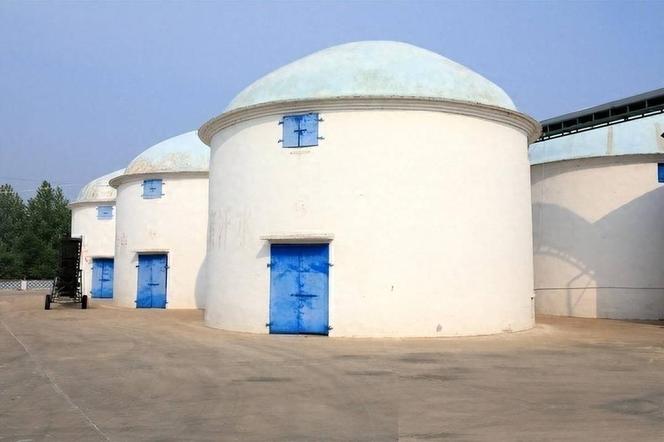
Despite the recent shifts in market share, the United States retains significant structural advantages, including a robust inland waterway system, extensive storage and logistics infrastructure, and advanced agronomic services. Furthermore, agricultural trade volumes between the US and China have remained at elevated levels across multiple years. Consequently, short-term fluctuations in market share do not indicate a structural withdrawal; rather, the primary variables influencing the landscape remain exchange rates, weather patterns, and the timing of policy adjustments.
To address the concern regarding strategic vulnerability, it is more productive to shift the analytical lens from questions of control to questions of mutual indispensability.
China’s demand for high-protein soybeans and feed grains is a fundamental economic reality, yet its supply sources have become increasingly diversified and seasonally staggered. Similarly, Brazil’s need for plant protection chemicals and fertilizers is equally objective, but its sourcing is also diversifying. In the first ten months of 2026, the market shares held by Russia, China, and Canada have seen dynamic shifts, with no single supplier dominating the landscape.
Moreover, the redundancy of the logistics network is expanding. This is driven by the advancement of studies on Pacific ports and transcontinental railway connections, as well as the continuous expansion of the Port of Santos and the investment in supporting rail fleets.
This reflects the deeper logic governing global agricultural and input trade. When the financial data is examined, both sides are beneficiaries of the current arrangement.
China secures critical protein and oil sources with reduced price volatility, while Brazil exports greater volumes of grain at lower unit logistics costs and stabilizes on-farm operations through the return flow of industrial goods. The true risk to monitor is not dependency itself, but single-point failure. When any party treats a single pathway as its exclusive solution, market prices will inevitably force a strategic reassessment.
The current landscape is mitigating this risk through incremental capacity expansion, the development of multiple logistical routes, and more transparent institutional frameworks. Under this framework, the notion of a "strangled lifeline" serves less as a factual description and more as a cautionary reminder: global agriculture should not be viewed as a single, fragile thread, but rather as a resilient, interconnected network.
Chnchemicals take
The record volume of soybean exports to China highlights the critical importance of diversified logistics for global agricultural supply chains. As infrastructure capacity expands at key ports, traders must monitor how new routes like the Chancay Port and potential railway links reduce concentration risks. This structural shift suggests that while demand remains robust, the resilience of the supply network depends on maintaining multiple logistical pathways to prevent bottlenecks.
Frequently asked questions
How much soybean volume did Brazil export to China in 2025 and what percentage of total exports did this represent?
Brazil exported approximately 85.4 million metric tons of soybeans to China in 2025. This volume accounted for nearly 80 percent of Brazil's total global soybean exports that year.
What was the total cargo volume processed by the port of Santos in 2025 compared to the previous year?
The port of Santos processed 186.4 million metric tons of cargo in 2025. This figure represented a new high, up from 179.8 million metric tons in 2024.
What infrastructure and policy measures are being implemented to mitigate the risk of over-reliance on a single trade route?
Strategies include incremental capacity expansion, development of multiple logistical routes, and more transparent institutional frameworks. These measures aim to create a resilient, interconnected network rather than a fragile single thread.