China: Dushanzi Petrochemical Selected for 2026 Pilot Smart Factory Cultivation List
Key facts
- PetroChina's Dushanzi Petrochemical was selected for the 2026 Pilot-Level Intelligent Factory Cultivation List by the Ministry of Industry and Information Technology
- The facility is the only refining and chemical project among the 34 sites included in the 2026 national pilot list
- Dushanzi Petrochemical achieved a 1.6% increase in product yield and a 4.2% reduction in comprehensive energy consumption through intelligent upgrades
- The company built the world's first demonstration base for carbon recycling from ethylene cracking furnace flue gas using the Tarim Ethylene Project
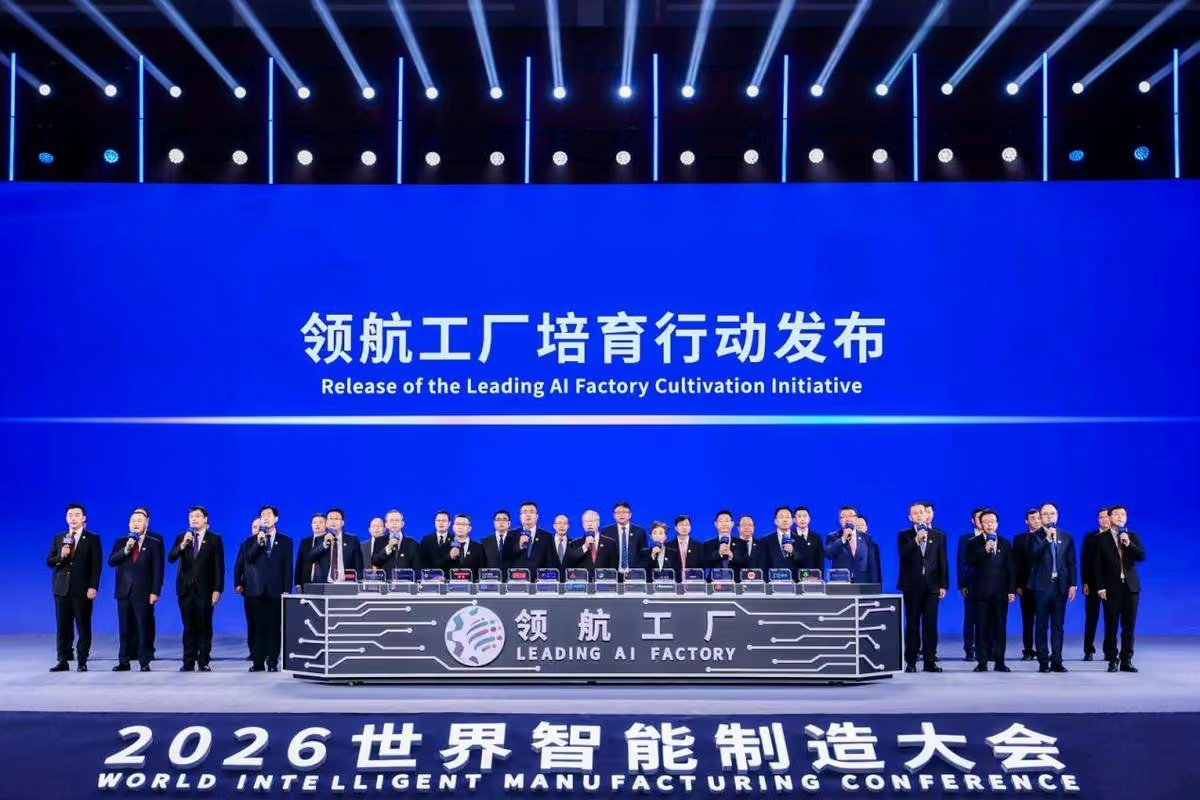
On November 19, at the 2026 World Intelligent Manufacturing Conference, the Ministry of Industry and Information Technology released the 2026 Pilot-Level Intelligent Factory Cultivation List. A total of 34 facilities across China made the cut. PetroChina’s Dushanzi Petrochemical Company secured a spot with its “Integrated R&D and Production Green Collaborative Intelligent Factory for Chemical New Materials,” marking the only refining and chemical project on the list and the first such cultivation initiative within the PetroChina system.
As the highest tier in the graduated cultivation framework for intelligent factories, pilot plants carry the critical mission of advancing next-generation intelligent manufacturing. By validating cutting-edge technology pathways, exploring future production models, and leading industry-wide innovation, these facilities continuously drive the high-quality development of China’s manufacturing sector.
For over a decade, Dushanzi Petrochemical has steadily deepened its digital and intelligent transformation, iteratively upgrading its intelligent factory architecture. The company has earned multiple distinctions, including PetroChina’s Refining and Chemical Intelligent Factory Demonstration, the Ministry of Industry and Information Technology’s Intelligent Manufacturing Demonstration Factory, and a place in the nation’s first batch of Excellence-Level Intelligent Factories. These achievements have laid a robust foundation for embedding artificial intelligence into core manufacturing processes. Departing from the traditional model of isolated unit-level automation, Dushanzi Petrochemical has established a green intelligent manufacturing model that integrates research and production for chemical new materials. This system connects the entire value chain—from AI-driven R&D and design, to intelligent scheduling and dispatch, real-time unit optimization, smart energy management, closed-loop business and financial operations, and low-carbon implementation. Powered by a dual-engine approach combining the “Kunlun Large Model” with mechanistic models, the facility integrates three layers of technology: Advanced Process Control (APC) for stable operating conditions, Real-Time Optimization (RTO) for global efficiency, and agent-based coordination for full-domain management. This strategy has forged a transformation path characterized by autonomous control of new materials through digital intelligence and integrated green intelligence serving national strategic goals.

Addressing industry-wide challenges such as long R&D cycles for high-end chemical new materials, difficulties in scheduling grade switches, and the instability of green power consumption, Dushanzi Petrochemical has prioritized maximizing full-value-chain benefits while advancing high-end, intelligent, and green development in tandem. On the innovation front, an AI reverse-design platform has shifted the paradigm from “adapting materials to applications” to “defining materials by demand,” cutting the R&D cycle for new solution-polymer styrene-butadiene rubber products by 50%. The company plans to expand this intelligent R&D capability to a broader range of chemical new materials. In production, the deployment of a domestic Advanced Planning and Scheduling (APS) system and a three-tier intelligent production control framework has yielded tangible results: overall product yield increased by 1.6%, comprehensive energy consumption dropped by 4.2%, and unplanned downtime fell by 45%, marking a shift from experience-based manual scheduling to autonomous closed-loop control. In the green and low-carbon sector, leveraging the Tarim Ethylene Project, the company has built the world’s first demonstration base for carbon recycling from ethylene cracking furnace flue gas. It has overcome the industry challenge of capturing carbon from ultra-low-concentration flue gas, establishing a low-carbon closed loop that combines direct green power connection, carbon capture, blue hydrogen production for blue ammonia, and green uremia. This system reduces carbon emissions by 1.37 million tons annually, providing a model for the green transition of the refining and chemical industry.

This technology, management, and standards system, validated through long-term production, has been successfully replicated at the Tarim Chemical Branch’s 600,000-ton-per-year ethane-to-ethylene and 1.2-million-ton-per-year ethylene projects. These facilities, located on the edge of the Taklamakan Desert, now stand as modern, autonomous, and digitally intelligent refining and chemical benchmarks. Currently, 13 mature digital scenarios have been deployed across multiple PetroChina refining and chemical enterprises and external chemical units, forming a replicable and implementable standards system for intelligent refining and chemical factories that prioritizes mechanistic models and integrates business with digital operations.
Wang Shengwei, Executive Director of Dushanzi Petrochemical, stated that the inclusion in the pilot-level smart factory cultivation list represents authoritative recognition of the company’s long-term commitment to independent innovation and its digital, intelligent, and green transformation. Going forward, the company will leverage its strategic position in western China to continue using smart manufacturing to overcome critical bottlenecks in high-end new materials. Dushanzi Petrochemical aims to provide a viable model for the digital and green transformation of the refining and chemical industry, contributing to the nation’s goals of building a manufacturing powerhouse, a digital China, and the "dual carbon" strategy.

As a cradle of China’s modern refining industry and one of the country’s three major petroleum origins, Dushanzi Petrochemical operates with an annual refining capacity of 10 million tons and an ethylene capacity of 3 million tons. It is the largest ethylene base in central and western China and has maintained the lead in energy efficiency within the national ethylene sector for 13 consecutive years. The company’s achievement in establishing a pilot-level smart factory marks a significant milestone for new-type industrialization in Xinjiang. Oil and gas production and processing is the primary cluster among the region’s eight major industrial groups. Many petrochemical and coal chemical enterprises in the area face practical challenges, including massive facility scale, complex processes, and the high difficulty of digital retrofitting. The experience of Dushanzi Petrochemical demonstrates that traditional heavy chemical enterprises can fully achieve intelligent upgrades by relying on existing facilities. This benchmark case is expected to accelerate digital transformation across the upstream and downstream of Xinjiang’s chemical industry chain, supporting the region’s manufacturing sector in advancing toward higher-end, smarter, and greener operations.
Chnchemicals take
This designation signals that state-backed chemical producers are prioritizing autonomous, closed-loop control to secure operational efficiency and environmental compliance. By validating next-generation intelligent manufacturing pathways, the facility sets a benchmark for reducing unplanned downtime and energy costs. Investors should monitor how these pilot technologies scale across the supply chain, as they may redefine competitive advantages in high-value chemical production.
Frequently asked questions
Which PetroChina facility was selected for the 2026 Pilot-Level Intelligent Factory Cultivation List?
PetroChina’s Dushanzi Petrochemical Company was selected for the list. It is the only refining and chemical project included in the 2026 Pilot-Level Intelligent Factory Cultivation List.
What operational improvements did Dushanzi Petrochemical achieve through its intelligent factory initiatives?
The company reported a 1.6% increase in product yield and a 4.2% drop in comprehensive energy consumption. Unplanned downtime fell by 45% due to the shift to autonomous closed-loop control.
How does the intelligent factory designation impact chemical industry professionals in China?
It signals a national push for digital transformation in manufacturing. Professionals should note that pilot plants are tasked with validating next-generation intelligent manufacturing technologies and production models.