Exclusive: China's Chemical Industry Production Capacity Surges, Cheap Products Shake Global Markets
Key facts
- China's ethylene production capacity increased by 80 percent between 2020 and 2025, according to a Rhodium Group report
- Polypropylene output in China grew by 71 percent over the same five-year period, signaling massive industrial expansion
- The European Union initiated three anti-dumping investigations against Chinese chemical imports in September 2025
- China's trade surplus is projected to exceed the 1.2 trillion US dollar record set in 2025
- Styrene production capacity in China surged by 97 percent between 2020 and 2025, outpacing other major feedstocks
China’s production capacity for several chemical compounds has nearly doubled in just five years. A U.S. think tank issued a report warning that the Communist Party of China’s expansion in the chemical manufacturing sector is squeezing foreign producers.
Analysts argue that this situation not only pressures international competitors but also risks opening new fronts in the trade war. In response to the Chinese chemical industry’s growth and the pressure from products sold at extremely low prices, European and American governments have begun taking measures to address the issue.
On November 2, the U.S. think tank Rhodium Group released a new report indicating that China’s chemical industry has seen massive expansion in both production capacity and exports. This development is having a serious impact on global markets and is fueling trade tensions among China, Europe, and the United States.
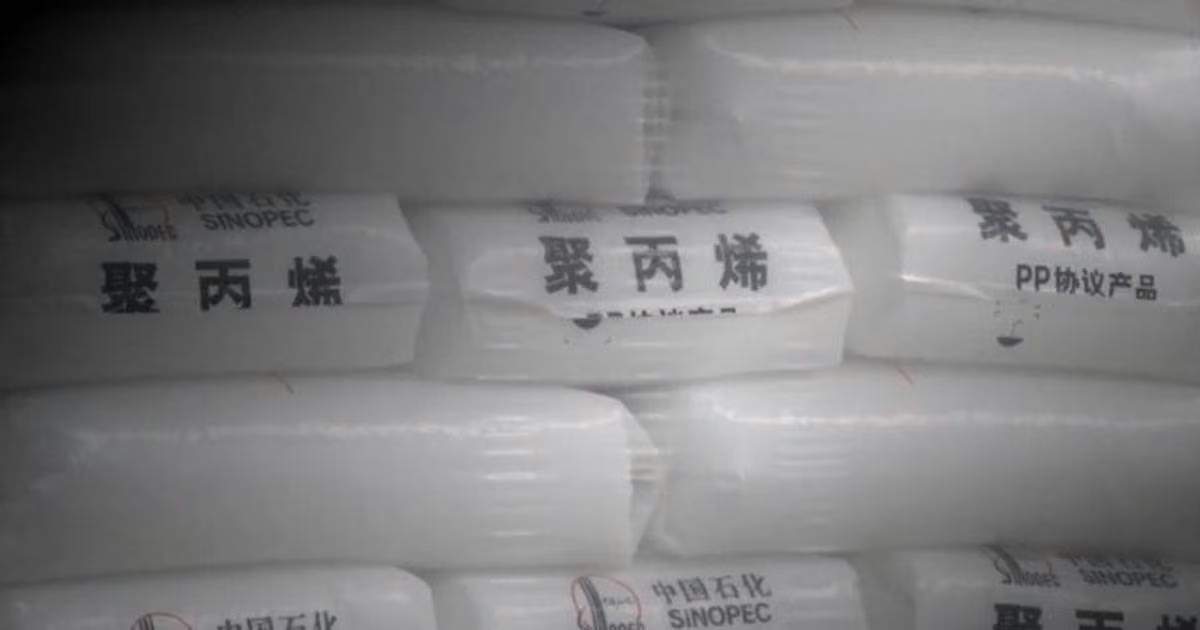
Between 2020 and 2025, China’s output of key feedstocks for the plastics industry surged. Ethylene production rose by 80%, polyethylene by 75%, polypropylene by 71%, polyvinyl chloride (PVC) by 15%, and styrene by 97%.
The report indicates that over the past 25 years, China’s chemical production has expanded 18-fold.
Currently, China controls more than 45% of the world’s production capacity for basic chemicals and plastic resins. This capacity significantly exceeds the country’s own domestic market demand.
“Initially, the Chinese government may have hoped to break its dependence on other countries and achieve what it calls self-reliance and autonomy. To that end, it developed nearly the entire petrochemical and chemical industry sector,” said Xie Tian, a professor at the Aiken School of Business at the University of South Carolina in the United States.
However, as the economy entered a period of stagnation and recession, the country began expanding production and exports. It has even shipped products at low prices or provided export subsidies to capture international market share.
The same approach is also being employed to counter economic downturns, sluggish economic activity, labor surpluses, and domestic overcapacity.
The report highlights significant structural shifts in the current global trade and economic landscape.
China’s industrial subsidies and manufacturing capacity upgrades are no longer confined to the three sectors traditionally referred to as the “new three,” namely electric vehicles, solar energy, and batteries.
This expansion has comprehensively permeated the foundations of modern industry, particularly the chemical sector, with a focus on high-technology, high-value-added fields.
“Over the past year, attention has largely centered on so-called green energy and end-consumer products. However, the expansion has now reached the hidden foundations of manufacturing, spanning plastics, pharmaceuticals, agriculture, and semiconductors, with virtually no sector left untouched,” said U.S. economist Huang Dawei (DAVY J. Wong).
Rhodium Group has warned that China is building a scale advantage at the upstream end of the industrial chain, specifically in basic chemicals and other industrial products, which have historically been the source of its cost and scale advantages.
This indicates that China’s capacity expansion is not confined to a single industry but represents a sector-wide industrial expansion driven by the state.
In September 2025, China’s Ministry of Industry and Information Technology, together with six other departments, issued a document titled the Plan for Stabilizing Growth in the Petrochemical and Chemical Industry.
The plan aims to increase the value-added output of the petrochemical and chemical industry by an average of more than 5% per year during the 2025–2026 period.
Despite facing overcapacity, weak market demand, and intensifying competition, Chinese authorities remain committed to driving growth in the sector.
Huang Dawei stated that Beijing is reluctant to shut down unprofitable plants for two primary reasons. First, exports remain the sole engine of China's economic growth. If the export sector fails to expand, the state will be unable to meet its fiscal revenue targets or secure the substantial foreign exchange reserves it requires.
Second, strategic security considerations play a significant role. Amid the technological rivalry between Europe, the United States, and China, Beijing views the chemical manufacturing industry as a cornerstone of national resilience against external pressures.
The government prefers to maintain excess production capacity rather than allow itself to be controlled by other nations. This approach represents a core element of its strategy.
The state will bear the financial losses incurred by the industry. The impact on European and American trade could be severe, as the situation is likely to trigger a massive wave of product dumping from industries operating at extremely low prices.
Xie Tian noted that manufacturers are reluctant to shut down plants on a large scale because they do not want to forfeit the prime opportunity to capture international markets, dominate the global landscape, and exert control over the industry. They are also determined to avoid losing domestic employment.
He emphasized that in an economic climate characterized by recession, sluggish consumption, a collapsing property market, and a continuously declining economy, these sectors can be leveraged to boost or sustain GDP figures while simultaneously seizing international market share.
The report indicated that China’s chemical industry is now beginning to enter market segments that offer higher profit margins and more advanced technology. These areas were previously dominated largely by foreign companies. This development has the potential to further exacerbate tensions between China and both the European Union and the United States.
Xie Tian warned that if the Chinese side fails to resolve the issue, does not cut production capacity, and continues to run trade surpluses in chemical goods and other industrial manufactured products, friction with Europe and the United States will inevitably intensify.
He predicted that the trade war would escalate rapidly, potentially expanding into broader and deeper political disputes, or even military conflict.
China’s trade surplus this year is projected to surpass the record set in 2025, which stood at 1.2 trillion US dollars.
European Union officials expressed concern that domestic chemical producers cannot compete with Chinese manufacturers who operate at lower production costs. Consequently, the EU initiated three anti-dumping investigations into imported Chinese products last September.
Chnchemicals take
The rapid expansion of Chinese chemical capacity creates significant pricing pressure that erodes margins for Western producers. This structural shift forces global buyers to re-evaluate supply chain resilience, as reliance on low-cost imports increases exposure to trade policy risks. The resulting trade tensions may lead to fragmented markets, complicating long-term procurement strategies for international chemical traders and investors.
Frequently asked questions
What did the Rhodium Group report reveal about China's chemical production capacity growth between 2020 and 2025?
The report indicates that China's production capacity for several chemical compounds nearly doubled in five years. Ethylene production rose by 80%, while polyethylene and polypropylene outputs increased by 75% and 71% respectively.
How has the European Union responded to the pressure from low-cost Chinese chemical imports?
The EU initiated three anti-dumping investigations into imported Chinese products in September 2025. Officials expressed concern that domestic producers cannot compete with manufacturers operating at lower production costs.
What is the projected trade surplus for China this year according to the report?
China's trade surplus is projected to surpass the record set in 2025, which stood at 1.2 trillion US dollars. This expansion is fueling trade tensions among China, Europe, and the United States.