Methanol
Key facts
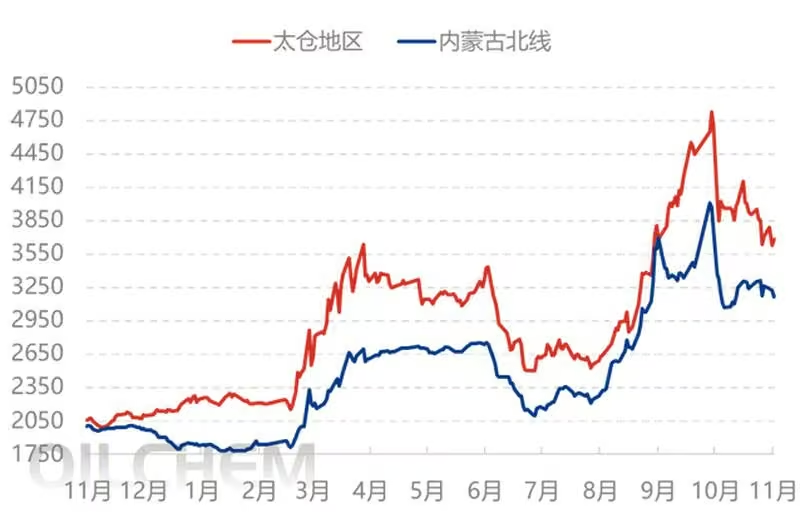
- Methanol prices in northwest China fell while coal prices rose, compressing production margins despite remaining relatively attractive
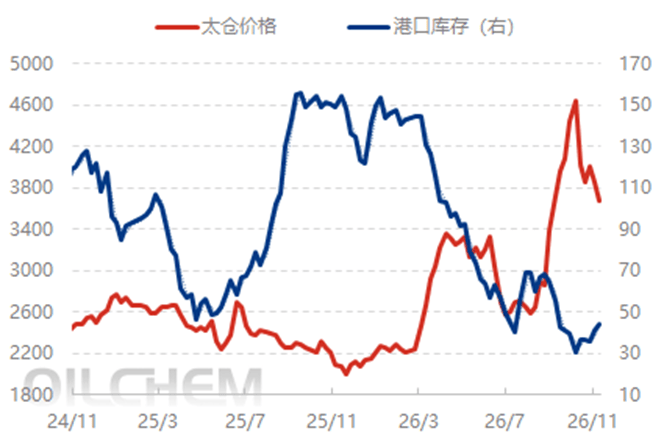
- Port methanol stocks increased due to higher import volumes, though the pace of accumulation slowed during the reporting period
- The MTO unit at Shandong Lianhong Gerun restarted operations this week, signaling a shift in regional downstream demand dynamics
- Downstream buyers procured only for immediate needs, causing market transaction volumes to fall and raw material inventories to decline
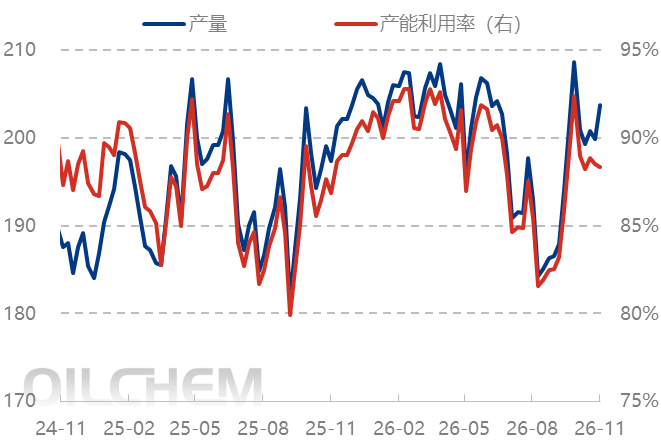
- New capacity commissioning increased domestic supply, causing overall capacity utilization to decline across the methanol sector
Last week, the methanol market traded lower on the back of sustained crude oil weakness, rising coastal arrivals, continued port inventory buildups, and cautious buying by downstream users, which collectively weighed on market sentiment.
Short-term focus: shifts in import arrivals and apparent port demand in East China; the restart status of olefin units in the region; and changes in procurement volumes from traditional downstream buyers in northern and southern Shandong.
Medium- to long-term focus: demand trends for MTO and other downstream products; the duration of shutdowns at gas-based plants both domestically and abroad; and the macroeconomic impact of evolving geopolitical conditions.
Coal prices rose while methanol prices in the northwest fell, compressing the margin for coal-based methanol production, though profitability remained relatively attractive. Domestic supply increased due to the commissioning of new capacity, causing overall capacity utilization to decline. During the period, inland producers managed shipments reasonably well, with smooth logistics and falling inventories. Port methanol stocks rose on higher import volumes, but the pace of accumulation was slow given that total supply remained at low levels.
In detail, the weekly average price for port methanol declined this period. Port inventories continued to build, albeit at a slow pace, while the volume of methanol available for trade in coastal markets remained depressed. Prices fluctuated within a narrow range as macro sentiment swings alternated with fundamental factors, including expectations of downstream unit restarts. Inland methanol prices weakened sharply, dragged down by the steep drop in port prices and compounded by softening demand from traditional end-users such as formaldehyde and MTBE. Pessimistic sentiment among downstream buyers was pronounced, leading to a notable weekly price decline.

Port inventories are expected to continue accumulating next week, and upcoming weekly arrivals are likely to sustain inventory builds through the month. However, the slow pace of accumulation and expectations of MTO unit restarts may continue to underpin a relatively firm market structure. Close attention should be paid to MTO procurement activity.
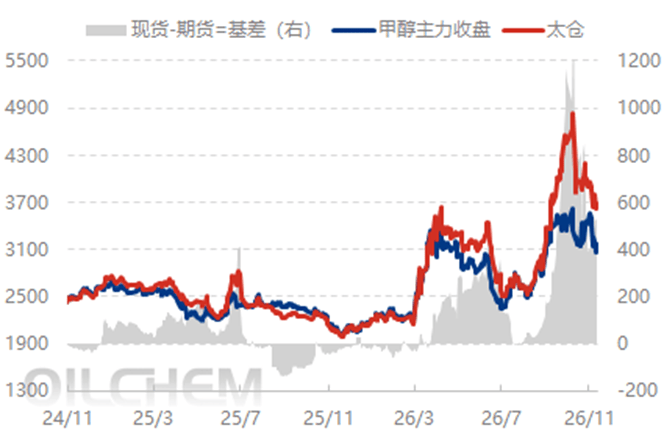
Domestic methanol capacity utilization edged down slightly this week, but market supply increased due to the startup of new facilities. Additionally, external market influences and reduced demand from downstream buyers in northern Shandong contributed to a modest decline in prices in major production regions.
For the coming period, explicit foreign vessel arrivals are expected to rise week-on-week, while import apparent demand is likely to remain weak. Port methanol inventories are projected to continue accumulating. Key variables to monitor include changes in domestic trade replenishment volumes and the rate of foreign vessel unloading.
Inland methanol producer inventories continued to fall week-on-week, with the most significant declines observed in the northwest and southwest regions. Although some traditional downstream demand has softened, upstream producers and long-term contract holders have been actively selling forward. Furthermore, routine trade restocking, external olefin procurement, and continued inflows of product to coastal areas have supported the digestion of inland supply, resulting in lower corporate inventories during the period. Looking ahead, an increase in inland producer inventories is anticipated. Focus will remain on the intensity of procurement from traditional downstream sectors and external olefin buyers.
Corporate pending order volumes declined week-on-week. Weaker macro news led traders to clear existing orders, while tight spot supply in some major production areas, slow pickup rates, and urgent calls for long-term contract deliveries resulted in a reduction in new spot orders from upstream producers, causing a slight drop in total order volumes. For the next period, inland corporate orders are expected to edge down slightly, with close attention on the purchasing intensity of mid- and downstream buyers.
Last week, downstream buyers procured only for immediate needs, causing market transaction volumes to fall and leading to a decline in raw material inventories at sampled downstream firms this week. As inland methanol prices continued to drop this week, downstream procurement volumes increased slightly compared to the previous week.
Olefins: The MTO unit at Shandong Lianhong Gerun restarted this week. The Qinghai Salt Lake unit underwent a temporary shutdown during the week, while the China Coal Yulin Phase II unit operated at low load. The industry’s average operating rate declined slightly over the week.
The average price of methanol in the raw materials market fell sharply this week, weakening cost-side support and easing the burden on propylene and ethylene producers to some extent. In Shandong, propylene prices initially rose on news-driven sentiment and inventory-building demand before retreating as shipment pressure mounted, leading to a gradual price correction. The weekly average price for ethylene in Northeast Asia edged higher than the previous week, but the market failed to sustain gains, with prices pulling back after a brief spike. Similarly, the weekly average price for ethylene in East China rose on a week-on-week basis, yet trading activity slowed toward the end of the period, resulting in a narrow price decline as participants adopted a cautious, wait-and-see stance.
International crude oil prices declined this week, primarily due to a reduced expectation of renewed U.S. strikes on Iran and ongoing mediation efforts by Qatar and other parties to advance U.S.-Iran talks, which temporarily alleviated market concerns.
International crude oil prices are expected to have room for further decline next week, with WTI potentially trading in the range of $80–89 per barrel and Brent in the range of $86–95 per barrel.
Supply: The number of units scheduled to resume operations next period is expected to increase, while the number of units undergoing maintenance or reducing output is set to decrease. As the volume of recovered production is anticipated to exceed the volume lost, overall market supply may rise.
Demand: Olefin demand is projected to grow. With the restart of Lianhong Gerun in Shandong and the ramp-up of the second-phase unit at China Coal Yulin, the weekly average operating rate is trending upward. Traditional downstream demand is expected to decline more than it will increase. In the glacial acetic acid segment, attention is focused on the anticipated restarts at Xinjiang Zhonghe Hezhong and Longyu, which could boost methanol demand. In the formaldehyde segment, losses are expected to outweigh recoveries, leading to a reduction in supply and a decline in overall capacity utilization compared with the previous week. In the chlorides segment, although some units are expected to restart, the timing near the end of the period suggests that overall output and capacity utilization will likely continue to decline.
Inventory: In the coming period, the volume of visible foreign vessels arriving at ports is expected to increase week-on-week. Import apparent demand may remain weak, and port methanol inventories are likely to continue accumulating. Market participants should monitor changes in domestic trade replenishment volumes and the speed of unloading from foreign vessels.
Feedstock: Coal prices remain at elevated levels, prompting enterprises to stockpile cautiously through small, passive adjustments rather than large-scale concentrated purchases. This dynamic provides solid support for methanol prices. Meanwhile, profitability for natural gas-based methanol production in Southwest China remains adequate.
Conclusion (Short-term): With new units coming online and some existing units resuming operations, market supply will continue to increase. While major downstream olefin demand may rise, purchasing sentiment in other downstream sectors remains heavily influenced by external factors. The pace of demand growth is insufficient to absorb the increase in supply, suggesting that the domestic methanol market may trend lower amid volatility next week.
Conclusion (Medium- to long-term): As the impact of geopolitical tensions diminishes, domestic supply and demand fundamentals will regain dominance. Intensifying competition between supply and demand sides is expected to narrow the range of methanol price fluctuations. However, external factors, including the progress of U.S.-Iran negotiations and navigation conditions in the Strait of Hormuz, warrant continued attention.
Chnchemicals take
The current market environment suggests that chemical producers should prioritize operational efficiency over volume expansion, as rising import volumes and new domestic capacity are intensifying competition. Traders and buyers must remain vigilant regarding geopolitical risks in the Strait of Hormuz, as these external factors continue to influence supply chain stability and price volatility. The narrowing price fluctuation range indicates a maturing market where fundamental supply and demand dynamics are regaining dominance over speculative sentiment.
Frequently asked questions
What factors caused the decline in methanol market prices last week?
Methanol prices fell due to sustained crude oil weakness, rising coastal arrivals, and port inventory buildups. Downstream buyers remained cautious, procuring only for immediate needs, which weighed on market sentiment and transaction volumes.
How did the commissioning of new capacity affect domestic methanol supply and utilization?
Domestic supply increased due to the commissioning of new capacity, causing overall capacity utilization to decline. Despite this, inland producers managed shipments reasonably well, with smooth logistics and falling inventories in the region.
What is the outlook for methanol price fluctuations as geopolitical tensions diminish?
As geopolitical impacts fade, domestic supply and demand fundamentals will regain dominance, narrowing the range of price fluctuations. External factors like U.S.-Iran negotiations and Strait of Hormuz navigation conditions remain key variables for traders.