China Launches 100,000-Ton EVA Production Line Using ECI Technology
Key facts
- ECI Group commissioned a 100,000-ton annual EVA copolymer plant at the Sailboat complex in China
- The facility is the first to use ECI's proprietary high-pressure polymerization autoclave technology for production
- The licensing agreement between ECI and Sailboat was signed in June 2022, with construction starting in November 2023
- The new EVA production is intended for flexible packaging, adhesives, footwear, and photovoltaic module encapsulation films
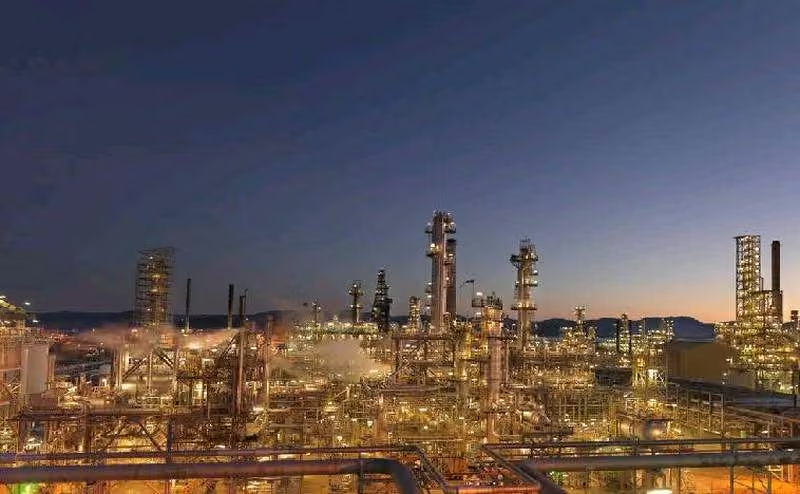
ECI Group has commissioned an ethylene-vinyl acetate (EVA) copolymer plant with an annual capacity of 100,000 tons at the Sailboat petrochemical complex in China, the company announced. This marks the world’s first production facility to utilize ECI’s proprietary high-pressure polymerization (HPPE) autoclave technology, according to the statement.
The licensing agreement between ECI and Sailboat, a subsidiary of Shenghong Holding, was signed in June 2022, with construction commencing in November 2023. ECI provided the core technology, developed the engineering documentation, and managed the technical support for the startup and commissioning processes.
The project is designed with the flexibility to expand production capacity and develop additional grades of high-pressure copolymers. The EVA produced at the facility is intended for applications in flexible packaging, adhesive materials, footwear, cable insulation, and encapsulation films for photovoltaic modules.
ECI Group is an international engineering firm specializing in the development and licensing of polymer production technologies, as well as the design and modernization of petrochemical facilities. The company offers technologies for producing polyethylene and ethylene copolymers, including EVA, alongside technical support services for manufacturing operations.
Previously, Vioneo signed a contract with ECI Technology for the design and construction of a high-pressure polyethylene (HDPE) plant that does not rely on fossil feedstocks. This facility, with a capacity of 110,000 tons, will be built in Antwerp, Belgium.
BASF ends bid to acquire Evonik
BASF SE has decided to halt its pursuit of Evonik Industries AG after two non-binding, all-cash acquisition offers were rejected, the company announced. In a statement released on November 19, BASF indicated that continuing negotiations at higher price points was no longer in the best interest of its shareholders. Representatives of BASF noted that Evonik’s board of directors had not demonstrated "constructive" interest, despite BASF’s willingness to consider a moderate increase in the proposed price. Furthermore, an assessment of Evonik’s prospects as a standalone entity and the associated risks did not provide sufficient justification for a higher valuation.
"We are convinced that BASF’s offer—an all-cash proposal that carries no additional risk for Evonik shareholders—priced at 24 euros per share, would have delivered significant additional value to them. We continue to believe that a merger would have created a stronger chemical entity under the BASF umbrella, bringing additional benefits to shareholders, as well as to the employees and customers of the combined company," said Markus Kamieth, chief executive officer of BASF.
BASF also emphasized that its decision to abandon the acquisition reflects its commitment to prudent capital allocation and ensuring attractive returns for shareholders. The company noted that under its "Winning Ways" strategy, acquisitions have always been presented as one of several possible options, rather than a mandatory requirement for strengthening and developing core business areas.
Speaking on October 28 during a conference call to discuss BASF’s third-quarter financial results, Markus Kamieth described the company’s proposal as "very serious and valuable." He highlighted that Evonik is an attractive asset due to its portfolio structure, financial performance, and potential for synergistic effects. One of the criteria BASF uses when evaluating potential acquisition targets is a balanced presence in key global markets. Kamieth added that a combined company would possess a more harmonious regional balance than BASF currently does. However, he noted that this assessment assumes Evonik will execute its stated plans for portfolio restructuring, specifically the divestiture of its C4 business unit. Kamieth further stated that if the deal had proceeded, closing would not be expected before 2028, as securing the necessary regulatory and other approvals for a transaction of this scale requires significant time.
In a video address posted on BASF’s website on October 22, Kamieth stated that the company was prepared to enter into negotiations with Evonik, but stressed that BASF was "not intent on achieving a merger at any cost." He described a potential union of BASF and Evonik as a "powerful German response to global competition."
Meanwhile, Klaus Rietting, acting chief executive officer of Evonik, told analysts on a conference call on November 3 that the company remains "fully" focused on its strategic path and development as an independent entity. Rietting reaffirmed that Evonik’s board of directors had decided not to engage in negotiations with BASF SE regarding a potential merger. However, he noted that Evonik is open to exchanging information with BASF—strictly on a confidential basis—to clarify its position and to allow BASF to present its arguments and key considerations underlying its interest in Evonik.
Tax authority files bankruptcy claim against Turkish contractor of SIBUR and Gazprom for 5.5 billion rubles
The Federal Tax Service of Kirov Oblast has filed a bankruptcy petition against the Turkish construction firm Yamata, according to records from the Moscow Arbitration Court. The claim amounts to 5.5 billion rubles.
Earlier reports indicated that PJSC Nizhnekamskneftekhim (NKNH), a subsidiary of SIBUR, is removing Yamata from the construction of its "styrene chain" project. This is currently NKNH’s largest investment initiative, with total costs estimated at 182 billion rubles.
Yamata was also responsible for constructing Gazprom’s Amur Gas Processing Plant and the Amur Gas Chemical Complex, a joint venture in which SIBUR holds a 60% stake and the Chinese corporation Sinopec holds the remaining 40%.
Since the beginning of 2026, two separate bankruptcy petitions have been filed against Yamata in the Arbitration Court of Amur Oblast. In one of these cases, the court ordered the debtor to disclose the location of its primary assets and production resources, the whereabouts of its controlling persons, and its financial statements, among other details.
Previously, a list of the largest organizations in Nizhnekamsk with tax arrears was published. Yamata topped the list with the highest outstanding debt, recorded at 625.7 million rubles.
Chnchemicals take
This expansion intensifies competition in the EVA market, particularly for photovoltaic encapsulation films, by adding significant new capacity from a Chinese producer. The use of proprietary high-pressure technology suggests a focus on specific high-performance grades that may challenge existing suppliers. Traders should monitor how this new supply affects pricing dynamics in the solar materials segment, as increased local production could reduce import dependencies in the region.
Frequently asked questions
What is the capacity of the new EVA plant commissioned by ECI Group in China?
The plant has an annual capacity of 100,000 tons. It is the world's first facility to utilize ECI's proprietary high-pressure polymerization autoclave technology.
Which specific applications are targeted by the EVA produced at the Sailboat petrochemical complex?
The EVA is intended for flexible packaging, adhesives, footwear, cable insulation, and photovoltaic encapsulation films. The facility is designed with flexibility to expand capacity and develop additional grades.
How does the commissioning of this EVA facility impact the competitive landscape for polymer producers?
It introduces a new technological pathway for EVA production in China. This may affect supply balances and competitive strategies for other producers in the region.