Ukraine Targets Russian Explosives Supply Chain in Strike on Fertilizer Giant
Key facts
- Ukrainian drones struck the Dorogobuzh chemical plant in Smolensk on November 20, triggering an explosion at the facility
- The Dorogobuzh plant accounts for approximately 11% of Russia's total ammonium nitrate output, a key chemical for explosives
- The facility is owned by the Acron Group, with Russian billionaire Vyacheslav Kantor identified as the main beneficiary
- A previous attack on the same site in February caused a massive fire, resulting in four deaths and ten injuries
- Ukraine struck the Dorogobuzh facility twice within one month during March and April, damaging production infrastructure
In brief: The overnight attack triggered an explosion at one of Russia’s largest fertilizer producers. The plant accounts for around 11% of the country’s ammonium nitrate output, a chemical widely used in explosives manufacture. The strike is the latest in Ukraine’s growing campaign against Russia’s chemical industry.
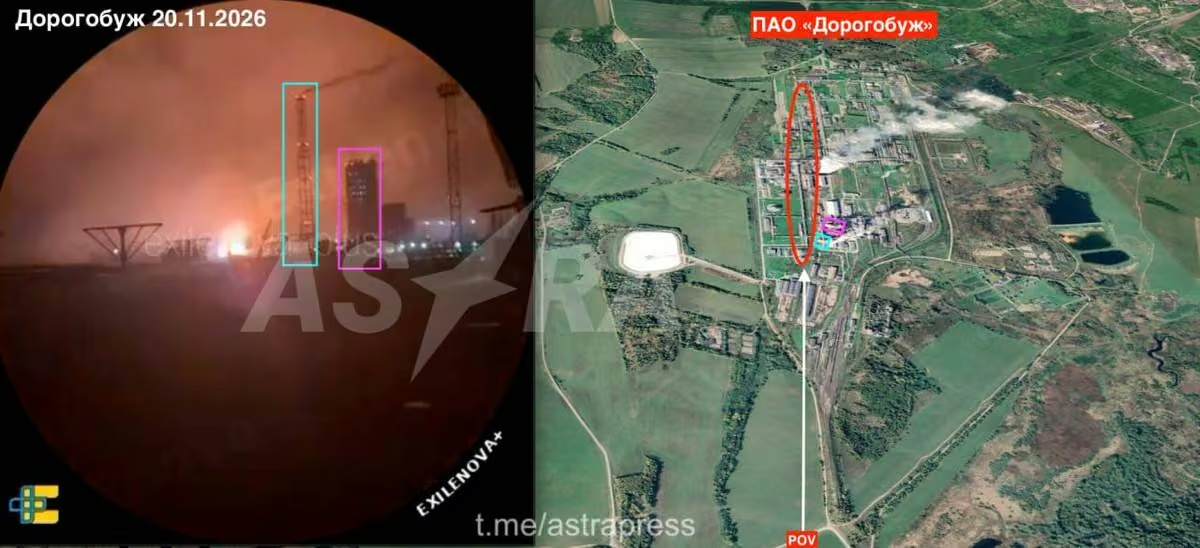
Ukrainian drones struck the Dorogobuzh chemical in the Smolensk region, one of the Russia’s largest fertilizer producers, early Friday, Nov. 20, triggering an explosion.
The Ukrainian monitoring channel Exilenova+ identified the plant was the target of the attack. Footage filmed by eyewitnesses and reviewed by the independent Russian outlet Astra showed an explosion at the industrial facility following the attack.
Follow our coverage of the war on the @Kyivpost_official .
Regional authorities have yet to comment on the reported strike or its consequences.
Dorogobuzh is one of Russia’s largest mineral fertilizer producers and the biggest industrial enterprise in the Smolensk region.
The plant belongs to the Acron Group, whose main beneficiary is Russian billionaire Vyacheslav Kantor, a former president of the European Jewish Congress.
According to the company, the facility accounts for around 11% of Russia’s total ammonium nitrate production. It also manufactures ammonia, nitric acid, mineral fertilizers and nitroammophoska.
The plant’s output has dual-use applications, with several of those products including ammonium nitrate also used in the production of industrial explosives.
The facility has been repeatedly targeted by Ukrainian drones. On Feb. 25 , a previous attack triggered a massive fire at the plant during which Smolensk Governor Vasily Anokhin said that four people were killed and 10 injured.
The facility had also been struck in December 2025, when a fire broke out without reported casualties.
The February attack also damaged production and logistics infrastructure. According to satellite imagery and an assessment by OSINT analysts CyberBoroshno, reported by Ukrainian media, explosions hit areas used for ammonium nitrate production, storage and transportation.
The latest strike is part of Ukraine’s expanding campaign against Russian chemical producers supplying materials that can be used in the manufacture of military items.
On Oct. 24 , Ukrainian drones struck the Tolyattikauchuk petrochemical plant in the Samara region, triggering a major fire. The facility, owned by Tatneft, produces synthetic rubber used in the manufacture of solid rocket fuel.
The attack also prompted the evacuation of workers at the neighboring AvtoVAZ automotive plant.
A day earlier, drones reportedly struck the Azot chemical plant in Berezniki , Perm region. The facility, operated by Uralchem, produces ammonium nitrate, nitric acid and other chemicals used in the manufacture of explosives and gunpowder.
On Sept. 12 , Ukrainian forces struck two chemical industry enterprises in Russia’s Perm and Samara regions, President Volodymyr Zelensky confirmed. The targets included the KuibyshevAzot plant in Tolyatti and the Azot facility in Berezniki.
Other targets have included the Apatit chemical plant in Cherepovets, which produces ammonia, ammonium nitrate and nitric acid used in the manufacture of explosives. Ukraine struck the facility twice within a month in March and April, with Ukraine’s Unmanned Systems Forces confirming the April attack.
Chnchemicals take
This targeted disruption of a major ammonium nitrate producer introduces significant volatility into the global supply chain for industrial explosives and fertilizers. By directly impacting a facility responsible for a substantial share of national output, the strike highlights the growing vulnerability of critical chemical infrastructure to geopolitical conflict. Traders and buyers must now account for potential supply shortages and increased logistics risks when sourcing these essential materials from the region.
Frequently asked questions
What was the impact of the Ukrainian drone strike on the Dorogobuzh chemical plant in Smolensk?
The strike triggered an explosion at the facility, which is one of Russia's largest fertilizer producers. The plant accounts for around 11% of the country's ammonium nitrate output, a chemical widely used in explosives manufacture.
How much of Russia's ammonium nitrate output does the Dorogobuzh plant represent according to the report?
The plant accounts for approximately 11% of Russia's ammonium nitrate production. This significant share makes the facility a critical node in the domestic supply chain for this specific chemical product.
Why is the disruption at the Dorogobuzh plant significant for chemical industry professionals and traders?
The facility produces ammonium nitrate and nitric acid, which are essential for explosives and fertilizer production. Disruptions to such a large producer can affect regional supply balances and logistics for buyers and traders in the sector.